Donald Trump Approval Hits Record Low as Majority of Americans Sour on Iran War and Economy
As war abroad drives up prices at home, Donald Trump is discovering that even the most loyal base has a breaking point.

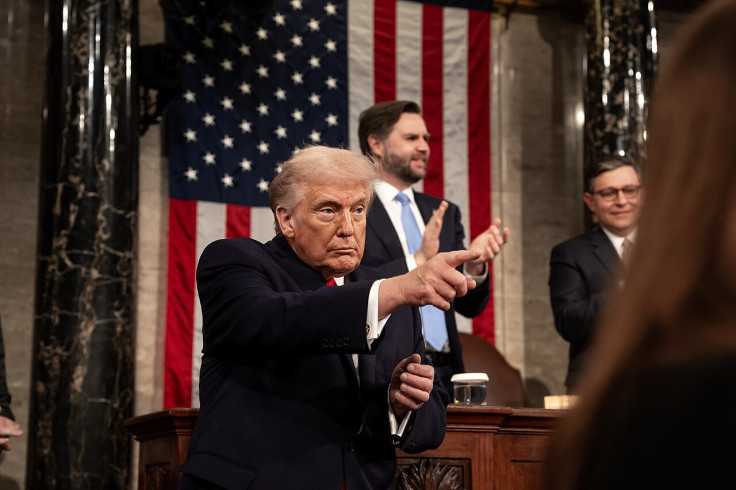
Donald Trump's approval rating has fallen to some of the lowest levels of his second term in the United States, as a majority of Americans express growing unease over the Iran war and its impact on the economy, according to a string of new national polls released in recent weeks.
For context, Donald Trump entered his second term promising economic strength and a tough posture abroad, and for much of that time voters grudgingly gave him relatively better marks on the economy than on anything else. That calculation appears to be shifting. Since late February, when the US launched strikes on Iran, pollsters have recorded a steady slide in support for both his handling of the conflict and his broader performance in office.
The latest YouGov/The Economist survey puts Trump's overall approval at 35 per cent, down from 39 per cent just before the Iran operation. A separate Reuters/Ipsos poll finds a similar picture, with approval dipping from 40 per cent to 36 per cent over roughly the same period. A Fox News poll, meanwhile, reports his disapproval rating at 59 per cent, the highest recorded in either of his terms.
Those numbers are not happening in a vacuum. They track almost exactly with a worsening public mood about the Iran war, which has coincided with petrol prices rising above $4 a gallon for the first time since 2022 and the stock market falling to its lowest level of the year. In other words, voters are watching foreign policy and their wallets at the same time, and many are not impressed with what they see.
Trump gave a televised address on Wednesday night defending his approach to Iran, but the polling suggests minds were already shifting. In early March, 39 per cent of respondents approved of his handling of the conflict. That slipped to 36 per cent for two consecutive weeks, then fell again to just 30 per cent in the latest YouGov/Economist numbers.
Donald Trump Faces Erosion Within His Conservative Base
It is the pattern inside Donald Trump's own coalition that should most worry the White House. The decline is broad-based, but particularly sharp among the very voters who powered his 2024 re‑election.
In the past five weeks, YouGov/Economist polling shows Trump's approval among his 2024 voters dropping 6 points to 76 per cent. Among conservatives it is down 4 points to 79 per cent. His standing with Republicans more generally has fallen 5 points to 81 per cent, and even self‑identified 'MAGA supporters' have softened, down 5 points to 92 per cent.
These are still high numbers in absolute terms, but the direction of travel is unmistakable. When presidents begin losing ground with their core supporters, it is usually a sign that something deeper is amiss than a passing news cycle.
The erosion is not simply a partisan story. On the other side of the aisle, there was little support to lose, though it has inched lower still. Approval among Democrats is down a further 3 points, among liberals 2 points and among people who voted for Kamala Harris in 2024 by 1 point.
Independents, who often decide close national races, appear increasingly disenchanted. Trump's approval with this group climbed briefly from 25 per cent in late February to 31 per cent in early March, before tumbling to just 22 per cent in the latest survey.
Donald Trump Struggles On Economy As Iran War Bites
The economic backdrop is bleak for Donald Trump, and here the polling is blunt. Only 14 per cent of Americans now say the economy is improving, down from 22 per cent in late February, according to YouGov/Economist data. That is a striking reversal for a president who has long leaned on economic performance as his political safety net.
Geoffrey Skelley, chief elections analyst at Decision Desk HQ, argued that sentiment about the Iran war and the economy is tightly linked. 'The long-term problem for Trump has been that views about the economy have grown more negative during his presidency,' he said. If your strongest selling point starts to look like a weakness, he suggested, the political cupboard suddenly looks bare. 'When the things that you are viewed as strongest on become weaknesses, what do you have left to do to use as something to appeal to the public?'
The souring mood is especially pronounced among Republicans. In late February, half of GOP respondents told pollsters they were optimistic about the economy. That share has now dropped to 29 per cent. Support within the party for Trump's handling of Iran has also slipped, from 83 per cent in early March to 68 per cent in the most recent polling.
Voters appear to be making a fairly direct connection between the conflict and their cost of living. Skelley puts it bluntly.
'It's not hard for people to see, 'Oh, gas prices went up after we attacked Iran, and the Middle East is where a lot of oil comes from,'' he said. 'You know, people are not dumb. They connect the dots on that.' In his view, the administration may have calculated the military risks, but the politics were always going to be harder to manage. 'They launched this military operation, and whatever you think about the judgment of that, the politics of it [are that] people are not terribly happy with it. And it's now, if anything, further exacerbating people's negative views about the economy.'
Beneath the topline numbers are shifts that would trouble any campaign strategist. Trump's approval among white voters has dropped 4 points to 41 per cent. Support among Black voters has edged down to 10 per cent, and among Hispanic voters to 34 per cent. Among Americans without a university degree, traditionally a relative strength for Trump, approval has fallen from 43 per cent to 37 per cent over five weeks. Among graduates, it is flat at a low 32 per cent.
Perhaps most telling is the reversal among younger voters. Trump started his second term with a plurality of support from under‑30s, an age group that has often tilted Democratic. That advantage has evaporated. Only 24 per cent of young voters now approve of his performance, down from 32 per cent in late February.
© Copyright IBTimes 2026. All rights reserved.
- Recommended For You