

UFO Expert Mark Rodeghier Questions Air Force Secrecy as CIA History Details Misleading U-2 Explanations
Rodeghier questioned Cold War aerial investigations as historical studies confirm Air Force issued deceptive explanations to conceal classified reconnaissance flights
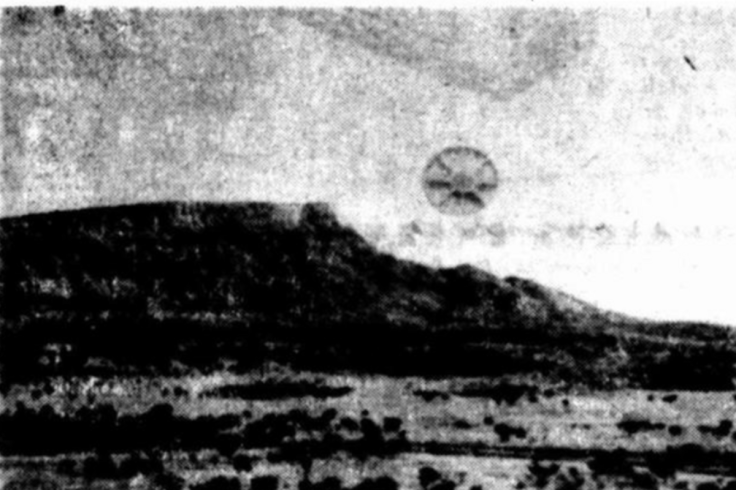
Cold War aerial secrecy faced renewed historical scrutiny this week as archival intelligence findings highlighted how the United States Air Force deployed deceptive public explanations to shield classified military reconnaissance operations.
Speaking in an interview revisited across defence networks in November 2026, Dr Mark Rodeghier, scientific director of the J. Allen Hynek Center for UFO Studies, questioned the integrity of mid-century military investigations, arguing that national security compartmentalisation actively undermined genuine aerial threat detection.
Rodeghier pointed to the CIA-backed Robertson Panel of January 1953, which urged government agencies to systematically debunk civilian sightings and monitor domestic tracking groups to prevent emergency communication channels from clogging during potential Soviet confrontations.
However, newly scrutinised historical studies compiled by former CIA historian Gerald K. Haines demonstrate that official misdirection served primarily to conceal ultra-secret aviation hardware, confirming that military spokespersons routinely blamed atmospheric temperature inversions and ice crystals for high-altitude sightings generated by the reflective hulls of U-2 reconnaissance aircraft.
While government archives document calculated deception to safeguard cutting-edge aviation, the Air Force maintains that Project Blue Book uncovered no evidence of extraterrestrial visitation among its 701 unexplained encounters.
In the 9 April 2025 episode of Reality Check, Rodeghier spoke to journalist Ross Coulthart about the influence of intelligence secrecy on the investigation of unidentified aerial phenomena, or UAPs.
Mark Rodeghier Questions the Origins of Air Force UFO Secrecy
Rodeghier pointed to the Robertson Panel, a scientific review assembled with CIA backing in January 1953. He also cited MK-ULTRA as an example of intelligence secrecy, without establishing any connection between that programme and UFO investigations.
The Robertson Panel met from 14 to 17 January 1953 to examine sightings and possible risks to American security. According to a CIA history, the agency found no evidence that the reported objects were extraterrestrial or posed a direct security threat. Yet its recommendations extended beyond scientific assessment.
The panel urged public education to reduce interest in UFO reports. It feared that excessive reporting could clog communications and make genuine threats more difficult to identify. It also recommended monitoring some civilian UFO groups for potential subversive activities.
Those recommendations help explain why official messaging became part of the Cold War UFO story. They do not demonstrate that the Air Force was ordered to suppress valid reports or abandon investigations.
Rodeghier was particularly critical of Project Blue Book, the Air Force programme established in 1952 to investigate sightings. He characterised its later work as largely propaganda, an allegation that goes further than the historical record alone establishes. The programme also collected and assessed reports, including cases its investigators could not explain.
His wider argument concerned two competing demands. Military officials needed to keep classified projects secret while identifying potential intrusions into US airspace. Rodeghier questioned whether efforts to discourage reporting could compromise the second responsibility.
What CIA Records Show About Mark Rodeghier's UFO Claims
An earlier CIA historical study supplies a concrete example of misleading explanations. Written by historian Gerald K Haines and published in 1997, the book describes reports on the U-2 reconnaissance aircraft during the 1950s.
The aircraft flew far above the altitude of commercial airliners operating at the time. Its reflective surface sometimes made it appear unusual to pilots and observers on the ground, particularly around sunrise and sunset.
Haines wrote that Blue Book investigators could match many sightings to secret flights by consulting CIA personnel. They nevertheless avoided publicly identifying the U-2. Some instead attributed the sightings to atmospheric conditions, including ice crystals and temperature inversions.

The historian described the resulting Air Force statements as 'misleading and deceptive'. His account identified protection of an exceptionally sensitive reconnaissance programme as the reason for withholding the true explanations.
That is evidence of misleading public information, not proof that every UFO inquiry was obstructed. A concealed aircraft explanation and an investigation deliberately prevented from proceeding are different claims. Neither the interview account nor the cited historical study establishes a blanket policy of blocking all investigations.
For Rodeghier, the unresolved security question was whether unfamiliar objects received appropriate scrutiny, regardless of their eventual explanation. The historical records show that some public explanations were deliberately incomplete. They do not show that an unidentified sighting was evidence of extraterrestrial visitors.
The Air Force's own published account gives another perspective. It maintains that Project Blue Book found no evidence that unidentified sightings represented extraterrestrial vehicles or technology beyond contemporary scientific understanding.
According to the National Archives, the programme recorded 12,618 sightings from 1947 to 1969, with 701 remaining unidentified. The Air Force ended Project Blue Book on 17 December 1969, following reviews of its investigations and a commissioned scientific study.
For contemporary aerospace researchers, the historical record demonstrates how early intelligence imperatives shaped public perception, leaving the core question of unidentified phenomena caught between classified military technology and unverified speculation.
© Copyright IBTimes 2026. All rights reserved.