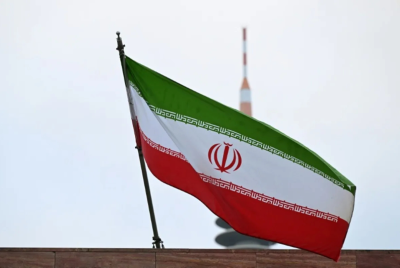
Iran Seizes US Underwater Drone, Raising Fears Tehran Could Reverse-Engineer Its Technology
Tehran's latest capture of a US underwater drone raises concerns over potential reverse-engineering and public relations gains
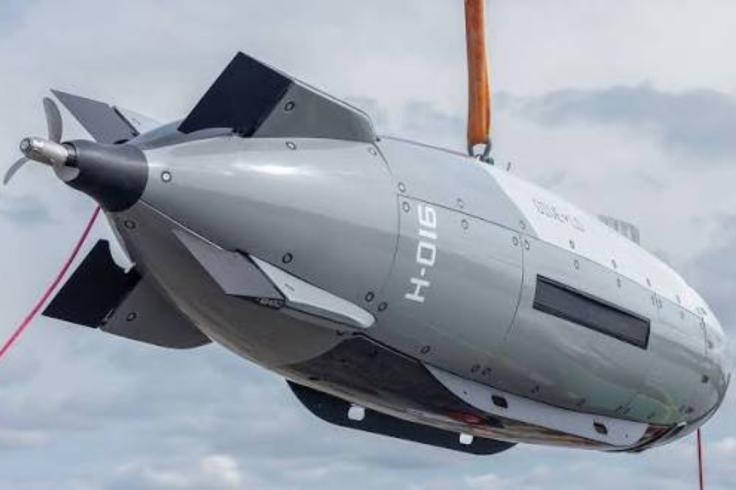
Iran seized a US Navy underwater drone in the Strait of Hormuz.
— Chay Bowes (@BowesChay) September 9, 2026
The Dive-LD is a 5.8-metre AUV that the US was using to detect mines in the strait.
Tehran will likely try to reverse engineer it and share the technology with China and Russia. pic.twitter.com/KTPBEEIEew
Iran's recovery of a malfunctioning US Navy underwater drone in the Strait of Hormuz has triggered fresh concern in Washington that Tehran could study and potentially reverse-engineer its mechanical systems, even as American officials insist the ageing vehicle carried no classified equipment and collected no sensitive data.
The craft, a Dive-LD autonomous underwater vehicle built by US defence firm Anduril, is used for undersea missions including surveillance, seabed mapping and other maritime operations. Reuters reported that Iran's Revolutionary Guard said it had captured the vessel, while US officials said it had already malfunctioned and been effectively stranded for more than a day before it was picked up.
Navy officials said the vehicle was an older model that did not collect sensitive data or carry classified sonar or radar equipment. Iran displayed footage of the drone, though the condition of its internal systems has not been independently verified.
Echoes of Earlier Drone Standoffs
The episode recalls a string of earlier confrontations between the two countries over uncrewed US hardware. In 2011, Iran captured a US RQ-170 Sentinel stealth reconnaissance drone after it came down inside Iranian territory, though the circumstances of the loss were disputed. Then-President Barack Obama publicly asked for its return; Tehran instead claimed to have reverse-engineered the aircraft and later unveiled drones it said were based on the captured design.
In August 2022, an Iranian Revolutionary Guard support ship attempted to tow away a Saildrone Explorer in the Arabian Gulf. The US Navy responded with the patrol ship USS Thunderbolt and an MH-60S Sea Hawk, after which the Iranian vessel released the drone. The US Navy said the Saildrone carried commercially available sensors, radars and cameras and did not store sensitive or classified information.
Days later, an Iranian naval ship seized two Saildrone Explorers in the Red Sea. The US Navy responded with USS Nitze, USS Delbert D. Black and MH-60R Sea Hawk helicopters. The Iranian vessel released both drones the following day.
Analysts said the latest capture, while unlikely to yield major technical gains, could still be useful to Tehran. Farzin Nadimi said the incident could help the Islamic Revolutionary Guard Corps refine its own designs. Bryan Clark said Iranian engineers could 'definitely reverse-engineer the mechanical systems', though he noted the drone's software contained built-in defences that could make tampering more difficult.
Tehran Turns Seizure Into Public Relations Win
If the technical gains from the capture remain uncertain, the incident has nevertheless given Tehran a public relations opportunity. Iranian diplomatic missions used social media to mock Washington over the loss. Iran's embassy in Ghana wrote on X that its personnel had picked up the submersible 'like a plastic bottle in a fishing net', adding that it was 'fully intact'. Iran's mission in Hyderabad posted: 'Unboxing ceremony by our reverse engineers, tomorrow morning!'
Mona Yacoubian, director of the Middle East programme at the Center for Strategic and International Studies, said Iran has proved adept at using such incidents to portray US forces as inept and to reinforce its claims of control over the Strait of Hormuz.
Anduril describes the Dive-LD as 'the most reliable and flexible' autonomous underwater vehicle on the market, capable of operating without human intervention for up to ten days. The Pentagon and Anduril did not immediately respond to Reuters' requests for further comment on the circumstances of the loss.
It could not be independently verified what state the vehicle's internal systems were in when it was recovered. What is established is that Iranian forces took possession of an older, malfunctioning US drone without classified equipment aboard, while analysts believe the hardware could still provide some opportunity to study US undersea technology.
© Copyright IBTimes 2026. All rights reserved.
- Recommended For You