Extreme Heat Hits Europe's Power Supply: Why Hungary Was Forced To Shut Down Its Biggest Plant
Danube River's historic low levels force shutdown of Hungary's key power plant

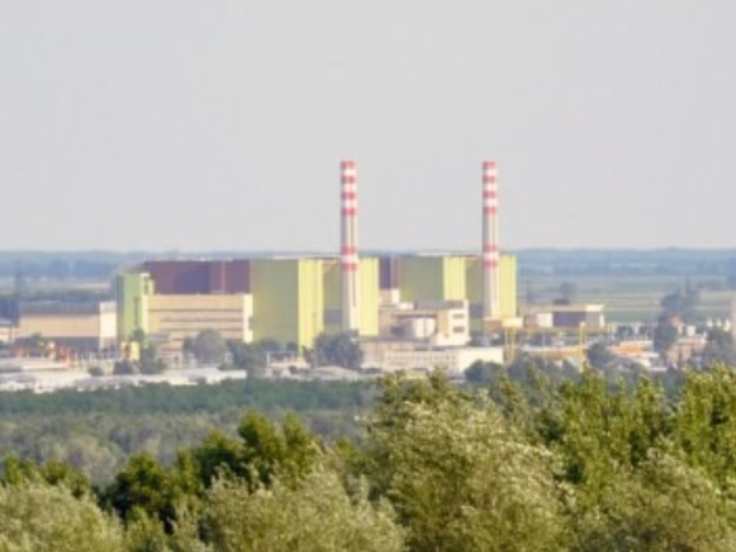
Hungarians are bracing for blackouts as the Paks Nuclear Power Plant was shut down amid the European heatwave. Paks, which supplies almost half of the country's electricity, had to stop generating power because of record-low water levels in the Danube River, which is essential for cooling the plant.
'Due to the further drop in the Danube's water level, one of the last two generating units at the Paks Nuclear Power Plant will be shut down at 1:30 a.m.,' announced Hungarian Prime Minister Péter Magyar on his social media accounts. 'As a result, the plant's output will fall to just 240 megawatts, and tomorrow it will be completely shut down for the first time in 44 years.'
Due to the further drop in the Danube's water level, one of the last two generating units at the Paks Nuclear Power Plant will be shut down at 1:30 a.m. As a result, the plant's output will fall to just 240 megawatts, and tomorrow it will be completely shut down for the first…
— Magyar Péter (Ne féljetek) (@magyarpeterMP) August 1, 2026
Why the Danube River Is Essential for Power Supply
The Danube River flows through and benefits 10 countries. It has receded to historic lows as Europe continues to grapple with the seemingly never-ending heat dome. Some parts of the body of water have even exposed the riverbed, while others have exposed old shipwrecks, artifacts, and fossils.
The Danube is essential for cooling operations at the Paks Nuclear Power Plant. The plant siphons water directly from the river to cool down its reactors. But the European heatwave dropped water levels to unprecedented lows that the plant's suction equipment could no longer reach the water.
Last week, Budapest energy officials recorded water levels at 23 centimeters (nine inches), which is much lower than the previous lowest-level record of 33 centimeters (13 inches) set in 2018. Magyar said the next five days will be critical to Hungary's energy situation.
Tájékoztatás a teljes paksi leállásról, a fogyasztási adatokról és az energiarendszer állapotáról.
— Magyar Péter (Ne féljetek) (@magyarpeterMP) August 2, 2026
Ma is ülésezik a Védelmi Munkacsoport. A meghozott döntésekről később adok a tájékoztatást.
Hétfő reggel a köztársasági elnöki jogköröket gyakorló Forsthoffer Ágnessel és az… pic.twitter.com/OWMJQF3PzD
Moderate Use of Electricity
'The government, together with energy and water management experts, evaluated the expected consumption data for tomorrow and the week ahead, the available domestic power plant capacities, and the expected import and trading opportunities for tomorrow. Mandatory restrictions on household consumption will not be necessary,' Magyar also announced.
While there will be no mandatory load shedding yet, government officials have asked major consumer companies to voluntarily reduce the use of power. Hungarian citizens were also asked to use energy moderately, especially during the 'critical period' between 5 p.m. and 10 p.m.
The European Commission is also contemplating meeting the Electricity Coordination Group to discuss Hungary's power problem. 'Although the operator has emergency measures in place to guarantee nuclear safety, an event of this kind could further strain the regional electricity balance,' European Commission spokesperson Anna-Kaisa Itkonen said. 'The Commission stands ready to convene an ad hoc meeting of the Electricity Coordination Group.'
Decentralised Energy System Mulled
Environmentalists believe this is a signal for Hungary to think of better energy distribution in the nation. 'Hungary needs to speed up its transition into a more resilient, decentralised energy system that relies less on climate-vulnerable infrastructure and more on energy savings, flexibility and renewable energy,' said Akos Eger, executive president of Friends of the Earth Hungary.
Another climate organisation, Energiaklub, believes the situation is a serious test on Hungary's regional power supply. 'From Monday, when consumption is expected to rise and the Paks plant remains offline, a more serious situation will begin,' said András Perger, who believes that Hungary will stand to lose 25% to 30% of its energy output due to the shutdown.
© Copyright IBTimes 2026. All rights reserved.
- Recommended For You