

'ICE Treats Protesters Like Criminals': ICE Weaponizes Palantir's Database Against Legal Observers
The filings say agents entered observers' photographs and personal details into a federal system and warned at least one person to stop monitoring enforcement activity
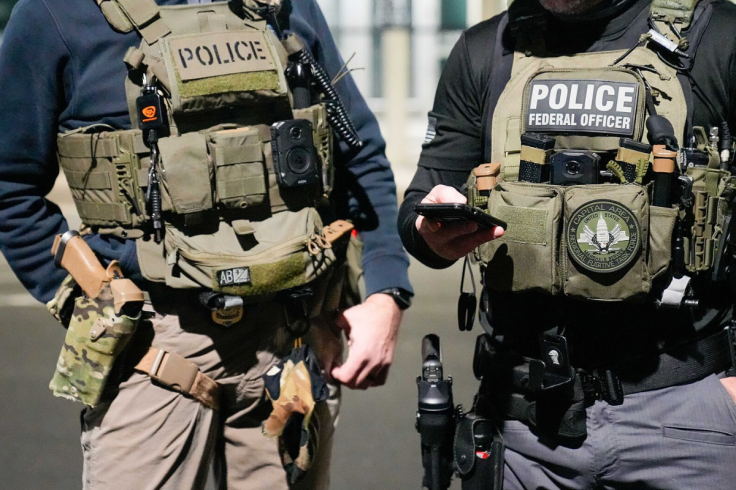
Newly unsealed federal court filings have revealed that U.S. Immigration and Customs Enforcement (ICE) agents allegedly documented, tracked, and intimidated citizens observing immigration arrests in Maine.
By uploading photographs, license plates, and personal profiles of legal observers into a specialized software database built by Silicon Valley contractor Palantir, called the Investigative Case Management (ICM) database, federal authorities converted routine First Amendment oversight into federal criminal dossiers.
The revelations, first detailed in court filings brought by civil rights group Protect Democracy, sparked immediate backlash online.
A widely shared post detailing the court filings garnered over 5.6k upvotes on Reddit, where a top comment with more than 1.4k upvotes captured the broader public outrage: 'ICE treats protesters as if they were criminals.'
Despite this, Palantir has not released any comment regarding the issue.
The Palantir Infrastructure Behind the Surveillance
ICM database of Palantir is a system built for Homeland Security Investigations (HSI) under an initial $96 million contract, which later expanded by $30 million to develop an 'ImmigrationOS' platform.
This software was designed to manage complex criminal investigations. It was repurposed by agents during the 'Operation Catch of the Day' in Maine to catalog community members watching enforcement activities from public sidewalks.
Anatomy of an Observation: How Agents Build Dossiers
Allegedly, the unsealed depositions revealed that the field agents used mobile facial recognition applications and LexisNexis databases to identify observers.
According to the lawsuit, one HSI agent, referred to as 'Agent J.C.,' created ICM records for at least six to eight observers.
In one case of two individuals in a Home Depot parking lot, J.C, filmed and labeled them "Threat to Law Enforcement, Professional Protestor" in the ICM system. Their photos were sent to a Customs and Border Protection officer for facial recognition scans via the Mobile Query app.
The surveillance escalated after observer, Polyxenia Pantos, photographed an ICE arrest in Portland, Maine, on January 20 while near her spouse's vehicle. Hours later, J.C. reportedly used the vehicle's licence plate to access Accurint, a LexisNexis law-enforcement database, obtaining personal details about Pantos' spouse, Carlyn Williams, including addresses, phone numbers, and information about cohabitants.
After sharing the photograph with colleagues and confirming Pantos' entry into the agency's records, J.C. called Williams directly, identified himself only as being from the United States Department of Homeland Security (DHS), and warned her to tell Pantos to stop observing arrests.
According to court filings, government attorneys said J.C. denied mentioning a watchlist, while J.C. acknowledged in a deposition that he warned Williams she could be arrested if she continued.
From Local Logs to Automated Border Looklists
Government documents show that Williams' newly created ICM profile falsely described her vehicle as being used to 'interrupt ICE arrests' and linked her driver's licence photo to an 'aggressive woman' involved in an enforcement action.
Under a 2016 DHS framework, ICM records can sync with CBP's TECS screening system, potentially turning local observation records into border 'lookout' alerts.
As a result, Williams was reportedly subjected to mandatory secondary screening when crossing international borders through at least January 2027. Her attorney, JoAnna Suriani of Protect Democracy, said the government was treating people exercising their First Amendment rights as criminal suspects.
DHS officials called the lawsuit 'meritless' and denied having a specific database for domestic terrorism. However, lawyers for the plaintiffs argue that Palantir's system effectively creates one by linking records of people who observe government activities to federal law enforcement databases.
The plaintiffs are asking a federal judge to order DHS to remove all observer records from the ICM system and stop agents from using federal surveillance tools against people who are not accused of crimes.
© Copyright IBTimes 2026. All rights reserved.