

US Central Command Launches 'Powerful Strikes' on Iran After Attacks on Civilian-Crewed Commercial Ships
Escalation in the Middle East as US Targets Iranian Assets Following Attacks on Shipping Vessels
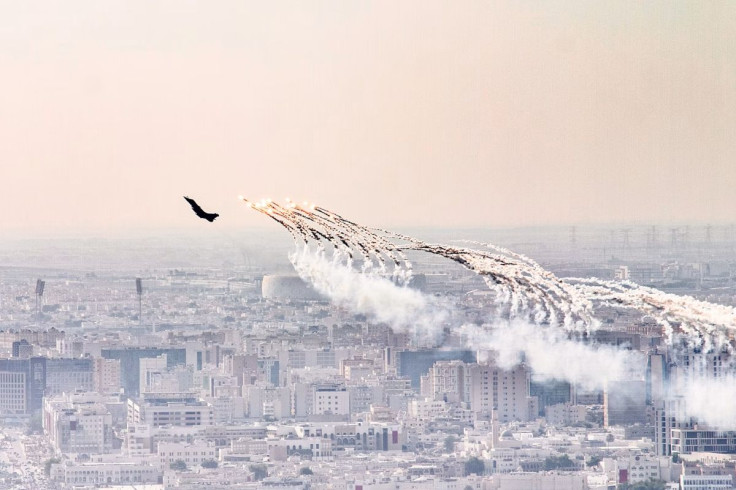
US Central Command says it has begun a series of 'powerful strikes' on Iran after accusing Tehran of attacking three civilian-crewed commercial ships in the Strait of Hormuz, one of the world's most sensitive maritime corridors.
Officials said the operation, launched late on Tuesday and announced shortly after 5 p.m., was intended to impose 'heavy costs' on Iran for targeting key shipping routes used by civilian crews.
Iranian state media reported several explosions in southern Iran, including near Sirik, Qeshm and Bandar Abbas, as Washington moved to protect commercial traffic through the narrow waterway between the Gulf of Oman and the Persian Gulf.
Strategic Calculations Behind New US Strikes On Iran
The timing of the announcement, issued just after 5 p.m. from the headquarters of US Central Command, indicates that Washington is no longer relying on verbal warnings. By ordering 'powerful strikes', American commanders are attempting to redraw the lines of engagement in the region.
BREAKING: The U.S. military says it has launched a series of 'powerful strikes' against Iran in response to attacks on three commercial vessels in the Strait of Hormuz.
— Sky News (@SkyNews) July 7, 2026
Iranian state media say multiple strikes have been heard in the south of the country.https://t.co/QrirKIa4TB pic.twitter.com/svku45JbAp
It is a familiar form of military deterrence that aims to force Tehran to recalculate the financial and physical costs of its maritime activity. The underlying logic is to hit back hard enough that the other side decides the disruptive actions are no longer worth pursuing.
The scale of the response raises questions about what the Pentagon hopes to achieve over the longer term. The strategic calculation now extends beyond the immediate use of force.
CENTCOM has framed the alleged Iranian attacks on the three ships in the Strait of Hormuz as 'dangerous' and a violation of the ceasefire, signalling that it sees the strikes as a response to a clear breach.
At the same time, Iranian media have reported projectiles hitting a commercial pier in Sirik, a fishing pier in the nearby village of Ziyarat and seven explosions at Sirik port, along with blasts east and west of Bandar Abbas, though independent verification of the damage remains limited.
Why Centcom Says It Struck To Protect Civilian Shipping
In presenting the operation, US Central Command placed particular emphasis on the civilian crews of the targeted vessels. The official statement noted that the ships were 'crewed by innocent civilians', a focus that serves a clear political and ethical purpose.
The result is that ordinary merchant sailors, individuals carrying out commercial work, have become central figures in this dispute. By framing the strikes as a direct defence of these civilian workers, the US military is seeking to underline a protective role.
This focus on civilian protection provides a stated justification, but it does not remove the dangers of using heavy military force against a major regional power. Tensions between Washington and Tehran have built for months, and each action risks prompting a further response.
Some regional experts may question whether an aggressive military response will secure the Strait of Hormuz or instead make it more likely to become an active conflict zone. Central Command has concluded that inaction was no longer a viable option and has chosen to test Iran's resolve through direct force.
As the impact of the Tuesday night operation is assessed, the international community is watching how Tehran responds. Iran's Foreign Ministry has warned that it will take any measure it deems necessary to protect the country's interests and national security. Whether this move encourages a return to negotiations or leads to further escalation in the conflict that began in February remains unclear.
© Copyright IBTimes 2026. All rights reserved.