Iranians Say Trump's War Is Punishing Civilians, Not Just The Regime
Ordinary families fear they will bear the lasting scars of a conflict they did not choose

For many Iranians, the ongoing war in the Middle East no longer feels like it is about politics or power. It has become something far more immediate, a daily struggle to get through the day and survive.
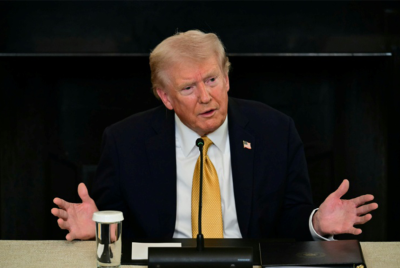
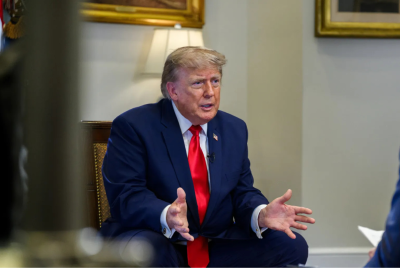
As US President Donald Trump pushes forward with military pressure, warning he could destroy major infrastructure if Tehran does not open the Strait of Hormuz, civilians say they are the ones carrying the burden and paying the price. Homes, jobs and basic services are caught in the fallout.
Even with a ceasefire on paper, the fear has not lifted. Many believe the worst damage has already started and will not be undone any time soon.
Civilians Fear Long-Term Damage
Across cities and towns, ordinary people speak of a growing sense of helplessness, describing a reality that is far more complicated than it first appeared. Damage to infrastructure and a tightening economy are beginning to reshape daily life.
According to The Washington Post, Iranian civilians fear that continued US actions targeting infrastructure could leave the country weakened for years. Power systems, transport links and essential services are all at risk, making any recovery uncertain.
Even though some Iranian civilians initially felt a sense of support at the start of the conflict, that feeling shifted as airstrikes began hitting industrial and economic infrastructure. A 27 year old teacher in Tehran said the reaction changed completely, describing the war as 'no longer just about the regime' as it now directly affects people's lives and the 'nation's economic future.'
Many say their concerns have moved away from political outcomes. What matters now is whether they can keep their families safe, as the destruction brought by the war creates what one described as a 'much deeper sense of insecurity.'
Some fear that even if the fighting stops, the economic damage could leave them struggling for a generation.
Dispute Over Ceasefire Deepens Mistrust
Iranian officials have raised new concerns about how fragile the ceasefire really is. Parliamentary speaker Mohammad Bagher Ghalibaf has accused Washington of breaching key parts of the agreement.
In a statement posted on X, Ghalibaf said Trump's administration has repeatedly violated 'all forms of commitment.' He added that these actions have made any 'bilateral ceasefire or negotiations unreasonable.'
— محمدباقر قالیباف | MB Ghalibaf (@mb_ghalibaf) April 8, 2026
The proposal, described as a 10 point plan, was meant to guide de escalation. It included limits on military action, protections for civilian infrastructure and steps towards economic relief.
Ghalibaf claims the US has already broken three of those points, including continued Israeli attacks on Lebanon, a drone entering Iran's airspace and the denial of Iran's right to enrich uranium. These alleged violations have cast doubt over the sincerity of negotiations, fuelling anger within Iran's leadership and deepening public scepticism about any lasting peace, CNBC reported.
For civilians, these disputes can feel distant, but the consequences and danger are not. Each accusation carries the risk that fighting could return without warning.
A Ceasefire Under Strain
The situation has become more complicated beyond Iran's borders. The wider Middle East is showing signs of strain that could easily unravel the fragile pause.
Israel's renewed military action in Lebanon has added pressure to an already tense region. At the same time, Iran has reportedly moved to block oil tankers, raising fears of wider economic disruption.
These developments threaten to bring the ceasefire framework to a collapse, The Guardian noted. Tensions across the region are feeding into the conflict, making it harder to contain.
According to the report, Iran and Pakistan both stressed that the ceasefire included Lebanon as part of the last minute truce. After Israeli strikes in Lebanon killed at least 254 people, UN rights chief Volker Turk condemned the assault as 'horrific,' saying it went against the purpose of the ceasefire as the attack happened within hours of the agreement to pause rising tensions.
US Vice President JD Vance, however, said Lebanon's inclusion in the ceasefire came from a 'legitimate misunderstanding.' He stressed that Washington 'never made that promise.'
As confusion continues, the wider instability is placing a heavier burden on civilians. Rising fuel costs, supply shortages and uncertainty are already part of everyday life.
Lives Caught Between Power Struggles
For many Iranians, the conflict feels deeply personal. It is not about strategy or diplomacy, but survival.
Families worry about access to food, electricity and medical care. Small business owners fear they may have to close as economic pressure builds. Young people talk about uncertain futures shaped by forces they cannot control.
There is also a growing sense of isolation. Some feel the world is focused on political narratives while overlooking the human impact on the ground.
Unanswered Questions Linger
The ceasefire was meant to bring hope, but for many, it has raised more questions than answers and solutions. Trust is fragile, and each new development chips away at it.
Civilians are left wondering whether leaders on either side fully understand the cost of continued conflict. There is a quiet fear of being forgotten in negotiations that focus on power rather than people.
For now, daily life continues under a cloud of uncertainty. For those living through it, the war is not a distant headline. It is a reality, and a trauma they carry with them every day.
© Copyright IBTimes 2026. All rights reserved.
- Recommended For You