Jared Kushner Accused of Being 'Deeply Compromised' Over Millions in Fees From Countries With Which He Negotiates
Reports say Donald Trump's son-in-law was raising money for Affinity Partners
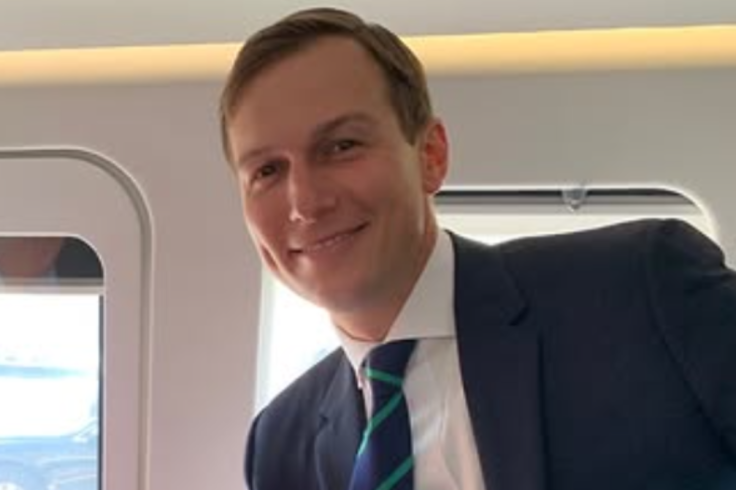
Jared Kushner's role as a US peace envoy has come under renewed scrutiny after reporting revealed that he was raising billions for his private investment firm while simultaneously taking part in sensitive negotiations with foreign governments.
Former CIA officer Julia Curley went further, saying Kushner would be considered 'deeply compromised' if reports that he was receiving substantial fees from countries he negotiated with were accurate.
Kushner's Diplomatic Role Draws New Scrutiny
Kushner, Donald Trump's son-in-law, has taken on a significant role in the administration's foreign-policy efforts, including negotiations involving Iran, Russia and Ukraine.
According to a report investigation by Dexter Filkins, Kushner and fellow envoy Steve Witkoff have approached international negotiations through a business-oriented lens.
During discussions surrounding Russia's war in Ukraine, Kushner reportedly described diplomacy in terms of finding a 'win-win' arrangement, framing the conflict through the language of potential economic benefits.
The report also described Kushner and Witkoff travelling to Moscow, where they reportedly met Vladimir Putin and used a Russian limousine rather than a US Embassy vehicle.
$5 Billion Fundraising Effort Raises Questions
One of the most striking revelations concerned Affinity Partners, the private-equity firm Kushner founded after leaving the first Trump administration.
Kushner was engaged in talks involving Iran, he was also discreetly raising another $5 billion (£3.71 billion) for Affinity in the Middle East. The report said the simultaneous activities prompted questions about whether the diplomatic and financial efforts could become entangled.
A person with deep ties to Middle Eastern leaders said that their impression was that Kushner was 'killing two birds with one stone', suggesting he was helping Arab governments counter Iran while also seeking financial benefit.
Former CIA Officer Calls Him 'Deeply Compromised'
Those concerns were sharply highlighted during a discussion involving former CIA officer Julia Curley.
Asked how she would describe a senior diplomatic figure who had billions of dollars invested by governments where he was negotiating on behalf of the United States, Curley said she would consider the person 'deeply compromised' if the reporting about fees were accurate.
'If the reporting is true that he's accepting hundreds of millions of dollars in fees from the same countries that he's negotiating with in his own government capacity,' Curley said, 'I can't think of another case where this has occurred in my 20 years of being a CIA officer.'
She added that, under circumstances she described, she would expect an intelligence officer to lose their security clearance and face investigation.
Curley also warned that foreign governments could potentially exploit financial incentives when dealing with American officials whose private interests overlap with their diplomatic responsibilities.
Affinity's Foreign Backers Add to the Tension
Affinity's rapid growth has intensified the questions. The New Yorker reported that the fund expanded to more than $6 billion (£4.45 billion) after new Middle Eastern investments helped it grow by about 30 per cent in 2025. The firm reportedly collects management fees on the capital it manages, generating tens of millions of dollars annually.
The firm has received substantial backing from Gulf states and has invested in businesses in Israel, including the Shlomo Group and Phoenix Financial. Congressional Democrats have also raised concerns about the overlap between Kushner's private investments and his government activities.
© Copyright IBTimes 2026. All rights reserved.
- Recommended For You