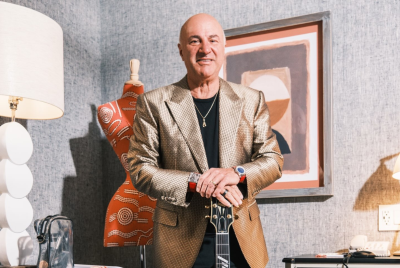
Kevin O'Leary Reveals 'F*** You Account' Strategy: Why He Says $5 Million Is Enough
Kevin O'Leary's strategy focuses on generating passive income first, so you can set aside earnings and risk only your capital
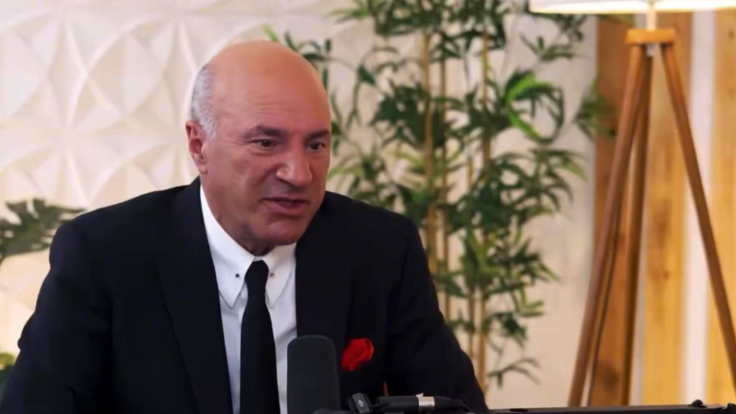
Shark Tank investor Kevin O'Leary has drawn a hard line on what it means to be truly wealthy. It has nothing to do with property, cars or business equity. The Canadian entrepreneur says the real threshold is $5 million (approximately £3.95 million) in liquid cash — a sum he calls his 'magic number' and one he keeps parked in US Treasury bills.
'You're not rich until you have $5 million liquid. Not in your house. Not in your car. Cash,' O'Leary wrote in an April 2026 post on X. 'Once you have that, you can take risks again.'
Kevin O'Leary says all you really need in the bank to be secure for the rest of your life is $5 Million.
— Percy (@percyishim) May 31, 2026
"The discipline is, get $5 Million and put it in Treasury Bills and don't touch it".
"I have T-bills, I roll a lot of T-bills and that's my f*ck you account and it always... pic.twitter.com/v7B6WPUw88
The strategy is a version of what personal finance circles call an 'F-you account' — a pool of money large enough that work becomes optional. O'Leary has pushed this argument across YouTube, X, Fox Business, and LinkedIn over the past three years, anchoring it each time to the same figure.
The Math Behind the 'Magic Number'
O'Leary's logic works backwards from passive income. At a 6 to 7 per cent annual return, $5 million generates between $300,000 and $350,000 (£237,000 to £277,000) a year before tax — well above the median US household income of $74,580 (£58,900).
'When you make that, you have to set that aside, and you don't risk it,' O'Leary said in a 2023 YouTube video. 'Then after that, you can start to take risk capital and put it to work.'
He told Fox Business' Varney & Co. in early 2026 that he keeps at least $5 million in T-bills — short-term US government debt that can be converted to cash almost immediately. At current yields near 4 to 5 per cent, that reserve generates roughly $250,000 (£198,000) a year pretax, as Fast Company noted.
'You have a family of four, and poo-poo hits the fan in your world, and everybody loses their job, you can sustain a family on 250 pretax,' he told the outlet. 'That's why it's the magic number.'
Why Liquidity Matters More Than Net Worth
'You're not rich if it's all tied up in real estate, you're not rich if it's in jewellery and in cars and in boats and all that stuff,' O'Leary told Fox Business.
Most entrepreneurs think success is about valuations, followers, or the next big idea. It's not.
— Kevin O'Leary aka Mr. Wonderful (@kevinolearytv) November 16, 2025
The real test is simple: Do you have $5 million liquid that you never touch? That's the discipline most founders never build. They double down on risky ideas, over-invest... pic.twitter.com/SKFA8hT16T
He has been especially blunt with entrepreneurs. In a November 2025 post on X, he wrote that the 'real test' of financial success is whether a founder has $5 million liquid 'that you never touch,' as Benzinga noted. 'Most founders never build' that cushion, he added, because they 'double down on risky ideas, over-invest emotionally, and then wonder why they're broke at 65.'
In a video attached to that post, O'Leary expanded on the temptation to raid the nest egg. 'You're always tempted to buy a watch with it or lend it out to somebody or help your cousin open a restaurant,' he said. The only exception is a catastrophic event such as a major health crisis.
Critics Call the Advice Out of Touch
The benchmark has drawn backlash. Federal Reserve data from the Survey of Consumer Finances shows the median US bank balance sat at roughly $8,000 (£6,300) as of 2022. 'He said that with a straight face,' one commenter wrote. 'How many of us know someone with 5 million in the bank?'
Financial experts say the underlying principle still holds. Even under the more conservative 4 per cent withdrawal rule favoured by retirement planners, $5 million generates $200,000 (£158,000) a year. FinlyWealth co-founder Abid Salahi told GOBankingRates that clients with a liquidity ratio of 20 to 30 per cent of total assets are better positioned to handle emergencies.
O'Leary, whose net worth is estimated at over $400 million (£316 million) according to Forbes, has framed the $5 million figure not as a finish line but as a foundation. 'I tell all my entrepreneurs, "That's your goal",' he told Fast Company.
© Copyright IBTimes 2026. All rights reserved.
- Recommended For You