Jeff Bezos Says AI Will 'Elevate' Workers — Despite Amazon's 30,000 Job Cuts Amid $100 Billion AI Push
Many believe AI will reduce jobs, while experts argue it will create new roles and boost productivity
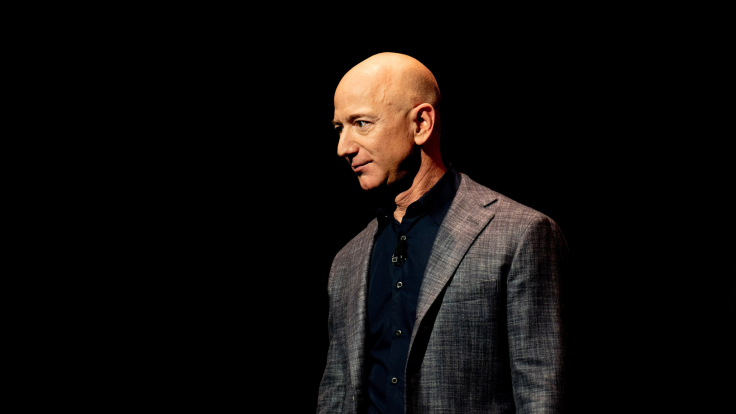
The arrival of artificial intelligence (AI) is widely regarded as a game changer for completing tasks more accurately and efficiently. As a result, many employees view AI as a threat—something that could potentially take over their jobs. However, Amazon founder Jeff Bezos disagrees, arguing that people are looking at AI entirely the wrong way.
'The reason they are afraid of that is because all these smart people keep saying that. These people are wrong,' Bezos said in an interview with CNBC. 'What's really going to happen is that it's going to elevate all these people,' he added.
Jeff Bezos says that AI will "elevate" people at work, not replace jobs. pic.twitter.com/sbtiSkvLXD
— CNBC (@CNBC) May 20, 2026
Given that Amazon employs more than 1.58 million people globally, this figure represents only a small fraction of its total workforce. However, the company has made it clear that further cuts may follow as AI becomes more deeply integrated into its operations.
One of these initiatives is Bezos's reported $100 billion fundraising push to acquire and modernize industrial manufacturing firms. The aim is to deploy advanced artificial intelligence developed by his startup, Project Prometheus, with the goal of heavily automating operations across industries such as aerospace, semiconductor manufacturing, and defence.
Should You Buy Into Bezos' AI Pitch?
In hindsight, Bezos' analogy about AI integration carries a degree of logic. There is little doubt that businesses are likely to perform better with the adoption of artificial intelligence. At the same time, it also serves as a warning sign for certain workers.
While AI can help employees improve their output, it also acts as a form of measurement. If a worker's efficiency does not increase with the assistance of AI tools, there is a possibility they could be replaced — either by another employee who performs better or by an automated system. Reactions following the CNBC interview appeared to reinforce this concern.
'AI will also evaluate every worker's performance against their peers as well as against AI,' X user @USAArmyPhoenix wrote. 'If you are not the most productive person or do not meet the standard threshold set by AI then you'll be replaced by either another human who can hit quota and quality benchmarks or an AI/robotic system.'
AI will also evaluate every workers performance against their peers as well as against AI.
— Mr. House (@USArmyPhoenix) May 20, 2026
If you are not the most productive person or meet the standard threshold set by AI then you’ll be replaced by either another human who can hit quota and quality benchmarks or an…
Others interpreted Bezos' comments as an attempt to ease public anxiety rather than a reflection of what lies ahead. While AI can lead to more efficient workflows, critics argue that this efficiency ultimately reduces the number of workers companies need to employ.
'If AI makes the jobs more efficient, then they don't have to hire as many people,' another X user, @nogeorgehere, suggested.
He’s being disingenuous here..
— Chris (@nogeorgehere) May 20, 2026
If AI makes the jobs more efficient, then they don’t have to hire as many people.
Why else would corporations waste time and money to.. not save time and money?
Make that make sense
Divided Opinions on AI Use
There is little dispute that opinions remain divided on AI's long-term impact on employment. A 2024 poll found that nearly two-thirds of US adults believe job opportunities will decline over the next 20 years.
AI experts, however, tend to view the issue differently. Many argue that artificial intelligence will create new roles while enhancing productivity — a view that aligns closely with the analogy Bezos offered in the same interview.
'The work is gonna be done at a higher level,' the former Amazon CEO said. 'It's gonna be done with a bulldozer instead of a shovel, and that's gonna be a good thing.'
Through his remarks, Bezos frames AI as a tool designed to help employees perform better at their jobs. The underlying reality, however, is more complex. Failure to adapt and improve alongside artificial intelligence could carry serious consequences — including being replaced by someone more efficient or, ultimately, by AI itself.
© Copyright IBTimes 2026. All rights reserved.
- Recommended For You