Mark Cuban Says AI Won't Replace Most People — It Will Change What Entry-Level Jobs Look Like
Billionaire investor argues AI could reshape the workforce while creating new layers of human decision-making

The debate around artificial intelligence and jobs is no longer theoretical. Across the technology industry, companies are cutting thousands of roles while investing heavily in AI systems. The trend has triggered fears that automation could permanently alter the future of white-collar work.
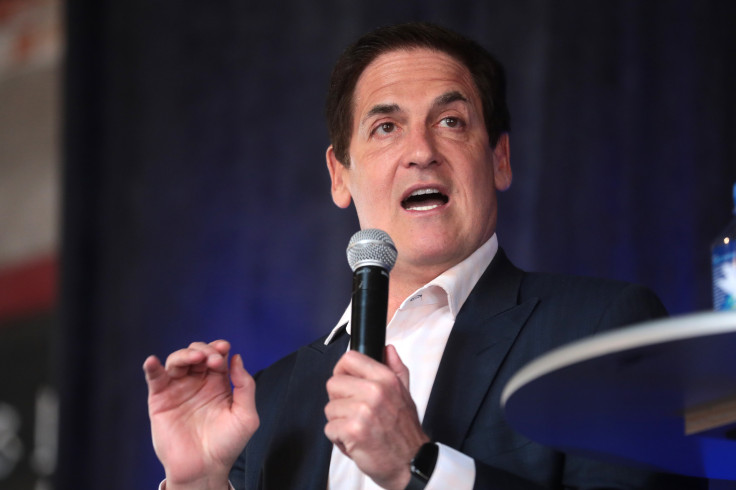
Yet billionaire entrepreneur Mark Cuban believes the outcome may be more complicated than many predictions suggest. In a recent post on X, the former Shark Tank investor dismissed some of the growing pessimism around AI replacing workers. Instead, he argued that artificial intelligence is more likely to change the structure of employment, especially for younger workers entering the job market.
I'm not a doomer an AI at all. I think the nature of work, particularly entry level jobs will change.
— Mark Cuban (@mcuban) May 20, 2026
Ai will make business more complicated and competitive. Not less. Which means more layers where humans have to make decisions before the next process can happen
And there...
'I'm not a doomer on AI at all,' Cuban wrote. 'I think the nature of work, particularly entry level jobs will change.' His comments come as technology firms continue to reduce headcount while accelerating AI development.
Tech Companies Continue Workforce Cuts
Meta, the parent company of Facebook, WhatsApp and Instagram, recently began notifying employees globally about fresh layoffs. Reports indicated that workers in Singapore received notification emails during the early hours of the morning. The company is not alone. Cisco announced plans to cut around 4,000 jobs, while Intuit said it would reduce roughly 3,000 positions.

The layoffs have intensified concerns that AI systems could eventually replace large numbers of office workers. Earlier this year, Dario Amodei, chief executive of Anthropic, told Axios that artificial intelligence could eliminate half of all entry-level white-collar jobs within five years. He warned that unemployment levels could rise sharply if automation expands too quickly. Such forecasts have added to uncertainty among graduates and younger professionals preparing to enter an increasingly automated workplace.
Cuban Says AI Will Increase Complexity
Cuban, however, believes AI may create new forms of work rather than simply removing human roles. According to him, artificial intelligence could make businesses more competitive and operationally complex. That complexity, he argued, will still require people to make decisions, supervise systems and manage outcomes.
'AI will make business more complicated and competitive. Not less,' Cuban wrote. 'Which means more layers where humans have to make decisions before the next process can happen.' His remarks challenge a growing narrative within parts of Silicon Valley that AI agents will rapidly replace human workers across industries.
Instead, Cuban suggested that businesses may discover that automation still depends heavily on human oversight, particularly when decisions involve risk, judgement or unpredictable outcomes.
Questions Remain Over the Cost of AI
Cuban has also questioned whether large-scale AI deployment makes financial sense for many businesses. Earlier this year, he responded to a discussion on the All-In podcast in which investors described the high operating costs associated with advanced AI agents. According to the podcast conversation, some AI systems were costing companies more than $300 per day, potentially exceeding $100,000 annually.
The figures prompted debate over whether replacing employees with AI tools is economically sustainable. Cuban argued that businesses have yet to fully solve what he described as the 'AI maths'. While AI may improve productivity in some areas, he suggested companies still need to determine whether the technology delivers enough value compared with human workers.
He also questioned whether AI systems can genuinely understand the consequences of their actions in the same way people can. 'Humans have a far greater capacity to know the outcomes of their actions,' Cuban wrote. 'Agents, and LLMs as well, never do.'
A Different Vision of the Future Workforce
Beyond the current debate over layoffs, Cuban outlined a broader vision for how AI could reshape employment in the future. He predicted that millions of people may eventually build personalised AI models trained on their own knowledge, experiences and working methods. Businesses, he suggested, could then pay for access to those specialised models.
'Maybe the new gig economy will be the models that represent our lives and the knowledge and experiences each one of us train those models on,' Cuban wrote. The idea reflects a more nuanced view of AI's impact on work. Rather than replacing people entirely, Cuban believes the technology could create new markets built around human expertise and personal knowledge.
For now, however, uncertainty continues to dominate the conversation. As companies invest billions into artificial intelligence, workers across industries are left asking the same question: whether AI will become a tool that supports human labour, or one that steadily reduces the need for it.
© Copyright IBTimes 2026. All rights reserved.
- Recommended For You