Did Meta Target Non-Chinese Workers in Mass Layoffs? Ex-Engineer Makes Explosive Discrimination Claims
Former Meta employee claims racial bias in layoffs as company shifts focus to AI
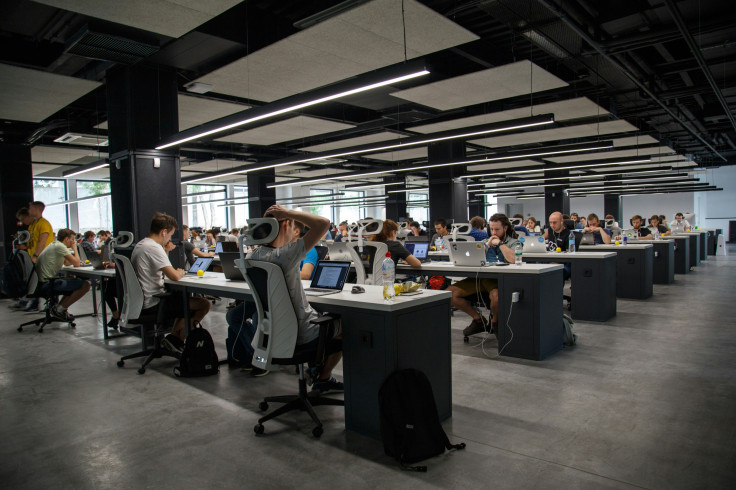
With Meta laying off thousands of workers, the initial justification was the company's shift towards a more artificial intelligence (AI)-centric environment. As a result, many employees were caught off guard as the company opted to transition to a new way of doing business.
While some have lashed out at the growing reliance on AI, others have advanced conspiracy theories. One of them, a Meta engineer identified as Jeremy Bernier, has claimed that the initial batch of laid-off employees involved elements of racial discrimination.
In a lengthy post, the disgruntled former employee detailed how he was part of a group that was composed mostly of Chinese workers. Based on his observations, Bernier claimed that the layoffs disproportionately affected non-Chinese employees.
Bernier explained that he had nothing against his Chinese colleagues or people of a different race in general. However, he said he could not ignore what he described as a disparity between the ethnicity of employees who were laid off and those who traced their roots to China.
'The result is that non-Chinese get excluded. The fact that 6 of the 7 layoffs I observed were not Chinese in a 80-90% Chinese dominated org is testament to this. The fact that 90% Chinese dominated orgs even exist in the first place is testament to this,' part of his lengthy post on X read.
At Meta, 90% of my coworkers were Chinese, and non-Chinese were routinely excluded, disadvantaged, and targeted for layoffs. 6 out of the 7 layoffs I observed targeted non-Chinese despite non-Chinese being the vast minority. Certain orgs like ads and MRS are notorious for being…
— Jeremy Bernier (@jeremybernier) May 23, 2026
As of this writing, Bernier's post has garnered more than 2.2 million views. Several people reacted to the thread, with some suggesting that learning the Chinese language could help, while others pointed out the importance of adapting to different working environments.
There were also those who criticised him for being racist. However, as Bernier pointed out in his post, he argued that this was not the case, noting that he was not generalising Chinese people and that he was friends with some of them.
Meta Layoffs Not About Race
In the same discussion, some users argued that race had nothing to do with the layoffs. One user, @keslaoto, noted that China has a very strong hierarchical system and that employees need to be proactive in adapting to it. Bernier agreed and admitted that he felt he could have done better, although he never expected it to be a factor.
China has a very strong hierarchy system I recognize that, and I’m Chinese myself. But you need to be more proactive about integrating into Chinese social circles. Their personalities are somewhat like a more introverted version of Americans, especially TECH Chinese people
— Charile (@keslaoto) May 24, 2026
'The hierarchy thing is true, and that took time for me to understand and adjust to. It was completely the opposite of what I expected, given that Meta is supposed to have a bottoms-up culture,' Bernier said to @kestaoto. 'I admit I could've done more too. I initially interpreted the exclusion as disrespect because in American culture it's disrespectful, but later realised that the cultural differences are vast and they probably never integrated or adopted American culture,' he added.
Yes the hierarchy thing is true, and that took time for me to understand and adjust to. It was complete opposite of what I expected given that Meta is supposed to have a bottoms-up culture.
— Jeremy Bernier (@jeremybernier) May 24, 2026
Yea true, I admit I could've done more too. I initially interpreted the exclusion as…
Whining Won't Help
It is understandable why Bernier would release a lengthy account to share his feelings about being laid off. Claiming that ethnicity played a role in Meta's layoffs is a point that has drawn attention.
Lina Hua said she understood where Bernier was coming from but argued that others also lose their jobs without resorting to similar public complaints.
'Yes, your experience wasn't great. But guess what? Other people their own problems, but they don't write a novel about it and spam other people with their whining,' Hua posted on X.
Yes, Meta work culture is most likely toxic.
— LinaHua (@Linahuaa) May 24, 2026
Foreign workers are being held hostage due to the layoff-threats + visa issues wombo combo.
They're working their asses off at 200% through burnout and health issues to not getting kicked out of the country.
Now imagine you're in… pic.twitter.com/ZpjO0k2OFA
Mark Zuckerberg, in a memo issued on 20 May, said: 'We're transforming our company to make sure it will always be the best place for talented people to have the greatest impact.'
More workers are expected to follow the same path as Bernier and other recently laid-off employees. For those who remain, some have been reallocated to AI-focused departments. Depending on their performance, they too could face redundancy if they are unable to adapt.
© Copyright IBTimes 2026. All rights reserved.
- Recommended For You