

Kylian Mbappé Gets a Red Card From China Over 'Dictator' Joke, but Is the Video Even Real?
Dongpeng Beverage and Mengniu were reported to have ended partnerships with the Real Madrid forward, but the footage's authenticity and context remain unclear
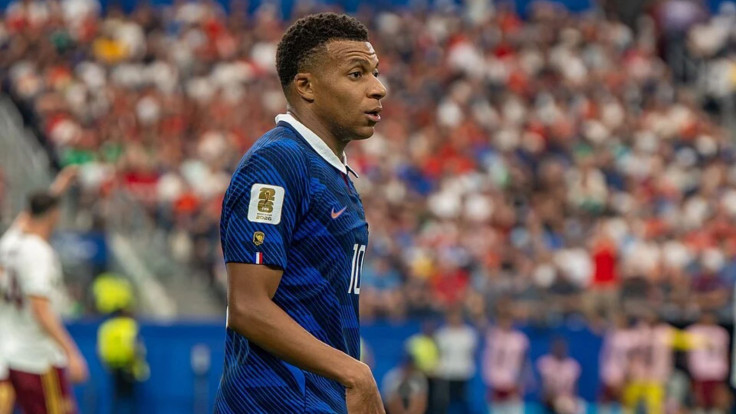
Kylian Mbappé is facing a sponsorship controversy in China after a viral video appeared to show him joking about a 'Chinese dictator', prompting backlash over an apparent reference to Mao Zedong.
Two Chinese brands, Dongpeng Beverage and Mengniu, were reported to have ended their partnerships with the Real Madrid forward on Tuesday, 27 October 2026. However, questions remain over the authenticity of the circulating footage, which has not been independently verified.
Chinese Sponsors React to Viral Remarks
The controversy erupted on 26 October when a short interview clip began circulating across social media platforms.
In the footage, Mbappé appears to discuss an internet meme featuring his face superimposed onto an image associated with a Chinese historical figure. The footballer allegedly describes the meme as involving a 'Chinese dictator' and discusses sharing it with friends during online gaming sessions.
Although the reported remarks do not explicitly identify Mao Zedong, viewers connected the description to China's former leader. The clip subsequently attracted criticism from Chinese social media users who considered the apparent reference disrespectful.
Dongpeng Beverage and Mengniu were reported to have responded by terminating their commercial relationships with Mbappé.
The reported decisions placed the French international's endorsement arrangements under scrutiny, although the financial value of the affected agreements remains unclear.
Is the Controversial Video Authentic?
Despite the reaction, the original recording has not been conclusively authenticated.
10月26日,法国球星姆巴佩在一段采访中被问到"用他头像、最让他发笑的meme"时,他表示:“最让我发笑的那个,就是那个把我的脸放到中国独裁者(毛泽东)脸上的表情包,我在线上和朋友玩 PlayStation时经常使用这个meme。” 🤣 pic.twitter.com/EodYS51YFb
— moshanghuakai (@moshanghua0513) October 26, 2026
The widely circulated footage raises questions about its source, whether the comments were presented in their original context, and whether any editing affected the exchange. There is currently insufficient independently verified material to establish those details.
That does not necessarily mean the video is fabricated. However, its circulation alone cannot confirm that Mbappé made the remarks exactly as presented. The distinction is particularly important when an athlete's reputation and commercial partnerships are involved.
A short clip can spread internationally within hours, while establishing its provenance may require access to the complete interview and original recording. The available evidence does not conclusively establish the remarks' authenticity.
Mbappé's Previous Comments Draw Renewed Attention
The controversy has also renewed interest in Mbappé's reported earlier criticism of internet memes comparing him to historical dictators.
In September, the French striker reportedly expressed discomfort with such comparisons, arguing that jokes involving figures associated with widespread suffering could trivialise serious historical events.
His earlier position has drawn renewed attention amid the controversy, although the authenticity of the latest remarks remains unresolved. The available evidence does not establish that Mbappé has reversed his position or deliberately mocked China's history.
When Internet Humour Meets Global Sponsorships
The dispute illustrates how a seemingly casual online joke can become an international commercial controversy. Footballers with global endorsement agreements operate across markets where historical references carry different political and cultural sensitivities.
For critics in China, the alleged remark concerns respect for a prominent historical figure. The available information does not establish whether Mbappé personally intended to insult Mao or whether the clip accurately represents his comments.
Until the original footage is verified, the question of whether the footballer actually made the remarks remains unanswered.
© Copyright IBTimes 2026. All rights reserved.