Meet the 20-Year-Old Dog Walker Making £15K a Month as Gen Z Turns to Self-Employment
As AI shakes the jobs market, Gen Z is ditching university and corporate stress to build six-figure empires on their own terms

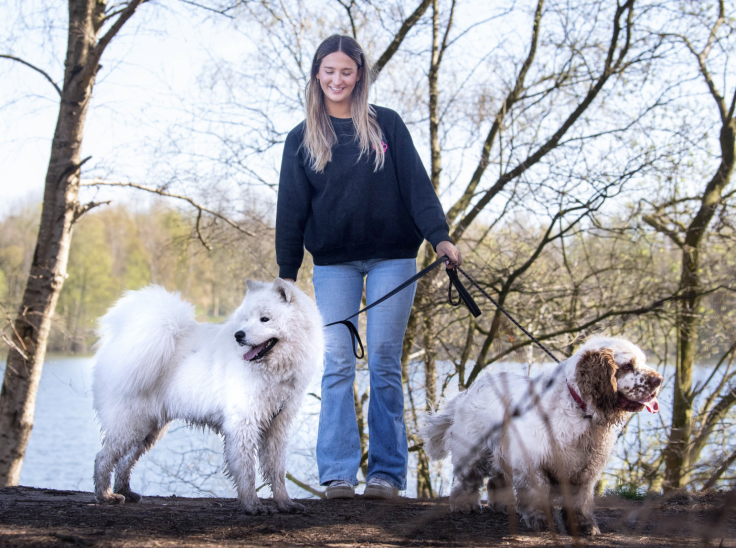
A 20-year-old entrepreneur who abandoned traditional schooling due to anxiety is now generating more than £15,000 a month after turning her teenage dog-walking hobby into a six-figure business.
Maddie Hale, founder of northwestern England-based Mads for Dogs, is part of a growing wave of Gen Z and Gen Alpha workers rejecting the corporate ladder in favour of the 'autonomy' of the gig economy.
As the threat of artificial intelligence-driven layoffs looms over the traditional jobs market, a global survey of 12,000 participants by Fiverr reveals that 50% of Gen Z and Gen Alpha believe traditional employment could soon become obsolete—triggering a massive surge in youth-led startups.
Megacap tech companies, including Mag 7 firms, have downsized their workforce by thousands of employees, and continue to do so amid the accelerating adoption of AI for automation, accuracy, efficiency, and cost savings.
The study showed that 38% of the respondents are already freelancing or plan to. Many young people are also setting up their own businesses, as unemployment reached 4.4% in February and the US economy shed 92,000 jobs.
'For them, entrepreneurship feels like taking control of their own risk — which, frankly, is a healthy instinct,' said certified financial planner Joshua Brooks. However, he added that the purpose of establishing a business must be clear from the start.
'The concerning part is when someone launches a business purely out of desperation without any financial foundation. That's not entrepreneurship — that's a financial emergency wearing a business-plan costume,' he explained.
From Panic Attacks To A Six-Figure Franchise
For Maddie Hale, school was a major source of anxiety. She experienced panic attacks that made traditional classrooms difficult for her to manage. Hale ultimately stopped attending class and began dog-walking at 16 to cope with the stress. Little did she know that walking dogs after studying at home all day as a teenager would turn into a six-figure business by age 19. 'I sort of moulded my job around myself,' she said.
In 2023, Hale purchased a van for the business called Mads for Dogs, which was the 'switch,' she says. 'That was like, "Oh my God — this is a real business,"' she added.
Her company now generates £15,000 or more than $20,000 every month. While all of Hale's friends are studying at universities, she decided to work for herself to gain freedom and improve her mental health. Hale believes the venture has given her a 'second boost in life.'
With no prior experience running a business, Hale faced burnout after rapidly scaling the company and had to work hard to build trust with clients, which paid off as word of mouth spread.
At present, her team of five employees serves over 200 dogs every month across a 5-kilometre stretch of northwestern England. She hired the first employee at age 17. As her business continued to grow, she turned it into a franchise, developed a custom app for the company, and started building systems that most dog-walking companies do not have.
She faced criticism for her business from classmates as well. 'A girl laughed at my business. Two years later, her mum applied to work for me,' Hale said in a LinkedIn post.
Entrepreneurship is Gen Z's Response to AI Job Disruption
Young people are opting for self-employment to address rising layoffs amid volatile markets, global geopolitics, and the higher risk of inflation.
The new trend of working for yourself rather than for a corporation could be Gen Z's response to growing job uncertainty, fueled by AI disruption and stress in competitive work environments. While this new direction for many young people is commendable, Brooks believes they still need guidance, a long-term strategy, and a robust financial foundation to take their businesses forward.
Brooks believes that young people planning to set up businesses should have personal savings as a backup. It is advisable to have up to 6 months of living expenses in an emergency fund before committing to a business full-time. 'I'd say that's the floor, not the ceiling,' Brooks concluded.
For Maddie Hale, that foundation was built through rapid scaling and hard-won client trust, proving that for some, the greatest risk is staying in the classroom.
© Copyright IBTimes 2026. All rights reserved.
- MOST POPULAR IN Business