

Met Office Snow Warning Cut to 18 Areas as Up to 15cm Threatens Travel Amid Freezing Temperatures
The yellow alert covers higher ground, where snow, ice and strong winds could disrupt travel from midnight until 11am on Tuesday
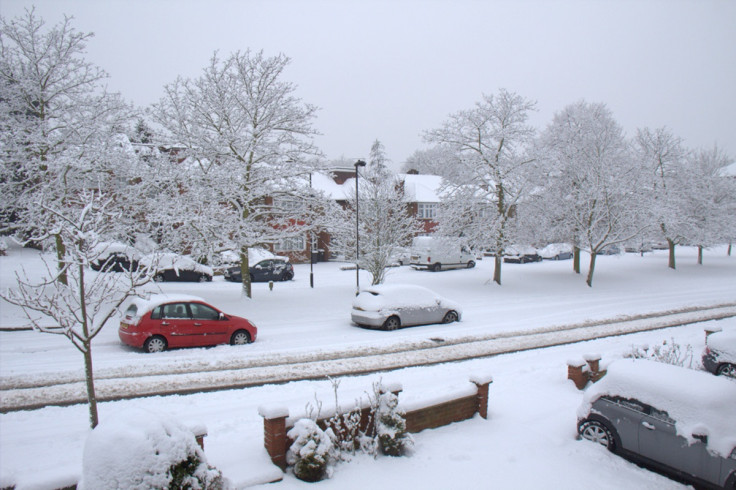
The Met Office has cut its snow warning from 23 to 18 local authority areas, with up to 15cm forecast on higher ground and possible travel disruption early on Tuesday. The revised yellow warning for Tuesday, 17 November, covers parts of England and Scotland from midnight until 11am.
The forecaster narrowed the warning at 9.24am on Monday, 16 November, trimming its southern and eastern boundaries and bringing the expiry time forward.
Earlier forecasts also suggested temperatures could fall to −4°C in parts of Scotland and Northern Ireland. Those figures were predictions, not confirmed readings.
Which 18 Areas Remain Under the Revised Snow Warning
According to the Met Office's updated warning, a band of rain moving northwards overnight is expected to turn briefly to snow as it encounters colder air. The greatest risk is on higher ground, rather than across every community within the warning area.
Snow is likely mainly at elevations of 100–200 metres or above. Accumulations of 1–5cm are possible where snow settles, rising to 5–15cm in some locations above 300–400 metres. The forecast therefore points to the heaviest accumulations at higher elevations, while lower-lying areas may see little or no snow settle.
In England, the warning covers Derbyshire, Staffordshire, Durham and Northumberland. It also includes Blackburn with Darwen, Cheshire East, Cumbria, Greater Manchester, Lancashire, North Yorkshire, South Yorkshire and West Yorkshire.
In Scotland, the affected areas are East Ayrshire, South Ayrshire, South Lanarkshire, Dumfries and Galloway, Midlothian and the Scottish Borders.
Nottinghamshire, Darlington, Gateshead, Newcastle upon Tyne and Stoke-on-Trent were the five areas removed from the original warning. Snow falling at lower levels is expected to melt quickly, with precipitation gradually turning back to rain from the south on Tuesday morning.
Snow and Strong Winds Could Disrupt Upland Routes
'Snow may cause travel disruption over higher ground early Tuesday,' the Met Office warned.
Drivers and public transport passengers could face delays, particularly on exposed routes. Strong easterly winds may cause localised drifting, while ice accumulating on infrastructure, including power lines, presents another concern. A small chance of power cuts or disruption to mobile telephone services has also been flagged.
⚠️ Yellow weather warning updated ⚠️
— Met Office (@metoffice) November 16, 2026
Snow across parts of northern England and southern Scotland
Tuesday 0000 – 1100
Latest info 👉 https://t.co/TfU9Ok8qZD
Stay #WeatherAware⚠️ pic.twitter.com/S2YzuGChVw
Met Office meteorologist Aidan McGivern warned in an earlier forecast that gusts could reach 50–60mph in some areas. He said the combination of strong winds and accumulating snow could produce blizzard conditions on exposed upland routes.
The warning does not mean every affected area will receive heavy snowfall. Much of the precipitation at lower elevations is expected to fall as rain, and any snow that does settle there is expected to melt quickly. Conditions may nevertheless make journeys difficult, particularly where snow accumulates or winds cause drifting.
Separately, earlier forecasts had suggested temperatures might fall to −4°C in Cumnock, Scotland, and Omagh, Northern Ireland, on Monday morning. These were forecast lows, not confirmed readings, and are separate from the snow-warning area.
Cold Health Alerts Across Northern England
The UK Health Security Agency has issued yellow cold-health alerts for north-east England, north-west England and Yorkshire and the Humber. They run from 9pm on Sunday, 15 November, until 9am on Thursday, 19 November.
The agency said lower temperatures could increase demand for healthcare among vulnerable people, particularly those aged 65 and over and people with existing medical conditions. People sleeping rough and those with respiratory or cardiovascular conditions may also be particularly affected.
Paul Coleman, a UKHSA consultant in public health, urged people to check on vulnerable relatives, friends and neighbours. The Met Office also advised travellers to monitor updated warnings, check road conditions and allow extra time for journeys.
© Copyright IBTimes 2026. All rights reserved.