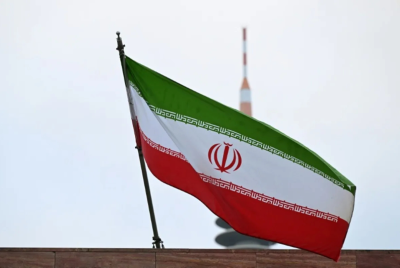
Iran Vows to Fully Seal the Strait of Hormuz as US Talks Collapse and Oil Surges 7%
Iran's decision to suspend negotiations with the US and potential closure of the Strait of Hormuz sends oil markets into turmoil

Iran has suspended all indirect negotiations with the United States and threatened to fully seal the Strait of Hormuz, according to a report by the Islamic Revolutionary Guard Corps-affiliated outlet Tasnim on Monday. The announcement sent global oil markets into a tailspin, with crude prices jumping more than 7% within hours.
Tasnim — an outlet affiliated with Iran's Islamic Revolutionary Guard Corps — reported that Iran had suspended all exchanges with the US via mediators, with the decision made over what the agency described as 'continuing crimes' of Israel in Lebanon. The decision has not been independently confirmed by Washington. The outlet cited a statement saying: 'Considering that Lebanon was one of the preconditions for the ceasefire and that this ceasefire has now been violated on all fronts, including Lebanon, the Iranian negotiating team is suspending dialogues and exchange of texts through mediators.'
For immediate attention:
— Seyed Abbas Araghchi (@araghchi) June 1, 2026
The ceasefire between Iran and the US is unequivocally a ceasefire on all fronts, including in Lebanon.
Its violation on one front is a violation of the ceasefire on all fronts.
The US and Israel are responsible for the consequences of any violation.
Full Hormuz Closure on the Table
The report, which was translated from a post on the messaging app Telegram, homed in on Israel's military operations in Lebanon against the Iran-backed militia Hezbollah. 'No dialogue will take place' until Israel fully withdraws from occupied areas in Lebanon and stops all attacks in both Lebanon and Gaza, per the IRGC-affiliated outlet.
In a separate post on X, Tasnim stated: 'Iran and the Axis of Resistance have resolved to pursue the complete closure of the Strait of Hormuz and activate other fronts, including the Bab al-Mandab Strait, as part of efforts to punish Israel and its supporters.'
Brent Crude Nears $100 as Hormuz Fears Grip Markets
Oil prices surged sharply on Monday after the Tasnim report. West Texas Intermediate futures rose as much as 8.5% to nearly $95 per barrel, while international benchmark Brent crude futures climbed as much as 7.3% to above $97 per barrel.
Concerns that elevated energy costs may boost inflation spurred losses in Treasuries, with 10-year yields hitting 4.5%. HSBC strategists noted in a Monday morning memo that 'the (largely) closed Strait of Hormuz remains the focus for commodity market observers,' adding that commodity markets had 'absorbed the shock better than some of the worst-case scenarios, reflecting high inventories before the conflict and rapid shifts to redirect commodity trade.'
Goldman Sachs said risks to its fourth-quarter 2026 Brent and WTI forecasts of $90 and $83 per barrel remain 'two-sided,' warning that while persistent Middle East supply disruptions could push prices higher, weakening demand could create meaningful downside risks.
Trump Pushes Back
The breakdown in diplomacy drew a swift, if contradictory, response from Washington. President Trump said he had not heard from Iran on reports that they were suspending talks with the US, but that 'going silent would be very good.' 'I think we've been talking too much if you want to know the truth,' he told NBC News.
Hours later, Trump appeared to walk back the severity of the situation. 'Talks are continuing, at a rapid pace, with the Islamic Republic of Iran,' Trump said on Truth Social. Trump and the administration have previously said they commonly receive conflicting messages from Iran publicly and privately.
BREAKING: Iran says it has now decided to execute the full blockade of the Bab el-Mandeb Strait as the next operational step following the announcement of ending all negotiations and communication with the US, per Tasnim.
— The Hormuz Letter (@HormuzLetter) June 1, 2026
Oil is surging over 8%, now at $94.
The abrupt halt to the negotiations comes after weeks of talks and intermittent fighting between Iranian and American forces. US Central Command said it had struck radar and command-and-control sites for drones in Goruk and on Qeshm Island, two Iranian locations along the commercially critical Strait of Hormuz. The strikes were carried out in response to 'aggressive Iranian actions,' including the shootdown of an MQ-1 Predator drone operating over international waters.
The renewed threat to the Strait of Hormuz comes at a particularly fragile moment in the four-month-old conflict. RBC analyst Helima Croft argued that 'time is running out to reopen the strait and stave off a hard landing,' warning that oil market optimism over a potential US-Iran deal may be dangerously misplaced. With Brent crude now inching toward $100 a barrel and diplomatic channels thrown into fresh uncertainty, the stakes for global energy markets have rarely been higher.
© Copyright IBTimes 2026. All rights reserved.
- Recommended For You