Iran's UN Defiance Keeps the Strait of Hormuz Question Open, and US Pump Prices Elevated This Fall
US drivers already face $4.47 a gallon as the waterway standoff shows no sign of easing
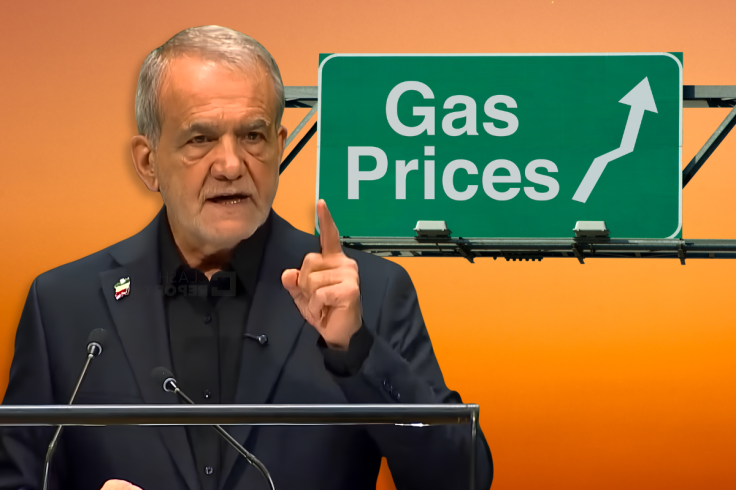
Iran's president used the world's biggest diplomatic stage on Wednesday to refuse an unconditional reopening of the Strait of Hormuz, and the standoff over that single waterway is now landing squarely on what American drivers pay at the pump.
Masoud Pezeshkian told the United Nations General Assembly in New York that Iran would not surrender control of the strait, holding up photographs of children he said were killed by US and Israeli bombs. As he spoke, the US official present stood and left the hall, mirroring Iran's own walkout during President Donald Trump's address a day earlier.
'We cannot let some have free access and bolster their interests from the waterway, while at the same time using that waterway to impose their aggression upon us,' Pezeshkian said, rejecting pressure to lift Tehran's grip on the passage.
The Waterway Behind Your Pump Price
Roughly a fifth of the world's oil once moved through the Strait of Hormuz, the narrow channel between Iran and Oman that links Gulf producers to global markets. Shipping through it has been sharply reduced since late February, when US and Israeli strikes on Iran triggered a naval standoff that still has not been resolved.
That matters in the US because crude oil is a global commodity. When Gulf barrels cannot reach buyers, prices climb everywhere, and American refiners pay more for the oil they turn into fuel.
What Drivers Are Already Paying
The national average for regular unleaded reached $4.47 a gallon (£0.89/litre) on 23 September, up from $2.81 (£0.56/litre) in early January, according to AAA. That puts pump prices within touching distance of this year's record of $4.56 (£0.91/litre) set on 21 May.
AAA links the climb directly to the waterway, noting that crude oil is averaging around $100 a barrel (£74) as volatility in the strait drags on. The International Energy Agency said August oil flows through Hormuz were still well below pre-war levels.
Why This Fall Offers Little Relief
Pezeshkian's refusal to accept unconstrained transit signals that the chokepoint is unlikely to clear soon. A June understanding between Washington and Tehran collapsed, and Trump told the same UN podium a day earlier that he was weighing whether to 'annihilate' Iran after nearly seven months of conflict.
Both leaders say they are open to talks, yet no deal has materialised. Trump has suggested any agreement is likely only after the 3 November midterm elections, which would push relief past the heart of autumn. Until one comes, analysts expect the supply squeeze that has propped up prices through the summer to carry into the autumn.
The Cost Beyond the Pump
The pain does not stop at the fuel tank. AAA says diesel has hit a record high this week, and that feeds into the cost of almost everything moved by truck, from groceries to store shelves.
Gene Seroka, executive director of the Port of Los Angeles, said two-thirds of the half-million containers that passed through the port last month left on diesel trucks. Higher fuel costs, he warned, 'simply mean higher prices for American families.'
For now, one waterway half a world away still drives up what Americans pay every time they fill up.
© Copyright IBTimes 2026. All rights reserved.
- Recommended For You