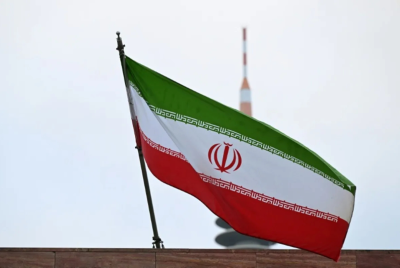
Donald Trump Claims 150 Iranian Ships are 'Underwater' as World Braces for 10 AM Strait of Hormuz Blockade
President declares 150 Iranian ships destroyed, while global oil markets brace for the impact of a total maritime shutdown in the world's most vital energy corridor

Donald Trump has triggered a global energy crisis by ordering a complete US blockade of the Strait of Hormuz, claiming the Iranian Navy has already been decimated.
Speaking from Joint Base Andrews in Maryland this morning, the President asserted that 150 Iranian vessels are now 'underwater' just as the 10AM EDT Hormuz deadline went into effect. The move follows a total breakdown in diplomatic relations and marks the most aggressive shift in the US-Iran ceasefire 2026 since hostilities began.
Trump told reporters that the Iranian military is effectively 'destroyed,' suggesting that the Islamic Republic is now too weak to resist the maritime squeeze.
While the President's tone was one of total victory, the Donald Trump Iran blockade has sent shockwaves through the City of London and Wall Street. The Strait of Hormuz is responsible for the transit of roughly 21 per cent of the world's daily oil consumption. Any sustained disruption to maritime traffic in the Strait of Hormuz threatens to send global inflation spiralling and disrupt the fragile post-war economic recovery.
Around a fifth of global oil supplies passes through the narrow Strait each day, a fact that rarely needs repeating in energy markets but suddenly matters again to people watching fuel prices at home.

Trump Boasts Of 'Underwater' Fleet As Blockade Looms
Trump was asked how the ceasefire with Iran was holding. He responded with a sweeping assessment that sounded more like triumph than caution.
'I would say it's holding well. Their military is destroyed, their whole navy is underwater. One hundred fifty ships are gone, their navy is gone,' he told reporters.
There has been no independent verification of Trump's claim that 150 Iranian naval vessels are 'underwater,' and neither the Pentagon nor CENTCOM has publicly provided matching figures. Without corroborating evidence, those numbers should be treated with considerable caution.
Still, the president doubled down on his characterisation of Iran as cornered and weakened. 'I think Iran is in very bad shape. I think they're pretty desperate,' Trump said, adding that US officials had held a 21–hour meeting on the crisis and now 'understand the situation better than anybody.'
Asked whether he wanted Tehran to return to talks, he sounded almost indifferent. 'I don't care if they come back or not. If they don't come back, I'm fine.'
Behind the bravado sits a hard lever of pressure. Trump insisted the blockade would be 'very effective,' predicting that Iran would not be able to sell oil once the clampdown is fully enforced.
Global Stakes As Trump's Strait Of Hormuz Plan Takes Shape
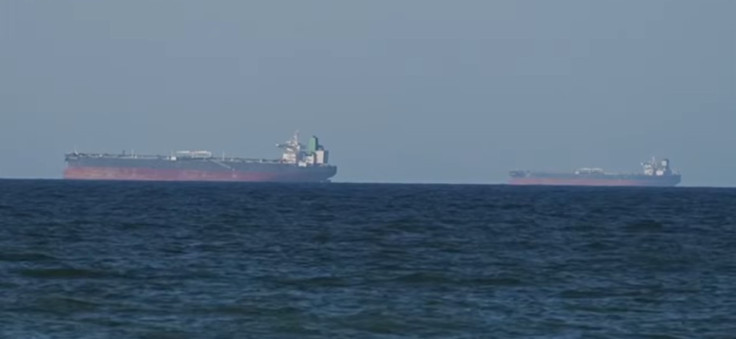
CENTCOM announced that from Monday's deadline, US forces would move to stop 'all maritime traffic entering and exiting Iranian ports,' promising the order would be applied 'impartially' to ships from every country, regardless of where they are flagged.
In the same statement, CENTCOM stressed that its forces 'will not impede freedom of navigation for vessels transiting the Strait of Hormuz to and from non-Iranian ports,' an attempt to reassure nervous exporters and importers that commercial flows not linked to Iran should continue.
Trump has also been busy lining up allies, though not all are willing to be seen as partners in an outright blockade. In an interview with Fox News, he said the UK and 'a couple of other countries' were sending minesweepers to help secure the waterway. According to Sky News, however, London is not joining the blockade itself.
A UK government spokesperson backed the principle of open seas but kept a clear distance from Trump's harsher tactics. 'We continue to support freedom of navigation and the opening of the Strait of Hormuz, which is urgently needed to support the global economy and the cost of living back home,' the spokesperson said.
'The Strait of Hormuz must not be subject to tolling. We are urgently working with France and other partners to put together a wide coalition to protect freedom of navigation.'
Western nations are preparing for a separate meeting on how to keep the Strait clear, Bloomberg reported, underscoring that, however bullish Trump might sound, his moves align with broader, more cautious conversations among allies.
On the other side of the Gulf, Iran's Islamic Revolutionary Guard Corps Navy issued a blunt warning on Sunday. Any military vessels moving towards the Strait under Trump's plan would be treated as violating the ceasefire and would face a 'strong and forceful response,' the force said.
Mohsen Rezaee, a senior adviser to the Supreme Leader and former commander-in-chief of the IRGC, publicly argued that the blockade would fail. 'America, just as it suffered a historic defeat against Iran in failing to open the Strait of Hormuz, is also doomed to failure in its maritime blockade,' he wrote on X. He insisted Iran's armed forces had 'major untapped levers' to counter US moves and dismissed the strategy as 'tweets and fanciful schemes.'
Shahram Irani, the regime's navy commander, went further, labelling Trump's blockade threat 'ridiculous and laughable' in comments carried by state media. Branding Washington the 'aggressor,' he claimed the US had already suffered a 'humiliating defeat' at Tehran's hands.
Alongside the economic squeeze, Trump and his advisers are also weighing whether to resume limited military strikes after the Wall Street Journal reported that the talks had failed. A broader bombing campaign remains on the table, the paper reported, but unnamed officials suggested it was less likely for now.
How much of Trump's talk about a destroyed Iranian navy reflects battlefield reality, and how much is deliberate psychological pressure, is still unclear. With the blockade order in force and oil markets on edge, the coming days will test whether his gamble forces Tehran back to the table or drags the region towards a confrontation no one is quite ready to own.
© Copyright IBTimes 2026. All rights reserved.
- Recommended For You