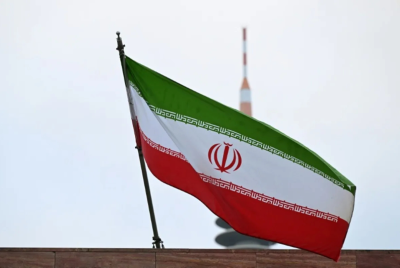
'Your Civilization Will Die': Trump Threatens Iran and Demands US Tolls on Waterway Moving 20% of Global Oil
Trump floats American tolls on the Strait of Hormuz as tensions with Iran stay high.

Donald Trump has taken the fight over the Strait of Hormuz into stranger territory still, floating the idea of American tolls on the vital shipping lane in a Truth Social post on Friday, 20 June 2026, as the fragile US-Iran ceasefire entered its 60-day window.
The president said there would be no tolls during the ceasefire period or after it, unless the United States itself imposed them, a line that put Washington, not Tehran, at the centre of the dispute.

The news came after Trump had already used apocalyptic language to pressure Iran, warning in April that a 'whole civilization will die tonight' if Tehran did not move on his terms. In the latest post, he recast the American role in the region as something like a billable service, saying any future charges would be compensation for the United States acting as a 'Guardian Angel' to Middle Eastern countries.
It was classic Trump in one sense, blunt, theatrical and impossible to ignore, but the idea of turning a chokepoint into a fee machine is still a mad little twist.
Strait of Hormuz Becomes Trump's Latest Bargaining Chip
The post matters because the Strait of Hormuz is not a symbolic stretch of water. It is one of the world's most important energy arteries, and the US Energy Information Administration said oil flows through it averaged 20 million barrels a day in 2024, about 20 per cent of global petroleum liquids consumption.

The same route also handles a significant share of liquefied natural gas trade. When leaders start talking casually about tolls, they are not just being colourful for the timeline, they are poking at a system the global economy still depends on.
Trump's latest message also left room for an odd kind of symmetry with Tehran. Reuters reported that Iran has said it will not collect tolls for 60 days, while the semiofficial outlet Tasnim said it plans to begin charging 'for services' once that window closes.
So both sides are effectively talking about the same lane, the same ships and the same money, only with different flags attached. That is the sort of detail that would sound like parody if it were not sitting inside a live geopolitical crisis.
Pressure Meets Real-World Shipping Risk
The practical stakes are also why the rhetoric lands with such force. Reuters reported on 15 June that a ceasefire agreement between the US and Iran would extend the earlier truce by another 60 days and reopen the Strait of Hormuz, after months of disruption.

On 20 June, the US military pushed back against Iran's claim that it had closed the strait, saying the waterway remained open and that American forces were monitoring the area to ensure navigational freedom. Navy Captain Tim Hawkins said Iran does not control the strait.
That is the awkward reality beneath the bluster. Trump's post suggested there would be no tolls unless the United States decided otherwise, but it also left the impression that peace itself could be priced, conditioned or revoked at will. The language was messy, but the message was not.
If the deal holds, the tolls do not appear. If it fails, Washington reserves the right to turn the world's most sensitive shipping route into a political instrument. That is a very Trumpian thought, and also a very dangerous one.
The result is a rare convergence of spectacle and substance. Trump gets to posture as the keeper of the lane, Iran gets to talk as though it has leverage over the passage, and tanker operators are left watching a corridor that moves a fifth of the world's oil.
In a better month, this would read like a strange line in a campaign speech. In June 2026, it is just another reason the Strait of Hormuz remains one of the most watched pieces of water on earth.
© Copyright IBTimes 2026. All rights reserved.
- Recommended For You