US Blockade of the Strait of Hormuz: Will There Be Any Country Joining Trump?
Washington's planned maritime enforcement in the Strait of Hormuz intensifies tensions with Iran, while the UK's decision not to join raises fresh questions about Western coordination and global energy stability.

The US blockade of the Strait of Hormuz has sent shockwaves through global energy and security circles after Washington unveiled a naval enforcement plan targeting vessels linked to Iranian ports, immediately raising fears of escalation in one of the world's most sensitive waterways.
What makes the situation more sensitive is not just the military posture, but the diplomatic gap emerging among Western allies, particularly the United Kingdom, which has already indicated it will not take part in the blockade effort.
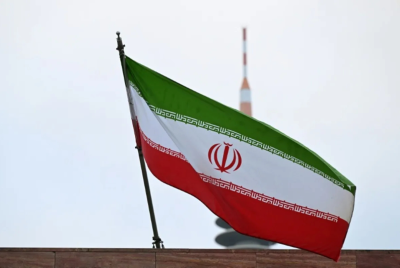
Iran said it would target all ports in and close to the Persian Gulf if its own shipping hubs are threatened, heightening the standoff over the Strait of Hormuz after the US announced plans for a blockade of Tehran-linked vessels https://t.co/KPGwhDyEFt
— Bloomberg (@business) April 13, 2026
UK Response Raises Questions About Allied Coordination
One of the most closely watched developments is the UK's response to the US blockade of Iran strategy.
The UK has confirmed it will not participate in the enforcement of the US blockade plan. However, British officials have continued to emphasise their commitment to freedom of navigation in international waters and ongoing maritime security cooperation with allies.
This position creates a notable difference in approach between London and Washington. While the US is moving toward active interception of specific vessels linked to Iranian ports, the UK appears to be focusing on broader maritime protection efforts rather than direct enforcement.
This divergence has led analysts and observers to question how coordinated Western responses are in high-risk maritime operations, especially in sensitive regions like the Strait of Hormuz.
UK says it will not be involved in U.S. blockade of the Hormuz Strait, and is currently "urgently working with France and other partners to put together a wide coalition to protect the freedom of navigation." pic.twitter.com/KAL9Cx19Nw
— The Daily News (@DailyNewsJustIn) April 12, 2026
What the US Has Announced About the Blockade
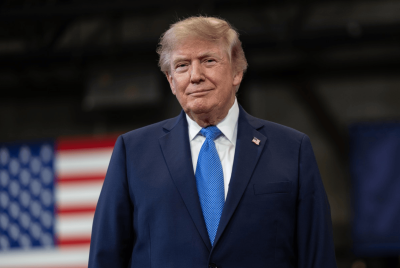
US President Donald Trump has publicly stated that the United States will begin restricting and intercepting maritime traffic linked to Iranian-controlled ports. His statements described a strategy aimed at preventing Iran from benefiting economically from what he characterised as control over passage through the strait.
US Central Command has indicated that enforcement is expected to begin under a structured timeline, with naval forces prepared to monitor and intercept targeted vessels. Officials have also stated that commercial shipping unrelated to Iranian ports would not be affected.
While the US has used strong language in describing the operation, the legal and operational classification of the move remains debated among international law experts.
Speaker of Iran's parliament sends a message to US consumers, after the threat by Trump to impose a blockade on the Persian Gulf. https://t.co/yGOS4CFVvU
— tim anderson (@timand2037) April 12, 2026
Legal, Strategic Concerns Over Maritime Enforcement
The Strait of Hormuz is governed by international maritime law, which generally protects freedom of navigation through key waterways. Because of this, legal experts cited in BBC reporting have raised questions about whether a blockade-style enforcement action could be consistent with international law, particularly outside a formally declared war context.
Some analysts also note that the definition of a blockade, as outlined in naval operational law, typically applies in situations involving armed conflict. This has led to further debate over how the US action should be classified.
At the same time, the enforcement plan comes amid a fragile ceasefire environment, raising additional questions about whether maritime escalation could destabilise the broader situation.
🚨Iran’s Khatam al-Anbiya Central Headquarters issued a statement as the US Central Command (CENTCOM) prepared to enforce the blockade starting at 10 a.m. ET:
— The Saviour (@TheSaviour) April 13, 2026
"Security of ports in the Persian Gulf and the Sea of Oman is either for everyone or for no one"
-- Iran’s armed forces… pic.twitter.com/NgvPWgdFEz
Impact on Global Oil Supply, Shipping Flows
The Strait of Hormuz is one of the world's most important energy transit routes, so even partial disruption can have global consequences.
The Hormuz shipping disruption oil prices concern is primarily linked to potential increases in insurance costs, shipping delays, and market volatility. However, the immediate practical impact remains uncertain.
Shipping analyst Lars Jensen of Vespucci Maritime told the BBC that the real-world disruption may be limited in the short term, partly because vessel traffic through the strait has already declined due to heightened tensions and risk perception.
Before the current escalation, the strait typically handled more than a hundred vessels per day. Recent tracking data shows significantly fewer ships are currently transiting the area, reflecting caution among commercial operators.
🇺🇸🇮🇷 More than 15 U.S. warships are in place to support the blockade on Iran, according to WSJ, citing a senior U.S. official.
— RusWar (@ruswar) April 13, 2026
The vessels include an aircraft carrier, several guided-missile destroyers, an amphibious assault ship, and other warships.
These vessels can launch… pic.twitter.com/G1iW3tc9fZ
Fragile Balance in Global Shipping Security
The US blockade of the Strait of Hormuz plan has added a new layer of complexity to an already volatile geopolitical situation. While the US is pushing forward with enforcement measures, allies such as the UK are choosing not to participate directly, highlighting differing approaches to risk and escalation.
At the same time, the Strait of Hormuz remains open but under pressure, with reduced shipping traffic and heightened uncertainty shaping global energy markets.
The coming days may prove critical, as decisions made by the US, Iran, and allied governments could determine whether this situation stabilises or evolves into one of the most significant maritime and energy security challenges in recent years.
© Copyright IBTimes 2026. All rights reserved.
- Recommended For You