

Oil Price Alert: Crude Spikes Past £60 as Trump's War Rhetoric Threatens Strait of Hormuz Blockade
Any prolonged disruption to the vital artery for Persian Gulf crude could lead to a catastrophic supply squeeze, driving fuel prices sharply higher.
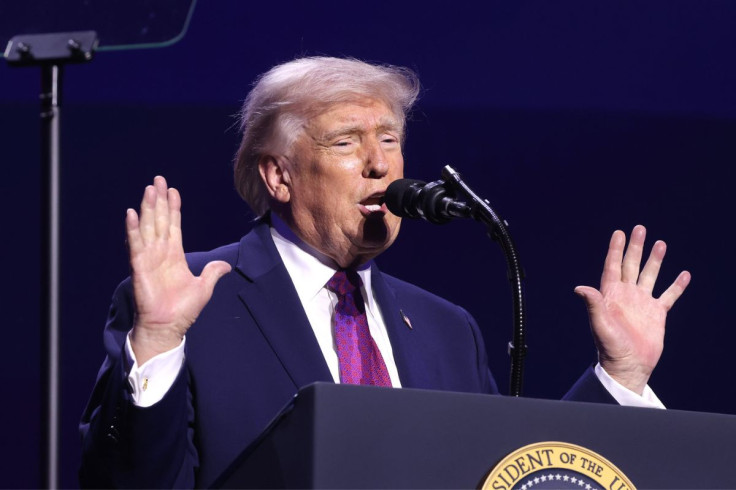
Crude oil prices have spiked past the £60-a-barrel threshold as geopolitical tensions ignite anew, following President Donald Trump's declaration that the ceasefire with Iran is 'over'. This abrupt diplomatic collapse has sent global markets into a tailspin, with investors bracing for a potential blockade of the Strait of Hormuz, the world's most critical maritime energy chokepoint.
As the US resumes military strikes against Iranian targets in retribution for attacks on commercial shipping, the resulting economic shockwaves have triggered a sharp sell-off across international stock indices. The sudden reversal of stability has reignited fears of supercharged inflation, forcing markets to confront the stark reality of a worsening regional conflict that threatens to derail both energy security and global economic growth.
Oil Prices Surge Amid Middle East Turmoil
The whiplash was felt most acutely in the energy sector. Brent crude climbed 5.2 per cent to £58.24 and briefly breached £59.71 during intraday trading. While remaining below the peak of nearly £89.57 seen earlier in the conflict, the upward trajectory is unsettling. The primary concern is that a prolonged war will block the Strait of Hormuz, a vital chokepoint for delivering Persian Gulf crude to international customers.
The broader panic sweeping trading floors comes down to a simple and brutal domino effect. If the crude supply gets choked off, fuel prices inevitably skyrocket. That threatens to supercharge inflation all over again, which would essentially force the Federal Reserve and other central banks to hike interest rates. Higher rates combat inflation but slow the broader economy and damage investment values. Watching this economic feedback loop play out in real time is wild, yet it remains the harsh reality of global finance.
Wall Street Stumbles Over High Interest Rates
The Dow Jones Industrial Average plummeted 576.76 points to close at 52,348.39, marking a 1.1 per cent loss. The S&P 500 mirrored this initial drop by falling 1.1 per cent following the president's comments before trimming its losses to close down 21.14 points at 7,482.71. In the bond market, the yield on the 10-year Treasury neared 4.60 per cent before settling at 4.57 per cent, a massive jump from the 3.97 per cent recorded before the Iran conflict began.
Companies sensitive to borrowing costs bore the brunt of the sell-off. The housing industry was hammered by fears that rising Treasury yields would translate into higher mortgage rates and chill the market. Builders FirstSource dropped 5.4 per cent, while homebuilders PulteGroup and D.R. Horton sank 5.4 per cent and 4.6 per cent, respectively. Businesses burdened by massive fuel bills also struggled, with American Airlines losing 4 per cent and cruise operator Carnival falling 3.9 per cent. It is mad how quickly sentiment can turn, delivering a market correction that leaves investors wondering how much more stress the system can handle.
Tech Stocks Provide Relief During Market Selloff
Helping offset the broader market losses was a remarkable steadying among artificial intelligence stocks. These tech giants have faced pressure in recent weeks over fears their valuations had grown too high, alongside scepticism about whether AI can generate enough profit to justify monumental investments in data centres. Because these companies are some of the largest entities in the United States market, their price swings carry immense weight.
NVIDIA rose 3.7 per cent, acting as the strongest upward force on the S&P 500. Broadcom followed closely, climbing 4.8 per cent after Apple announced a commitment to custom components that could top £22 billion. This tech optimism allowed the Nasdaq composite to erase an early loss and finish up 51.96 points at 25,870.65.
Global Markets Plunge Following Trump's Iran Statements
International markets were far less resilient to the diplomatic shockwaves. European indices turned sharply lower after the American president said, 'For me, I think it's over,' adding that negotiating representatives are 'wasting their time'. Germany's DAX and France's CAC 40 both sank 2.2 per cent in response.
In Asia, South Korea's Kospi dropped a staggering 5.3 per cent, continuing its sharp swings amid seesawing worries and euphoria over domestic AI stocks.
Hong Kong proved to be the solitary outlier, with the Hang Seng index rising 3 per cent. This was driven by Chinese AI startup Zhipu, traded as Knowledge Atlas Technology, which jumped 13.4 per cent. A six-month lock-up period for 'cornerstone' investors expires this week, an event that typically triggers a massive sell-off. However, China National Radio reported late Tuesday that nearly 70 per cent of early investors are committed to holding their shares. This pushes Zhipu's share price up 1,300 per cent since its debut, keeping the stock afloat as the rest of the world navigates the diplomatic fallout.
© Copyright IBTimes 2026. All rights reserved.