

Scientists Stunned: 3I/ATLAS Shows Methanol 'Raging' Outside Its Nucleus
New ALMA observations show methanol erupting far beyond 3I/ATLAS's nucleus, challenging comet science and offering rare insights into interstellar chemistry
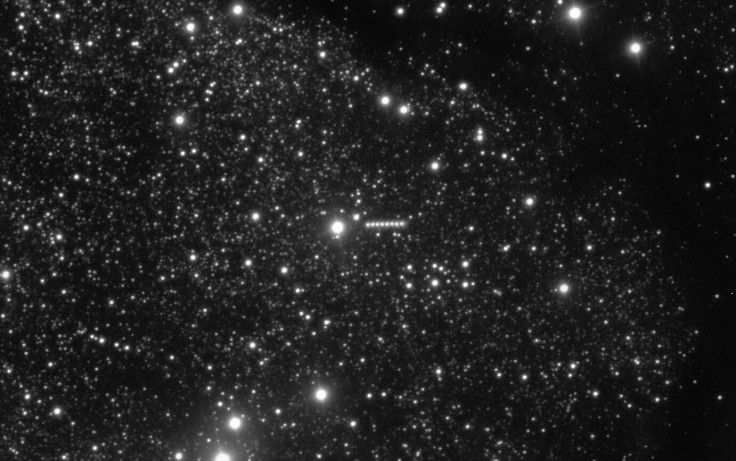
Astronomers analysing the interstellar comet 3I/ATLAS have found an unexpectedly high amount of methanol not only in the comet's centre but also far into the surrounding coma, defying existing theories on comet chemistry, and offering new insights into cometary matter beyond our solar system.
This intriguing discovery marks one of many unique finds about the celestial spectacle's rare characteristics, now challenging long-established astronomical conventions.
Unusual Chemistry in an Interstellar Visitor
The Atacama Large Millimetre/submillimeter Array (ALMA) in Chile has observed that 3I/ATLAS emits significant quantities of both methanol and hydrogen cyanide.
According to Martin Cordiner of NASA's Goddard Space Flight Centre, 'hydrogen cyanide and methanol usually appear only in small traces in our own comets. But in this interstellar object, they seem to be unusually abundant.
The data from the analysis of molecular abundances of this object, as astronomers examined them, indicate that methanol is not only found in the nucleus but also in large amounts throughout the comet as a whole, the coma, or diffuse cloud of gases and dust around the nucleus.
The research team estimated that methanol accounts for approximately eight per cent of the total gas emissions at 3I/ATLAS, which is much higher than in most Solar System comets, and approximately four times higher than usual.
Such an abundance of methanol, a molecule associated with early prebiotic chemistry, has led scientists to claim that the comet's behaviour is chemically unusual. It is seen that methanol production at the nucleus is not confined to the nucleus but also occurs in the more extended coma, suggesting the presence of complex chemical processes as the comet heats and reacts with solar radiation.
Interstellar vs Solar System Comets
The object is the third object known to be outside of our Solar System, after Oumuamua and 2I/Borisov. Its hyperbolic orbit, the orbit that will leave it out of the Solar System after its present flyby, implies that this is not gravitationally bound to the Sun, which makes it a proper guest of the interstellar world.
The composition of 3I/ATLAS shows features that indicate it is quite possible that comets formed in a very different environment can be observed in the Solar System as well, although only relatively small amounts of methanol and hydrogen cyanide are detected in them. There are speculations among scientists that the unusual chemistry might have been due to conditions in its parent star system — maybe it was colder or had a higher content of specific ices.
Hydrogen cyanide is another hydrogen-based gas found in the comet's emissions and has a dual effect in astrochemistry. In small quantities, it is a precursor to more complex organic components such as amino acids and nucleobases, which are fundamental building blocks of molecular structure. However, at high levels, it can be lethal.
Clues to Prebiotic Chemistry
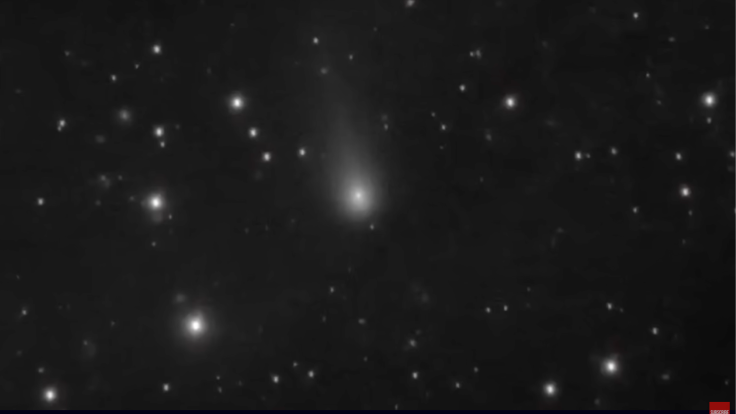
The preeminence of methanol in 3I/ATLAS is especially important, given its link to a set of chemical reactions known as prebiotic chemistry, which are thought to have played a role in the origin of life on Earth. Methanol promotes pathways that may lead to the production of amino acids and other organic molecules, which play central roles in the synthesis of DNA and RNA.
Their presence in an object in a different star system opens up some intriguing questions on the extent of the distribution of these life-building ingredients in the galaxy. It endorses the idea that comets and other bodies may serve as vectors of organic chemicals across star systems, probably even inoculating planetary systems with organic precursors of life.
Growing Activity as It Approaches Earth
As 3I/ATLAS approaches the Earth, with perihelion passed and its closest approach shortly to follow, its activity has been increasing, as is usual with comets warming in the sun. During this activity, volatile ices sublimate, releasing gas and dust that constitute the typical comas and tails visible in telescopes.
Hobbyist astronomers and even the large observatories have captured images of the comet with a bright greenish hue as cyanide and other gases fluoresce in sunlight — a typical trait of comets that contain large quantities of volatile compounds.
What It Means For Science
The unusual chemical composition of 3I/ATLAS highlights the diversity of objects in our galaxy and the data they provide on planetary formation and astrochemistry beyond our Solar System.
The rich molecular composition of the comet has already sparked debate among scientists about how these interstellar visitors could help calibrate models of the origin of organic compounds in space.
With more observatories worldwide and on space observing 3I/ATLAS, scientists are also hoping to narrow down their observations of the mechanisms that lead to the formation of complex molecules in ice bodies. This might provide valuable insights into the early history of distant planetary systems.
It is yet to be determined whether the abundance of methanol in 3I/ATLAS is typical of the chemistry of its home star system or is a characteristic of its history. But its demise already offers us an unparalleled opportunity to examine an interstellar chemical environment at closer range, and discoveries about the distribution of methanol challenge previous assumptions about the mechanism of cometary chemistry in the universe.
© Copyright IBTimes 2026. All rights reserved.