

Nancy Guthrie Latest Update: Expert Warns Affluent Seniors Are Now 'Prime Targets'
A quiet postcode, a vanished pensioner and the uneasy realisation that comfort can look a lot like vulnerability.

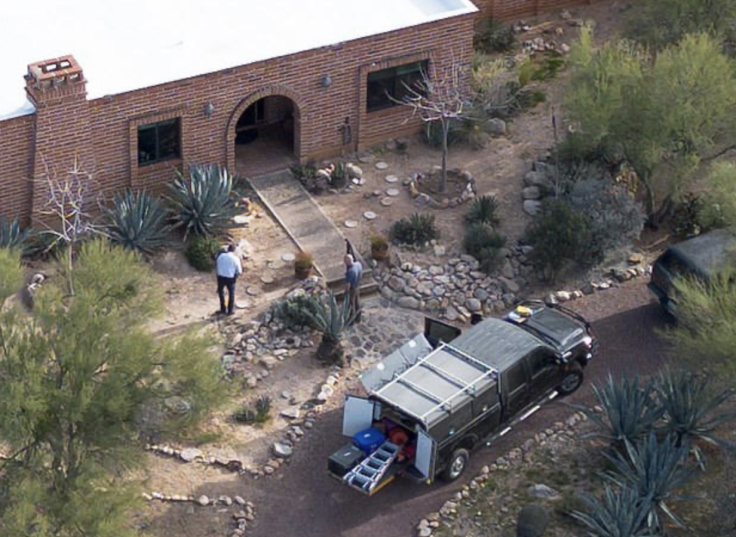
Authorities in Arizona say Nancy Guthrie, 84, was taken from her home in Tucson's Catalina Foothills in the early hours of Feb. 1, a disappearance that has stretched into a weeks-long, multi-agency search with few leads and a growing sense that even affluent retiree enclaves can be soft targets.
Fox News Digital reports that Guthrie had been living in a rural pocket of the Catalina Foothills where homes sit on acres of land and are often not visible from the road, the kind of privacy many older Americans seek when they imagine a quieter retirement. Census figures cited in the report put the area's median age at 56, with a median home value of $652,000 and a population of around 53,000.
What is known, and what is not, sits awkwardly side by side. Authorities describe an apparent abduction from Guthrie's home. The public has been given no clear account of who did it or why. Her family's profile adds attention, but it does not add answers.
A Neighbourhood Built for Quiet
Fox News Digital paints the Catalina Foothills as a 'remote, desert-like' landscape that offered Guthrie what many would call a retirement oasis. In a November interview on Today, Guthrie described the area as 'laid back and gentle,' a line that now reads less like lifestyle colour and more like an unintended warning about how safety is sometimes assumed rather than secured.
The brutality of the allegation is stark against that backdrop. 'In the early morning hours of Feb. 1, authorities say Nancy Guthrie was taken from her home in an apparent abduction,' Fox News Digital reports, adding that the search has yielded few leads.
It is tempting, in cases like this, to treat wealth as a kind of shield, a private gate or a long driveway as a substitute for community. That faith can be misplaced, not only because crime happens everywhere, but also because isolation is part of the appeal. If the nearest neighbour is far enough away that a shout cannot be heard, it is also difficult to notice when something is wrong.

Warnings About 'Prime Targets'
The Fox News Digital report leans on a blunt assessment from Mike Sapraicone, a retired NYPD detective and founder of a global security firm, who argues that criminals look for higher returns where higher-value property is concentrated.
'[Criminals] are thinking that there's a better opportunity as far as the benefits they can get in a burglary, robbery or a home invasion,' Sapraicone told Fox News Digital. 'You probably have a better opportunity there to get things of more value than you would in a small community that's not gated or might be closer-knit.'
Part of the risk, he suggests, is cultural rather than purely physical. Sapraicone points to gated communities as an 'unlikely catalyst' for crimes against seniors, arguing that part-time residents and revolving security can create lapses.
'When you go into these gated communities, the residents don't know each other as much, they're more spread out or they're part-time communities,' he said. 'Some people are snowbirds, so they don't really know each other as well, and they don't pay as much attention.'
He also describes what he sees as a dangerous comfort settling in behind the gatehouse. 'They feel that they don't have to lock their doors, they don't have to worry about things or that nobody's going to bother them but it's just the opposite,' Sapraicone said.
The wider backdrop is grim in its own right. A US Department of Justice report cited by Fox News Digital put the violent victimisation rate for people over 65 at 7.5 per 1,000 people in 2024. That statistic does not explain what happened to Nancy Guthrie, but it does undercut the comforting fiction that older age automatically means lower risk.
Sapraicone's warning, again, is that offenders study routines with the patience of people doing a job. 'Criminals do their homework just as much as we do in any type of business we own or whatever we do,' he said. 'They very much will do surveillance on these types of neighborhoods,' he added. 'They'll look to see patterns.'
He argues, too, that shame can keep some victims quiet, and that silence can invite repeat targeting. 'They may feel that they're getting on in years, and they're still at the top of their game, when they might not be at the top of their game,' Sapraicone said.
'So embarrassment is a big deal. The criminal may get away with a bunch of stuff on the same person because they've really scared them, but they've intimidated them to a point where they become more nervous and afraid to tell their family or go to the police,' he said.
As the search for Nancy Guthrie continues, Sapraicone's advice is basic and, in its way, an indictment of how atomised some 'safe' communities have become. 'If you're neighbors, check on each other,' he told Fox News Digital. 'You need to be diligent. Pay attention. Be aware of your surroundings.' 'Bad guys will always take an opportunity if it's in front of them. Don't give them the opportunity.'
© Copyright IBTimes 2026. All rights reserved.