Netanyahu Kept His Cancer Diagnosis Quiet During Iran War, Now 'In Excellent Health' After Prostate Treatment
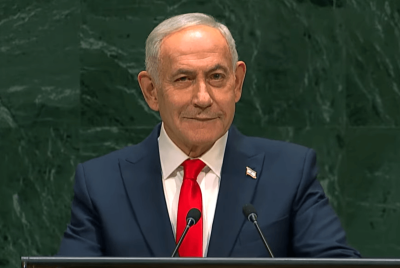
Benjamin Netanyahu is declared cancer-free after a secret prostate cancer diagnosis he kept quiet during Israel's war with Iran.

Prime Minister Benjamin Netanyahu has been declared cancer‑free in Jerusalem after secret treatment for early‑stage prostate cancer, which he kept from the public during Israel's recent war with Iran, according to an official medical report published on Friday that details the previously undisclosed cancer diagnosis.
The Prime Minister's Office released its annual health summary dated 20 April 2026, confirming that the 76‑year‑old had undergone a series of procedures over the past year starting with surgery on 29 December 2024 at Hadassah Medical Center.
That initial operation was said to address benign prostatic hyperplasia, a common non‑cancerous enlargement of the prostate, and at the time was presented as routine and complication‑free. Only later, and only after further scans, did doctors identify what turned out to be a small prostate tumour.
The new report now ties those earlier medical bulletins to a much more serious finding. A follow‑up MRI, carried out as part of standard post‑operative care, picked up what was described as a 'minuscule suspicious lesion' in Netanyahu's prostate, measuring under one millimetre. Additional testing then confirmed the presence of early‑stage prostate cancer, with no sign the disease had spread beyond the gland.

None of that was shared with the public as it was happening. Instead, details have surfaced only now, months after Israel's confrontation with Iran dominated headlines and sharply focused attention on the country's political and military leadership.
The Prime Minister's Office framed the disclosure as part of its regular annual reporting, but the timing has already prompted questions about transparency in a country where the health of top officials has become a political issue more than once.
Netanyahu's Secret Cancer Diagnosis And The Shadow Of The Iran War
Netanyahu has been blunt about why the cancer diagnosis was kept under wraps. In a statement issued alongside the medical report, he said he had deliberately delayed publication of the findings for two months because Israel was in the midst of its conflict with Iran and he did not want Tehran to see an opening.
'I chose to delay the report's publication so it would not come out at the peak of the war and be used by Iran for propaganda,' he said, arguing that any sign of frailty at the very top of government might have been seized upon by Iran's leadership and media.
היום התפרסם הדו״ח הרפואי השנתי שלי.
— Benjamin Netanyahu - בנימין נתניהו (@netanyahu) April 24, 2026
ביקשתי לעכב את פרסומו בחודשיים כדי שהוא לא יפורסם בשיא המלחמה על מנת שלא לאפשר למשטר הטרור באיראן להפיץ עוד תעמולת כזב נגד ישראל.
אני מבקש לשתף אתכם בשלושה דברים:
1 - ברוך השם, אני בריא.
2 - אני בכושר גופני מצויין.
3 - הייתה לי בעיה…
Publicly, Netanyahu now insists he is fit for office. 'Today I can say I am in good health and excellent physical condition after treating a very early‑stage prostate cancer that was completely removed,' he added, presenting the episode as contained and resolved.
The choice to suppress information, even temporarily, is likely to split opinion. Supporters will see a wartime leader trying to avoid giving comfort to an enemy known for aggressive messaging, especially in the information space.
Critics are more likely to frame it as another example of Netanyahu controlling the flow of information on matters that affect public life, including the question of who would have taken over had his condition worsened.
Doctors Detail How Netanyahu's Cancer Was Treated
The health report states that after the lesion was detected, Netanyahu underwent further diagnostic work which confirmed early‑stage prostatic adenocarcinoma, a common form of prostate cancer.
There was no evidence of metastasis, meaning scans did not show the disease in other organs or tissues.
Professor Aharon Popovzer, director of the Sharret Institute at Hadassah Medical Center, led the radiation treatment team.
In a written statement, he said that 'a few months ago, as part of a routine check‑up, we discovered a 0.9‑centimetre mass that was found to be a prostatic adenocarcinoma,' noting that Netanyahu subsequently went through 'a comprehensive examination' and that the cancer was identified 'in very early stages.'
Popovzer said the Prime Minister 'underwent a modern, specialised kidney treatment at the Hadassah Medical Center two and a half months ago,' a description that appears in the official account even though the cancer was in the prostate, not the kidney. He went on to say, 'We can say, based on the findings of these tests, that the disease has disappeared.'
הפרגוד: המרכז הרפואי הדסה:
— הפרגוד (@moshepargod) April 24, 2026
פרופ׳ אהרון פופובצר, מנהל מכון שרת לאונקולוגיה במרכז הרפואי הדסה, בסינק הסבר על מצבו הרפואי של ראש הממשלה.
קרדיט: דוברות הדסה pic.twitter.com/xfX5xz9tLJ
He was joined in overseeing the therapy by Dr Mark Wigoda, head of the hospital's radiation therapy unit, and Dr Shraga Gors of the same institute. Their combined assessment, reflected in the health report, is that the treatment was 'fully successful,' with follow‑up imaging and laboratory analyses showing complete disappearance of the lesion.
The Prime Minister's Office has not addressed whether Netanyahu experienced any side‑effects or required time away from day‑to‑day duties while receiving radiation, and the report does not specify how long the treatment course lasted. It also does not elaborate on contingency planning inside government during the period when the cancer diagnosis was first confirmed but not yet disclosed.
What it does do is underline that, as of April 2026, Netanyahu's doctors consider the episode closed. The man who chose to keep his cancer diagnosis from the public during a war with Iran is now, by their account, in 'excellent physical condition' and officially cancer‑free.
© Copyright IBTimes 2026. All rights reserved.
- Recommended For You