Netanyahu Backs Iran Ceasefire But Excludes Lebanon—Regional Tensions Rise
Netanyahu supports a ceasefire with Iran, but excludes Lebanon, fuelling fears of continued conflict along the northern border

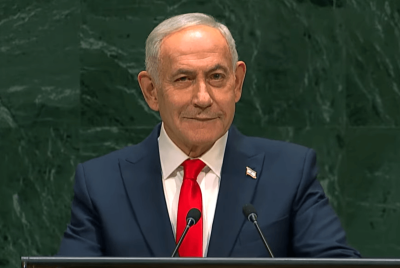
The Israel-Lebanon Conflict 2026 has entered a more complex phase after Benjamin Netanyahu signalled support for a ceasefire framework involving Iran. However, he drew a clear boundary that Lebanon is not part of the deal. That distinction, brief but decisive, is now shaping regional calculations. It is raising concerns that one conflict may cool while another continues to escalate.
What initially appeared to be a step toward de-escalation has instead exposed the layered and fragmented nature of current Middle East diplomacy.
BREAKING: Israel backs the U.S. ceasefire with Iran, but that deal doesn't cover fighting against Hezbollah in Lebanon, Netanyahu says. https://t.co/LLouBBr6nD
— The Associated Press (@AP) April 8, 2026
A Ceasefire With Defined Limits
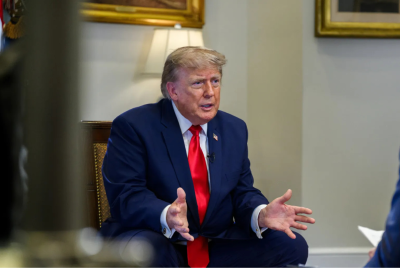
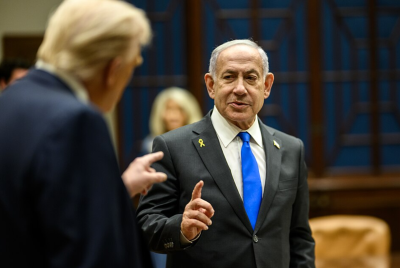
As per Reuters, a reported ceasefire framework linked to Iran has been shaped through indirect negotiations involving Donald Trump and the Pakistani government acting as intermediaries. It has broader aims of reducing hostilities tied to Iran's regional role. Within that context, Israel's leadership has expressed conditional support, but not without carefully separating theatres of conflict.
Netanyahu's position reflects a long-standing Israeli policy of treating Iran and Hezbollah as related but operationally distinct threats. While the Iran track may move toward a temporary truce, Israel is not extending the same expectation to Lebanon. In here, Hezbollah remains active along the northern border.
This distinction is crucial to understanding the current situation. A ceasefire in one arena does not automatically translate into stability across the region.
Netanyahu says US-Iran ceasefire ‘does not include Lebanon’ https://t.co/mKDGFvrweF pic.twitter.com/saUVKhETW3
— Al Jazeera English (@AJEnglish) April 8, 2026
Lebanon's Exclusion And Its Strategic Implications
The phrase that Lebanon is excluded from the ceasefire framework has quickly become the focal point of debate. It signals that Israeli military posture toward Hezbollah will remain unchanged, despite broader Iran-related tensions subsiding.
For analysts, this is more than a technical clarification. It suggests that Israel is pursuing a compartmentalised strategy. De-escalation may be practiced in one domain, but actions in another do not need to be limited.
On the ground, this creates uncertainty. Communities in southern Lebanon, already affected by repeated strikes and evacuations, remain exposed to ongoing risks despite the diplomatic progress elsewhere.
Israel has backed a US ceasefire with Iran, but says it excludes its war on Lebanon.
— TRT World (@trtworld) April 8, 2026
Since March, Israeli attacks in the country have killed 1,500+, displaced 1.1M+ and wounded thousands as fighting continues to escalate pic.twitter.com/g5vjfY1FNb
Hezbollah And The Risk Of Continued Escalation
Hezbollah is a powerful, dual-purpose entity that holds the key to how conflicts in the Middle East, particularly involving Israel and Lebanon, are resolved. It is not just a foreign entity acting in Lebanon, but a deeply rooted Lebanese organisation with a specific, Iranian-backed agenda.
Even as broader ceasefire discussions move forward, the absence of Lebanon from the agreement raises the possibility that hostilities along the Israel-Lebanon frontier could persist or intensify.
This imbalance is what disturbs many observers. If one side reduces activity while the other maintains or increases pressure, the likelihood of miscalculation grows. In such environments, even isolated incidents can trigger wider escalation.
The Human Impact in Lebanon
Lebanon is on the edge of a major crisis as relentless airstrikes have driven more than a million people from their homes. Key infrastructure is damaged, and basic services are breaking down. Every day, neighbourhoods have effectively turned into conflict zones, leaving civilians facing a fast-growing humanitarian emergency.
For many families, the idea of a ceasefire feels incomplete if it does not apply to their immediate environment. The reality of displacement, uncertainty, and intermittent violence continues to define daily life in affected regions.
Diplomacy may be moving forward on paper, but on the ground, the reality is very different. Agreements often tackle only part of the problem, leaving other conflicts unresolved and people still exposed to risk.
Regional Tensions in 2026 Remain Interconnected
Regional tensions in 2026 are being driven by multiple overlapping conflicts, with different players pursuing their own goals at the same time. The Iran negotiations, the Israel-Lebanon front, and US-led diplomatic efforts are all unfolding together, but they are not fully aligned.
International mediators are trying to steady energy routes, reduce direct clashes, and prevent the conflict from spreading further. However, leaving Lebanon out of the current ceasefire shows how fragile and incomplete these efforts remain.
A Fragmented Path Toward Stability
The current ceasefire efforts reveal a patchwork approach to ending conflict. While progress may be achieved in one area, unresolved flashpoints elsewhere continue to fuel instability and keep the wider security situation on edge.
Netanyahu's position makes Israel's priorities unmistakable, but it also exposes a key weakness of partial agreements in a region where conflicts are tightly linked and cannot easily be separated.
For now, Lebanon being left out of the ceasefire is the most important and alarming detail. It shows that excluding a key party can undermine the entire deal, because what isn't included can be just as dangerous as what is.
© Copyright IBTimes 2026. All rights reserved.
- Recommended For You