

North Korean Artillery Points South as Pyongyang Disputes Mine Blast Findings and Sends Warning to UN
North Korea has displayed a 122mm howitzer near the border while disputing South Korea's findings on a landmine blast that injured three soldiers
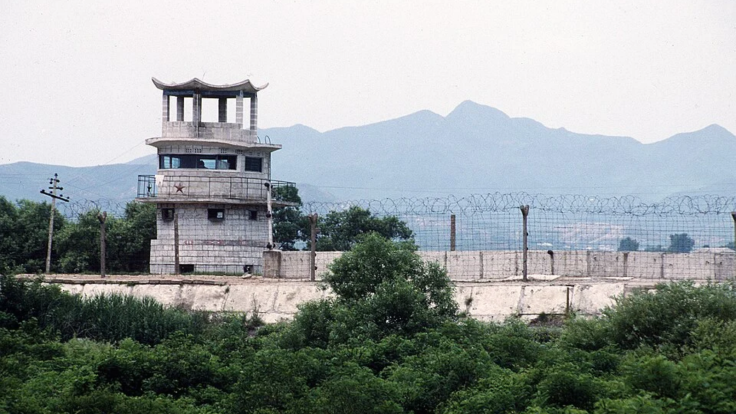
North Korea trained a self-propelled 122mm howitzer directly at South Korea from near the Demilitarised Zone, a Reuters witness said, as Pyongyang disputes Seoul's finding that a landmine blast injured three South Korean soldiers. The weapon was seen pointing south from an observatory in Gimpo, South Korea, on 26 October.
The display came after North Korea sent a letter to the UN Security Council on 25 October accusing South Korea of fabricating the 21 September explosion. It warned that violations of its sovereignty could trigger 'self-defence measures' and said Seoul would be 'wholly accountable for all the ensuing consequences'.
South Korea says its investigation found that mines planted by North Korean troops caused the blasts south of the Military Demarcation Line. Three South Korean soldiers were injured, two seriously, and Seoul has demanded an apology and called the incident a violation of the Korean War Armistice Agreement.
North Korea rejects that account. Its UN representative said the incident was a 'sinister obstructive move' to portray Pyongyang's border fortification as a military invasion.
Artillery at the Border
A Reuters witness confirmed that a North Korean artillery piece was visible near the frontier from the South Korean observatory on 26 October. South Korea's Yonhap news agency identified it as a self-propelled 122mm howitzer, capable of both low- and high-angle fire.
Witnesses also reported seeing three North Korean armoured vehicles with gun barrels pointed south. About 20 to 30 North Korean soldiers were carrying out fencing work inside the Demilitarised Zone.
Lim Eul-chul, a professor at Kyungnam University in Seoul, said it was highly unusual for North Korea to expose self-propelled artillery so conspicuously. 'By deliberately displaying it, North Korea is signalling through action, not words, that it intends to enforce its border policy through force rather than dialogue or negotiation,' he said.
Pyongyang appears keen for Seoul to understand that its border work is not simply construction.
The Mine Blast Dispute
South Korean Ambassador Cha Ji-hoon sent a roughly two-page letter to the Security Council president on 22 October. It set out Seoul's investigation findings and called on North Korea to take responsibility and return to dialogue.
Seoul says the explosions were caused by North Korean mines planted south of the Military Demarcation Line. Its military concluded that the mines injured three soldiers, two severely and one less seriously.
North Korea rejects that conclusion. Its letter to the Security Council described the incident as a 'fabricated' attempt to delay and obstruct its southern border fortification work, according to state media KCNA.
The competing accounts have not been independently resolved. South Korea's position rests on its investigation, while North Korea's account comes through KCNA, its state-controlled news agency.
Pyongyang's Warning to Seoul
Kim Yo Jong, sister of North Korean leader Kim Jong Un, said on 19 October that Pyongyang was considering resuming loudspeaker broadcasts and deploying additional 'tactical strike means' near the entire southern border.
'Our military leadership is considering increasing the deployment of tactical strike means near the entire southern border and resuming loudspeaker broadcasts against South Korea as preemptive and suppressive measures in preparation for any contingency,' she said in a statement carried by North Korean state media.
Kim accused South Korea of carrying out 2,870 warning broadcasts and firing warning shots on 201 occasions between 1 August and 17 October. South Korea's Defence Ministry said it had continued necessary warning broadcasts, but not through the large-scale anti-North Korea loudspeaker systems suspended in June.
Seoul says its measures are intended to prevent incursions and to warn North Korean personnel who cross the Military Demarcation Line. Its Joint Chiefs of Staff assessed that North Korean troops crossed the line around 50 times in August and September.
What Happens Next
Analysts warn that both sides could now treat routine border activity as provocation. South Korea sees mine-laying and crossings as violations, while North Korea presents its fortification work as sovereign construction and Seoul's warnings as aggression.
Kim's warning that Pyongyang does 'not defend our sovereignty with words' leaves little room for misunderstanding. Whether the artillery display is deterrence, coercion or preparation for something worse remains unclear.
© Copyright IBTimes 2026. All rights reserved.