

France Faces Halloween Protests as Yellow Vests Call for Fresh Rallies Amid 1,314 Arrests Nationwide
Interior Minister Laurent Nuñez says police will stay on 'high alert' as authorities struggle to contain a widening wave of anger
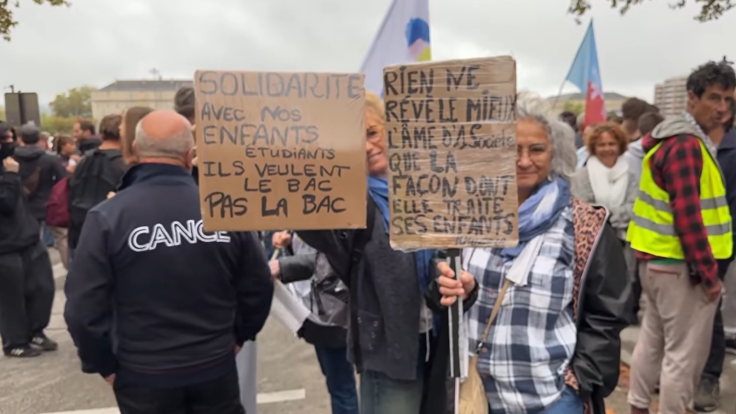
Yellow Vest organisers have called for fresh Halloween protests across France on Saturday, 31 October, as pressure mounts on President Emmanuel Macron over living costs and public services. The groups announced their plans on 24 October, when hundreds of thousands marched nationwide under heavy security.
France's Interior Ministry subsequently reported 1,314 arrests in connection with those demonstrations. Unions are also calling for a nationwide strike on 5 November.
Police representatives warn that the huge security deployment used last weekend cannot be sustained indefinitely.
The ministry's provisional figures, published on Sunday, recorded 289 protest actions attended by an estimated 410,000 people. The CGT trade union estimated turnout at around 800,000, a figure not independently established.
Authorities deployed 70,000 officers, and the ministry reported injuries to 53 members of the security forces. Most organised marches proceeded without serious incident, although clashes were reported later in several cities.
The figures were lower than those recorded on 17 October, when the ministry reported 2,628 arrests and 1,144 injured security personnel. Officials credited earlier intervention and more extensive preparations with limiting disorder on 24 October.
Yellow Vests Call for Halloween Rallies Across France
The Yellow Vests, a loosely organised movement that emerged in 2018 in opposition to fuel taxes, want further gatherings outside town halls and the National Assembly. Organisers have proposed rallies and sit-ins for 31 October, accusing Macron's government of an 'authoritarian drift' and calling on supporters to defend 'public freedoms'.
The plans remain distinct from those of the country's larger trade unions. The SUD Education teaching union said it would join the Halloween demonstrations.
As of Sunday, the CGT had not decided whether to participate, although it had already joined a separate call for nationwide strikes and marches on 5 November.
'We see an aggregation of anger,' Murielle Guilbert, co-leader of the Solidaires trade union federation, told BFM TV. She said frustrations among students, workers, firefighters and other groups were converging.
The unrest began with school protests in September before broadening into demands involving wages, the cost of living and public services.
Activist Azelma Sigaux also described discontent spreading beyond classrooms into neighbourhoods, farms and workplaces. Organisers are seeking further action from groups with different immediate grievances, rather than a single set of demands.
Macron Faces Pressure Over Pay, Schools and Public Services
Macron's government has opened talks with union and student representatives in an effort to address the unrest.
Protest leaders say the measures offered so far are inadequate. Guilbert put the criticism directly, saying, 'We have received no response at all from this government.'
France's strained public finances complicate the government's response, while Macron's centrist allies lack a parliamentary majority. The next presidential election is scheduled for 18 April and 2 May 2027, adding an electoral timetable to the dispute.
Protest restrictions have become another point of contention. During Saturday's Paris demonstration, the authorised march was moved from its originally planned location at the Bastille to Porte d'Italie.
Guilbert described the decision as 'scandalous' and objected to protesters being prevented from marching 'where we wish to demonstrate'. Participants nevertheless followed the revised route.
Police Warn of Strain as France Prepares for More Protests
Interior Minister Laurent Nuñez said the marches generally 'passed off well' but accused groups he described as 'ultra-left' of an 'extremely elevated level of violence' afterwards. Authorities said additional checks and rapid police intervention helped prevent attacks on people and property.
In Paris, Nuñez said clashes lasted about two hours. The prosecutor's office reported 64 arrests, including six minors, and said 40 people were placed in police custody. The allegations involved suspected weapons offences and preparations for violence or property damage.
Police used tear gas or water cannons during disturbances in several other cities, including Nantes and Marseille. Authorities also reported serious injuries in Clermont-Ferrand and Toulouse, but the circumstances of those injuries remained unclear.
The prospect of renewed demonstrations has prompted a warning from police unions. Representatives said on Sunday that staffing levels would make it difficult to maintain an operation on the scale of the 24 October deployment for any extended period.
The likely turnout for the proposed 31 October gatherings remains unclear, and the CGT's position on joining them was undecided as of Sunday. Its separate call for industrial action on 5 November, however, is already public.
Talks between the government and representatives of unions and students have begun, but protest leaders remain dissatisfied with the response. The next planned mobilisation is the Halloween demonstrations, followed five days later by the proposed nationwide strike.
© Copyright IBTimes 2026. All rights reserved.