Oil Prices Prediction Sparks Panic as Crude Hits Over $100 per Barrel: Could It Surge Past $200 This Month?
Forecasts for 2026 vary widely, with TradingView projections diverging sharply from mainstream analyst estimates, highlighting market uncertainty
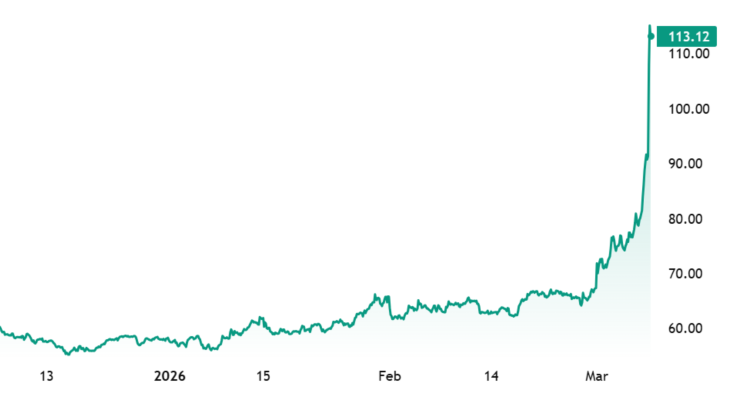
Oil prices have surged past $100 per barrel (roughly £75) this week, driven by sharp daily gains that have sent investors scrambling for clarity. Brent crude was trading at approximately $107 per barrel (£80.4) on 8 March 2026, marking a notable spike in global energy markets. Short-term forecasts by TradingView show aggressive bullish momentum, with projections suggesting oil futures could climb by more than 50% over the next five days and potentially reach over $206 (approximately £155) within a month.
The sudden surge has raised questions about whether crude could reach $200 per barrel, a level not seen in recent years. While analysts warn that these figures represent extreme short-term scenarios, the unprecedented volatility has sparked concern among traders and businesses reliant on oil and gas.
Forecasts Diverge From Analyst Expectations
TradingView projections stand in contrast to mainstream forecasts for 2026. Most analysts anticipate Brent crude to average between $57 and $62 (between £42.8 and £46.6) over the year, citing ample global supply and easing production concerns.
Futures contracts for later in 2026 currently trade around $90–$93 per barrel (around £67.6 to £70), indicating that market expectations are significantly lower than the short-term bullish forecasts.
The discrepancy highlights the uncertainty in global oil markets, where daily price movements can be exaggerated by speculative trading and sudden changes in supply or demand sentiment. Short-term forecasts suggesting an 80% increase in a month reflect an aggressive interpretation of market momentum rather than long-term fundamentals.
Factors Driving Price Fluctuations
Several factors are contributing to the sharp rise in oil prices. Geopolitical tensions in energy-producing regions and unexpected supply disruptions can create rapid spikes in crude costs. Conversely, high global oil inventories and OPEC production policies continue to exert downward pressure on prices over the medium-term.
Economic conditions also play a role, including inflationary pressures, recovery in industrial demand, and the pace of energy transition policies. Analysts note that while a spike towards $200 per barrel is theoretically possible in a short-term futures model, it remains highly unlikely based on current supply-demand fundamentals.
Impact on Markets and Consumers
The recent surge in oil prices has immediate effects on global markets. Equity indices with energy exposure have shown increased volatility, while trading volumes in oil futures have spiked as investors adjust positions. Rising crude prices directly affect transportation costs, fuel prices, and shipping expenses, with potential knock-on effects for food and consumer goods.
Industries with high energy consumption, including manufacturing and logistics, are particularly sensitive to sudden price jumps. Central banks and governments continue to monitor the situation closely, considering strategic reserves or policy adjustments if energy costs threaten broader economic stability.
Credible Forecasts and Sources
According to TradingView, oil futures indicate a possible surge of up to 80% over the next month, reflecting short-term bullish momentum. Analysts advising caution emphasise that the most likely scenario for Brent crude in 2026 remains a moderate range of $57 to $62 per barrel, based on ample global supply and current economic conditions.
The contrast between short-term projections and longer-term expectations underscores the high degree of uncertainty facing traders and policymakers. As the oil market navigates these fluctuations, businesses and consumers alike are closely watching developments to assess potential impacts on costs and investments.
© Copyright IBTimes 2025. All rights reserved.
- Recommended For You