

Stock Expert Reveals the 'Cheat Code' That Turned $35,000 Into $10 Million in Just 5 Years
'Sir Jack A Lot' Kevin Xu swears by one stock at a time, but his losses were just as big
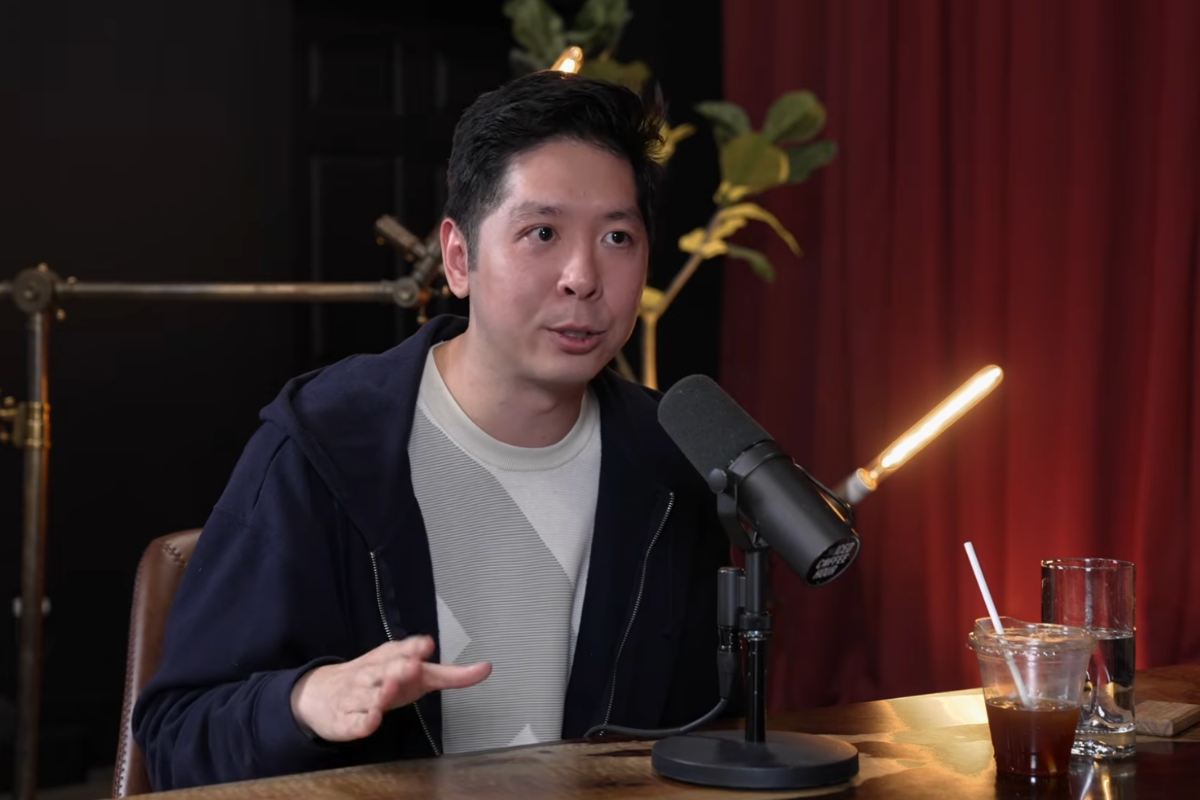
Kevin Xu began trading in his retirement account in January 2020 with $35,000 (£26,000). Within two years the balance had passed $10M (£7.5M). It now stands at roughly $11.5M (£8.6M), most of it moved into index funds.
The former Google and Stripe engineer built a following on Reddit's WallStreetBets under the handle Sir Jack A Lot, posting every trade in full dollar amounts. He set out how he did it in a wide-ranging interview on The Iced Coffee Hour, the finance podcast hosted by Graham Stephan and Jack Selby.
His approach came down to a few rules. Go all in on one stock at a time. Use no margin, no options, and no crypto. Never chase a stock that has already run.
How Kevin Xu Turned $35,000 Into $10 Million
Xu calls himself a swing trader rather than an investor, buying a single company he thinks has a near-term catalyst, holding for a 20% to 30% gain, then rotating into the next one. 'I'm a swing trader. I'm not an investor.' He trades on sentiment, or what he now calls vibes, watching where retail attention is heading rather than building models. He said he has never run a discounted cash flow calculation in his life.
The concentration is deliberate. Xu ran the strategy inside a 401(k), where gains are not taxed until withdrawal, and repeatedly staked the whole balance on one ticker, citing a line he attributes to Warren Buffett: 'Concentration makes wealth. Diversification keeps it.'
The Trades That Built the $10 Million Run
His largest single win came from Big 5 Sporting Goods. Xu said he put about $6M (£4.5M) into the retailer, briefly held close to 1.5% of it, and cleared roughly $1.7M (£1.3M). The most violent swing was Rocket Companies, the mortgage lender, in early 2021. 'I made a million dollars and lost a million dollars in back-to-back days,' he said.
He also came within weeks of a far larger payday. Xu said he was one of the earliest large buyers of GameStop, putting $1.3M (£980,000) into the stock in October 2020 at about $13 a share. He sold that December, a month before the January 2021 short squeeze. Had he held to the top, he estimates he would have made $30M to $40M (£22.5M to £30M).
Why Kevin Xu's Method Comes With Warnings
The losses matter as much as the wins. Before equities, Xu turned $8,000 (£6,000) into about $300,000 (£225,000) trading Ethereum and altcoins in 2017, then gave almost all of it back in the 2018 crash. Because the gains and losses landed in separate tax years, he was left owing around $150,000 (£113,000). He has not touched crypto since.
His first heavy equity loss was Slack, before its sale to Salesforce, which cost him about $200,000 (£150,000). His view on trading around results has not shifted: 'earnings are a coin flip.'
Xu is candid that timing carried him. 'I was incredibly lucky to have tried this style of trading during 2020 to 21,' he said, a stretch when almost everything rose. He has since restarted a fresh $35,000 challenge account, watched it near $100,000 (£75,000), then round-trip back to $35,000 after a bet on drone maker Red Cat soured.
Graham Stephan pushed back during the interview, warning that most people copying the all-in method would get 'absolutely rinsed'. Xu did not argue. The strategy suits someone with a secure job and money they can afford to lose, he said, not a full-time gamble.
Today he keeps the bulk of his wealth, about $11.5M (£8.6M), in S&P 500 and Nasdaq 100 index funds, treating it as a nest egg he is not supposed to spend. He runs a trading app, Alpha AI, formerly AfterHour, and says he now earns roughly $1M (£750,000) a year on X from $200 (£150) monthly subscriptions.
His advice for beginners is tamer than his record. Build an emergency fund, clear any debt, and only then take a measured risk. Asked for the simplest holding, his answer was two words: 'Buy Google'.
Disclaimer: Our digital media content is for informational purposes only and does not constitute investment advice. Please conduct your own analysis or seek professional guidance before investing. Remember, investments are subject to market risks, and past performance does not guarantee future results.
© Copyright IBTimes 2026. All rights reserved.