

'We Prefer Diplomacy But Speak Other Languages Too': Araghchi Says After Iran Downs US Apache
Tensions escalate as Iran signals military capability without formal declaration
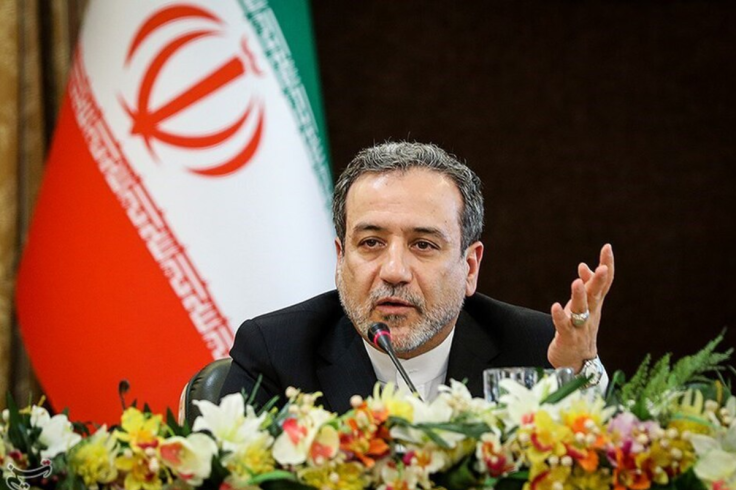
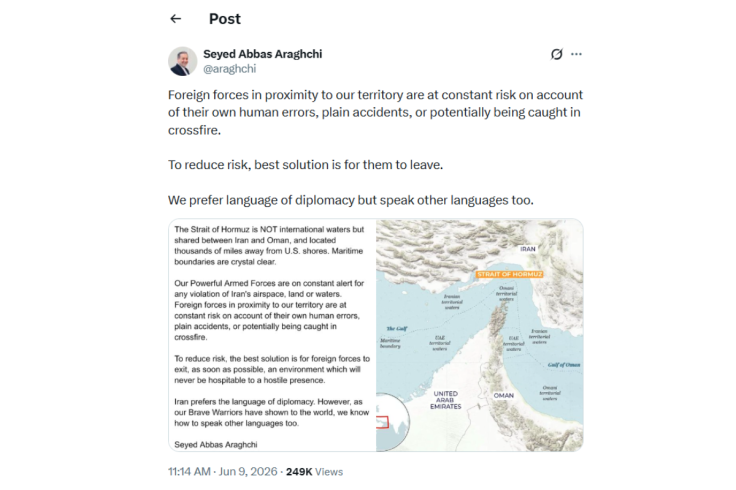
Iranian Foreign Minister Seyed Abbas Araghchi issued a pointed warning to US forces on Tuesday, stopping just short of claiming responsibility for the downing of an American Apache helicopter near the Strait of Hormuz. In a post on X, Araghchi said that 'foreign forces in proximity to our territory are at constant risk on account of their own human errors, plain accidents, or potentially being caught in crossfire,' before adding: 'We prefer language of diplomacy but speak other languages too.'
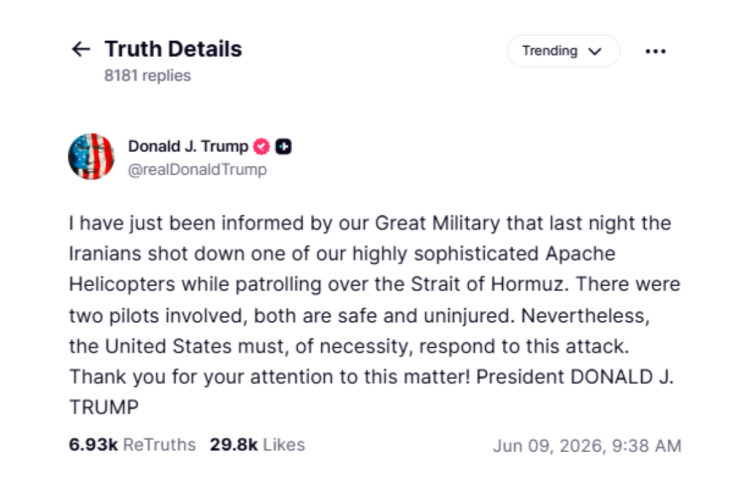
The statement came hours after US President Donald Trump announced on Truth Social that Iran had shot down a US Army AH-64 Apache helicopter that had been on patrol over the Strait of Hormuz the previous evening. Trump said he had been briefed by the military and confirmed that both pilots survived. 'There were two pilots involved, both are safe and uninjured,' he wrote. 'Nevertheless, the United States must, of necessity, respond to this attack.'
A Historic Rescue in Contested Waters
According to a statement from US Central Command, the two crew members were recovered at approximately 7:33 pm Eastern time on 8 June, after their aircraft went down near the coast of Oman. CENTCOM confirmed the soldiers were in stable condition and rescued within roughly two hours of the incident. The recovery was carried out by an unmanned Navy surface drone operated by Task Force 59, part of the US Fifth Fleet based in Bahrain — marking the first time such a vessel had been used to retrieve personnel in a live operation, according to CENTCOM spokesman Captain Tim Hawkins.
Two senior US officials separately told Fox News that Iranian drones were responsible for bringing the helicopter down, though it remained unclear whether the strike was intentional and the cause of the incident was still under official investigation as of Tuesday afternoon. No claim of responsibility had been made by Tehran, and the Islamic Revolutionary Guard Corps had yet to issue a statement.
Tehran's Message Is Clear
Araghchi's post did more than deflect blame. He also pushed back against the legal status of the waterway itself. 'The Strait of Hormuz is NOT international waters but shared between Iran and Oman, and located thousands of miles away from US shores,' he wrote. 'Maritime boundaries are crystal clear.' His call for US forces to withdraw was echoed almost simultaneously by Iran's parliamentary speaker Mohammad Bagher Ghalibaf, who posted on X that 'we prefer the language of diplomacy, but we speak other languages far more fluently.'
The coordinated tone of both statements signals that the warning was not improvised. Iran has not formally acknowledged shooting the helicopter down, but neither has it distanced itself from the incident.
A Fragile Ceasefire Under Pressure
Tuesday's events put fresh strain on the April ceasefire that had paused the broader US-Israel conflict with Iran. Trump's threat of retaliation risks fracturing the truce entirely, coming just days after Israel and Iran had exchanged fresh strikes — the first since the agreement came into effect. Trump had urged both sides to show restraint over the weekend before the helicopter incident brought the standoff to a new flashpoint.
The Apache loss is the first of its kind since the conflict began. Earlier in the campaign, an American F-15 had also been shot down by what officials described as a shoulder-fired heat-seeking missile, with its crew recovered after ejecting over Iranian territory. The accumulation of such incidents underscores how volatile the Strait remains, even during periods of nominal restraint.
The Strait of Hormuz is one of the world's most consequential maritime chokepoints, with roughly a fifth of global oil and liquefied natural gas passing through it. Iran's control over the waterway — and its willingness to signal military capability without a formal declaration — gives Tehran significant leverage in ongoing nuclear negotiations with Washington. Araghchi's statement, carefully worded but unmistakably threatening, reflects how Iran continues to operate in the space between diplomacy and open confrontation.
© Copyright IBTimes 2026. All rights reserved.