

ICE Quietly Kills Rule Tracking Detainee Deaths After Release as Custody Fatalities Hit a Two-Decade High
ICE's policy change removes a critical safeguard, raising concerns over detainee accountability.
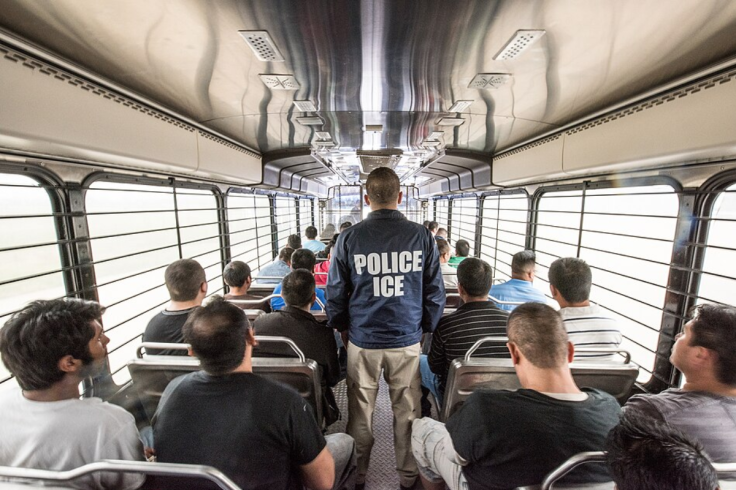
ICE has scrapped the rule requiring it to report deaths that occur within 30 days of releasing a detainee, precisely as the agency records its highest in-custody death toll in 20 years.
In a memo sent to agency employees on 4 June 2026 and reviewed by the Washington Post, acting ICE director David Venturella confirmed the agency is 'eliminating its requirement to report deaths that occur within 30 days of people being released from its custody.'
The change takes effect immediately and dismantles a safeguard that was put in place in 2021 specifically to stop the agency from shedding accountability for critically ill detainees by discharging them just before death. The policy shift comes as ICE has already recorded 18 deaths in the first five months of this year, a pace that puts 2026 on track to surpass the 32 deaths recorded in 2025, which was itself the deadliest year for ICE detainees since 2004.
The 2021 Rule ICE Has Now Eliminated
The 30-day post-release reporting requirement was introduced under the Biden administration after a case that made the loophole impossible to ignore. Martin Vargas Arellano contracted Covid-19 at the Adelanto detention centre in California. ICE held him until he was brain-dead and comatose, then released him from custody. He died three days later. Because he was technically no longer a detainee, the agency did not report his death to Congress.
'The policy changed to make clear that ICE should not release people simply to avoid deaths in custody,' Deborah Fleischaker, who was acting chief of staff at the time, told the Washington Post. That logic is now reversed. Venturella's memo states that 'ICE is returning to the standard practice of reporting deaths that occur while an individual is in agency custody,' framing the rollback as a return to normal rather than an erosion of oversight.

Congress has legally required ICE to report in-custody deaths publicly since the DHS Appropriations Bill of 2018, with the law obligating the agency to make full reports available within 90 days. That obligation covers deaths in custody. The 30-day post-release rule extended accountability beyond the moment of discharge.
Eliminating the latter does not violate the letter of the congressional mandate, but it does close off a category of deaths that was previously counted. A DHS spokesperson told ABC News: 'Under this updated policy, when an individual is no longer in ICE custody then ICE will no longer be responsible for monitoring or reviewing deaths that may occur.'
A Death Toll Already Straining the Numbers
The context for this policy change is stark. According to a CBS News analysis of ICE records, 32 people died in ICE custody in 2025, matching the previous record set in 2004. The detained population reached 68,440 in December 2025, the highest in the agency's history. Nearly 75 per cent of those detainees had no criminal convictions.
So far in 2026, ICE has reported 18 deaths in the first five months alone. The agency's own public death reporting page at ice.gov lists the congressional reporting requirements but shows only a partial picture of deaths, since the page covers fiscal years rather than calendar years and a reporting lag of up to 30 days has been documented by the American Immigration Lawyers Association.
Investigations by Jezebel found ICE had stopped issuing legally required full death reports within the 90-day window entirely, skipping the last eight deaths covered by the requirement.

The death rate, even when adjusted for the expanded detained population, is at its highest since the Covid-19 pandemic year of 2020. CBS News calculated a rate of 5.6 deaths per 10,000 detainees in 2025, the worst in five years. Advocates argue the new reporting change will make verifying or disputing official figures harder than ever.
Delaney Hall, Adelanto and a Pattern of Alleged Neglect
The policy change arrived days after a Human Rights Watch report documented a hunger and labour strike by over 300 detainees at Delaney Hall in Newark, New Jersey, a facility run by the private contractor GEO Group. Strikers reported medical neglect, spoiled food, denial of bond hearings, and pressure to sign voluntary departure documents. The strike began on 22 May 2026.
House Minority Leader Hakeem Jeffries conducted an oversight visit to the facility on 31 May 2026. 'The conditions of confinement we witnessed firsthand and discussed with approximately two dozen detainees at the Delaney Hall detention centre shock the conscience,' he said in a public statement released the same day. 'Immigration enforcement in this country should be fair, just and humane. The Trump administration is doing the exact opposite.'
Separately, on 2 June 2026, Representatives Judy Chu, Pete Aguilar, and Jimmy Gomez visited the Adelanto ICE Processing Centre in California, where detainees launched a hunger strike on 19 May. In a press release from Rep. Chu's office, the lawmakers noted that five people have died at or shortly after transfer from Adelanto since the start of Trump's second term, bringing the facility's total death count to at least 13 since it opened.
DHS disputed the hunger strike accounts in a statement published on its website, asserting that all detainees receive three meals a day certified by dieticians and that the death rate under the Trump administration remains consistent with the previous decade.
The agency added that it 'remains committed to transparency regarding detainee deaths.'
© Copyright IBTimes 2026. All rights reserved.