

AI-Generated Cargo Assessment Became Military Intelligence Report Before Chinese Ship Interception Was Halted
A chatbot's false reading of a Chinese vessel's cargo was incorporated into an intelligence product that circulated through the US military, sources reveal

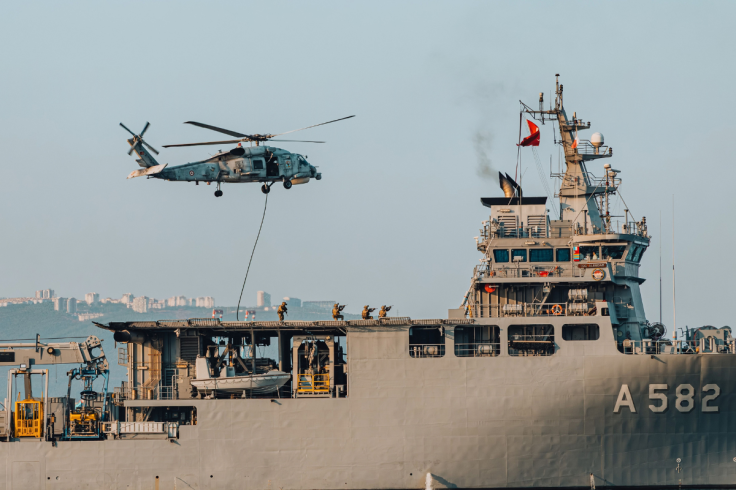
A US military analyst used a chatbot to assess intelligence about a Chinese vessel during the spring 2026 war with Iran, then used AI again to turn the resulting cargo assessment into a standard intelligence report that was circulated within the military and prompted preparations to intercept the ship.
The report claimed the vessel was carrying components of a nuclear weapons programme. Four sources said that the claim led to plans to stop the ship. Two said armed personnel were preparing to board it, while two said military aircraft were already airborne.
Officials halted the operation after reviewing the report and finding that the chatbot had misidentified the cargo.
How the False Assessment Reached Military Planners
The underlying reporting about the vessel's manifest originated with US Special Operations Command Pacific, or SOCPAC, in Hawaii. A special operations analyst fed the chatbot a mixture of open-source intelligence and classified signals intelligence, or SIGINT, about the ship.
The system combined that material and incorrectly identified the cargo as components of a nuclear weapons programme. The analyst then used AI to produce a standard intelligence report from the assessment. The report was circulated within the military before officials identified the error.
A former senior US official familiar with military and intelligence AI systems described internal tools as 'mostly just copies of the commercial stuff wearing lipstick'. One source described the report as 'entirely false' and said it 'almost started a war'.
It is not established what the vessel was actually carrying, and it was reported it could not determine whether the chatbot was a commercial system or a government-built tool.
It was also stated that another source said there was 'no real guidance' for how keeping a human in the loop would prevent civilian casualties or fratricide as AI use expands in military operations.
The comment was made about broader AI use and was not presented as an official finding about this incident. The Pentagon and SOCPAC did not provide any comment on the matter.
Senators Seek Investigation As AI Use Expands
The incident comes as the Department of War expands access to generative AI through GenAI.mil, its government AI platform. Google Gemini for Government was available when the platform launched in December 2025.
OpenAI's ChatGPT Mil and Starshield AI's Grok for Government were added on 31 August 2026. IT was reported there is no indication in its reporting that any of those systems was used in the Chinese vessel incident.
Senators Mark Warner, Jack Reed and Chris Coons wrote to Defence Secretary Pete Hegseth and Director of National Intelligence Jay Clayton on 19 September seeking investigations by relevant inspectors general into reported AI-related incidents.
The senators also cited a February US strike on a school in Minab, Iran, where previous reporting raised questions about outdated intelligence and warnings contained in databases, including an AI-powered system.
Their letter sought scrutiny of that case alongside the Chinese vessel episode and other reported incidents involving AI-assisted intelligence or targeting workflows.
The Chinese vessel was not boarded. Officials halted the planned interception after determining that the AI-assisted intelligence report had misidentified its cargo.
© Copyright IBTimes 2026. All rights reserved.
- Recommended For You


