

Psychologist Warns of What He Calls 'Concerning' Speech and Motor Changes in Trump
Dr John Garrison's video analysis of Trump's halting 9/11‑themed speech and arm movements has reignited debate over the president's health
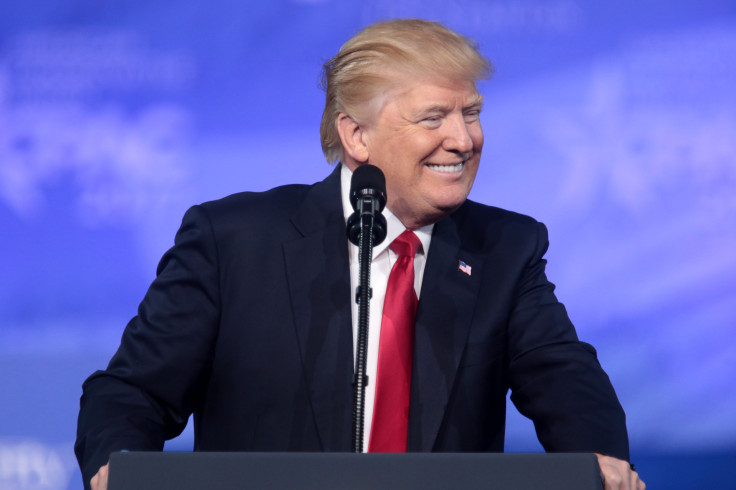
Donald Trump's remarks at a 9/11 commemorative event in Washington, D.C., on Tuesday prompted a widely shared warning from a psychologist, who on Wednesday claimed the president showed 'concerning' signs in his speech and physical movements that he believes could point to neurological problems.
The psychologist, Dr John Garrison, argued that Trump's halting remarks and what he views as unusual 'motor activity' should be cause for serious concern.
Trump spoke at the Ellipse on Tuesday, 8 September, at a Tunnel to Towers Foundation event held ahead of the 25th anniversary of the 11 September attacks.
The appearance came during a commemorative ceremony honouring victims and first responders, a set‑piece morning event that began at about 10am, where Trump was scheduled to participate at 10:35am.
Instead of fading into the usual churn of official speeches, his performance has poured fresh fuel on an already heated debate over the 80‑year‑old president's health, with commentators now poring over the footage.
Psychologist Warns of What He Calls 'Steep Neurological Decline' in Donald Trump
The latest scrutiny centres on an analysis by Dr John Garrison, a clinical and forensic psychologist who has been tracking what he himself describes as Trump's 'steep neurological decline' over time, based entirely on public appearances.
In his new assessment, Garrison points to what he interprets as repeated warning signs, stressing that these are his readings of video, not findings from any clinical examination of the president.
According to Garrison, Trump's 9/11‑themed speech featured 'halting' and laboured delivery that he says is sharply at odds with the way the president has usually sounded on stage.
He highlighted a clip in which Trump appears to lose his rhythm every few words, at times pausing and restarting as he tries to complete sentences.
Garrison interpreted the pauses and hesitations as possible signs of difficulty with language production, although the footage alone does not establish a neurological cause.
'For anybody who's seen President Trump speak before, this is highly unusual, this type of halting speech,' he said in his video breakdown. 'What we are seeing is a clear struggle with language production.'
He also drew attention to the timing. This was a scripted appearance on the White House schedule, in mid‑morning, not a late‑night rally after a long day.
Garrison argued that Trump's performance was notable because it occurred when he believed the president 'should be at his absolute freshest,' yet Trump still appeared, in Garrison's view, to be wrestling with his delivery.
Donald Trump's Speech Patterns and the Question of 'Motor Activity'
Garrison's concerns do not rest on a single event. He says he has observed what he characterises as slurred speech, unusual movements and a possible seizure‑like episode in Trump's public appearances over time. He presents these as part of a pattern that, in his view, looks more like neurological trouble than simple tiredness or the wear and tear of age.
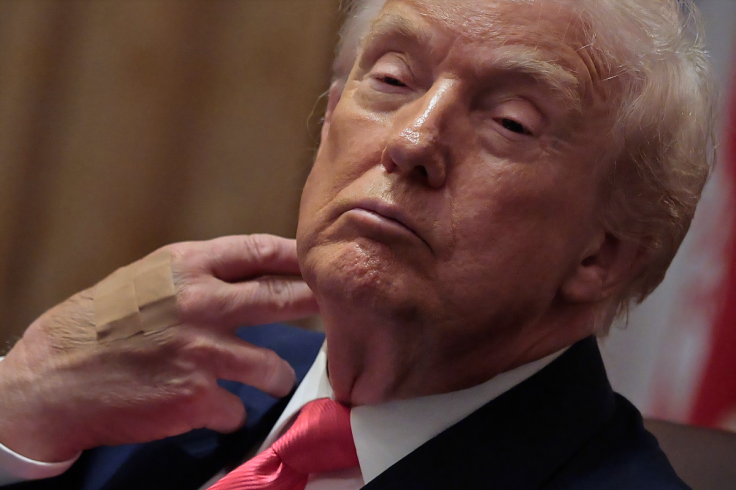
In his breakdown of the Ellipse event, Garrison said Trump 'seemed to get confused, and then he really struggled to speak'. He did not offer a firm diagnosis and repeatedly acknowledged that he was speculating. Instead, he floated several conditions that he said could, in theory, produce some of the behaviours he believes he is seeing on tape.
'There could be a wide variety of neurological reasons that someone can go through that,' he said, mentioning the possibility of a past stroke, some type of dementia, or Parkinson's disease as examples that might cause comparable issues.
Garrison argued that the behaviour could have neurological explanations, while conceding that he could not establish any underlying cause from public footage alone.
He contrasted Trump with a nervous novice at the podium. If an ordinary person unused to public speaking delivered a broken, hesitant address, Garrison suggested, it might not mean much at all. 'But it's not normal for President Trump,' he said. 'This is different.'
From there, Garrison shifted to Trump's body language, urging viewers to focus on what he called the president's 'motor activity,' especially around his arm and torso. In the footage he cites, Trump stands listening to another speaker and his arm appears to make several brief, sharp movements, which Garrison interprets as potentially involuntary.
'What we're noticing is a progression in his involuntary motor activity,' Garrison claimed, pointing to possible explanations such as myoclonic activity and 'focal seizure activity' that, he argued, 'can cause behaviour just like that.' He also suggested that the movements could, among other possibilities, be consistent with seizure‑type phenomena, but the video obviously does not establish that Trump experienced a seizure.
Garrison did not diagnose Trump with any specific condition. Instead, he suggested that several neurological conditions could produce some of the behaviour he flagged in public footage. No medical examination has established those possibilities, and Garrison has never treated or assessed him in a clinical setting.
Public Anxiety Over Donald Trump's Health
Over the course of Trump's second term, questions about his mental and physical fitness have hardened into a running national argument, and Garrison's commentary plugs neatly into that wider row.
A recent ABC News/Washington Post/Ipsos poll found that 56 percent of Americans said Trump lacked the mental sharpness required to serve effectively as president, underlining how far concerns about his cognition have moved into the mainstream political conversation.
Some doctors and medical commentators have publicly questioned aspects of Trump's health based on his public appearances, although such observations cannot substitute for a clinical examination. The online ecosystem, predictably, has turned that material into an endless loop of clips and commentary, some sober, some frankly wild.
The claims also sit alongside the White House's own narrative. A detailed medical memorandum released in May 2026 by the president's physician said Trump had strong cardiac, pulmonary and neurological function following a comprehensive examination that involved 22 speciality providers. The White House described him at the time as being in excellent health. Garrison's analysis, by contrast, rests solely on what he believes he can infer from publicly available video.
He, for one, is adamant that the trend line points the wrong way. 'Trump is continuing to struggle with speech production, and while there are a variety of potential neurological explanations, given all of the other symptoms and problems he's having, all of the possibilities are quite concerning,' he said.
In recent months, he added, he has heard Trump 'struggle in many different ways over many different speeches', but believes the particular hesitancy seen at the 9/11‑related event was 'highly unusual for him.'
In Garrison's reading, Trump appears to be battling not only to form words, but at times to keep his thoughts straight. 'It seems that he's not only struggling with language production, but there seems to be real confusion at times as well,' he said, arguing that Trump's 'behaviour, his problems, all of these challenges continue to progress.'
The White House has not publicly responded specifically to Garrison's latest analysis. Its most recent published medical assessment, however, said Trump demonstrated strong neurological and overall physical function. For now, at least, those duelling narratives ensure that debate over Trump's health is not going anywhere.
© Copyright IBTimes 2026. All rights reserved.