

Queen Camilla, Prince Andrew, Sarah Ferguson and More: All Royals Who've Been Named in the Epstein Files
Epstein files reheat the Prince Andrew scandal—and show how fast 'named' can be mistaken for 'guilty.'
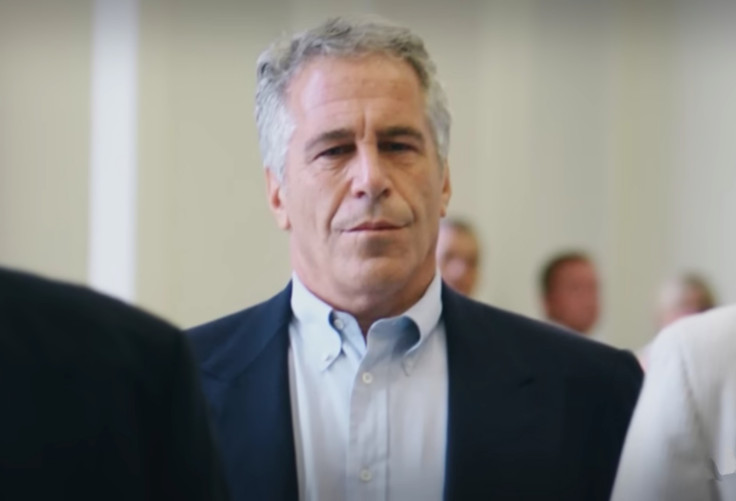
A photograph can do what a thousand pages of legal language cannot: it sticks. Three days after the US Department of Justice published what it described as the final tranche of material tied to Jeffrey Epstein, one particular image of Andrew Mountbatten-Windsor—on all fours over an unidentified woman—was the detail that refused to behave like 'just another document'.
The release, according to the Justice Department, runs to roughly 3.5 million pages in total, with more than three million pages added in the latest publication under the Epstein Files Transparency Act. The same DOJ material describes a haul that includes more than 2,000 videos and 180,000 images—numbers so large they almost become abstract until you remember what they contain and why people wanted them disclosed in the first place.
And then, inevitably, politics arrived, elbow-first. Deputy Attorney General Todd Blanche described the drop as the end of a 'very comprehensive document identification and review process,' while Tyla reports some Democrats argue the public is still not seeing everything, with US Representative Robert Garcia claiming the Trump administration is withholding 'roughly 50 percent' of the files.
None of this is tidy. It was never going to be. But it does expose something uncomfortable about how we now consume scandal: the public says it wants transparency, then behaves as though the only useful unit of information is a famous name.
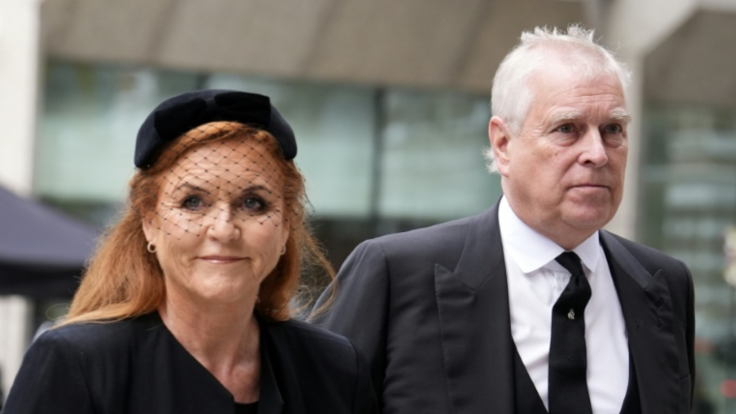
Queen Camilla, Prince Andrew, Sarah Ferguson: When A Name Is Not A Charge
Start with the crucial, frequently ignored distinction: 'named' is not a synonym for 'implicated.' Tyla makes that point explicitly when it turns to Queen Camilla, saying she appears nine times in the federal documentation while adding there is 'no reason to believe' those references indicate a personal connection to Epstein.
The article suggests the likeliest explanations are mundane—her name appearing in forwarded articles, third-party correspondence, or reference lists—precisely the kind of background noise that becomes a bonfire online.
Princess Diana is treated in similarly careful terms. Tyla reports she is mentioned 14 times and stresses that, in itself, this does not prove she had contact with Epstein or any involvement in wrongdoing.
It also notes a claim within what appears to be an unpublished profile piece, in which an author says they observed Epstein with 'his arm around Princess Diana' at a 1994 London dinner, while adding there is 'no viable proof' the two ever met.
This is where the public conversation tends to go sour. The internet—our own British corner of it included—rarely reads the second paragraph, never mind the caveats. Once the word 'Epstein' is bolted to a royal name, people stop asking what the mention actually means and start arguing about what it should mean.

Queen Camilla, Prince Andrew, Sarah Ferguson: The Ugly Economics Of Attention
Prince Andrew is different, not because the documents have magically created allegations out of thin air, but because his relationship with Epstein has long been a live scandal. Tyla recounts Virginia Giuffre's accusations that Andrew sexually assaulted her when she was a minor after being trafficked by Epstein and Ghislaine Maxwell, and notes Andrew denies wrongdoing.
It also says Andrew is mentioned 'hundreds of times' in emails in the newly released material and highlights an exchange with a sender signing 'HRH The Duke of York' discussing a 'beautiful' Russian woman.
Then there is the question of proximity—who orbited the same circle, who appeared to normalise it, who benefitted from it. Tyla reports that Sarah Ferguson is mentioned multiple times, including a 2011 request from Epstein to publicist Mike Sitrick to 'draft a statement that in an ideal world Fergie would put out.' The same piece repeats Ferguson's quoted line—'I abhor paedophilia and any sexual abuse of children'—and says she apologised for accepting £15,000 from Epstein.
It is an ugly kind of reputational tax: association, implication, denial, counter-denial, all flattened into a timeline that refreshes every second. Even Andrew and Ferguson's daughters are tugged into the undertow, with Tyla reporting peripheral references, including claims that photographs and Christmas cards were sent to Epstein and that Ferguson appeared to invite him to Andrew's 50th birthday at St James's Palace.
What makes the whole cycle feel so bleakly predictable is how it rewards the least thoughtful reading. A mass disclosure can be a public good and still operate like a rumour engine, turning trauma into trivia and caveats into decoration. The test, now, is whether 'transparency' becomes a route to accountability—or simply another way of feeding the attention economy with famous faces.
© Copyright IBTimes 2026. All rights reserved.