

'Not Today Satan': Russia's Devil Worship Crackdown Could Get Recruiters Eight Years in Prison
The ruling exposes alleged recruiters to up to eight years in prison, while critics warn that vague definitions could target artistic expression
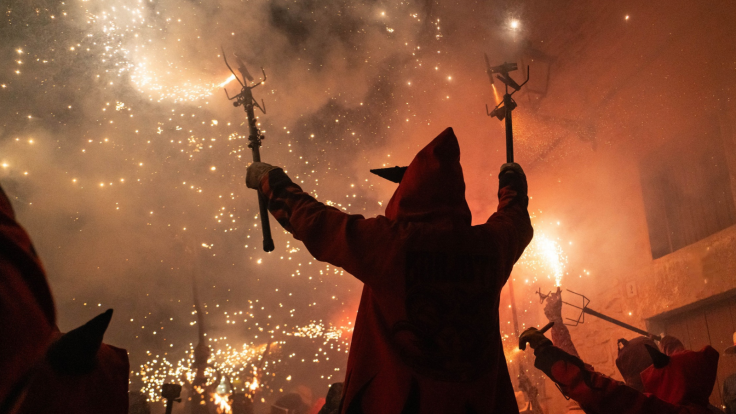
Russia has effectively criminalised activities associated with what its authorities call the 'International Satanist Movement', with people accused of supporting or recruiting for the banned organisation potentially facing years behind bars.
The controversial decision was made by Russia's Supreme Court on 23 July 2025, when it designated the so-called International Satanist Movement an extremist organisation and prohibited its activities throughout the country.
However, the ruling does not simply make every form of Satanism or private devil worship illegal. Instead, it targets an alleged extremist movement whose definition remains vague, raising concerns that ordinary people, musicians and fans of occult imagery could also find themselves facing legal consequences.
Russia's Supreme Court Bans 'Satanist Movement' as Extremist
The case was brought by Russia's Prosecutor General's Office, which argued that the movement promoted hatred, hostility towards traditional religions and extremist ideology.
The authorities also alleged that its followers called for the desecration of Orthodox churches and committed other crimes. The Supreme Court accepted the request and banned the movement with immediate effect.
However, the supposed international organisation has no clearly established membership structure or publicly identifiable leadership. Independent reporting has described it as a fictitious movement created by Russian authorities rather than a recognised organisation with a formal international presence.
The ruling has therefore raised questions about exactly who can be considered a member and what activities might attract prosecution.
You Could Face Eight Years Behind Bars
The potential penalties are particularly severe for people accused of helping the banned movement operate.
According to legal analysis published by Meduza, distributing extremist materials or organising public events on behalf of the organisation can carry prison sentences of up to six years. Recruiting other people into the movement can carry a maximum sentence of eight years.
These penalties fall under Russia's existing anti-extremism legislation rather than a law that simply prohibits someone from privately believing in Satan. Displaying symbols associated with the banned movement can also result in administrative punishment, including fines or short periods of detention.
The uncertainty surrounding which symbols are prohibited has become a major concern because the full reasoning behind the Supreme Court's decision has not been made publicly available.
Even Pentagrams and Gothic Imagery Have Attracted Police Attention
The consequences have already extended beyond organised religious activity.
A report published by Novaya Gazeta Europe in May 2026 identified at least 66 administrative cases involving alleged Satanist propaganda or symbolism since the ban. More than 50 of those cases reportedly involved social media posts.
Pentagrams were among the most frequently cited images, alongside depictions of Baphomet, inverted crosses and other occult symbols. One individual in Astrakhan reportedly received several short jail sentences after posting images containing symbols that authorities considered extremist.
Another case involved a resident of Yeysk who was ordered to perform 50 hours of corrective labour after posting photographs of tattoos that were deemed to contain Satanic imagery.
The cases have raised concerns among human rights advocates that people could be punished for artistic expression, clothing or online photographs without necessarily belonging to an extremist organisation.
Why Russia Is Targeting Satanism
The campaign has received public support from Patriarch Kirill, head of the Russian Orthodox Church, who previously called for Satanism to be prohibited. He argued that occult groups threatened traditional religious values and could undermine Russian society.
The crackdown also fits into a broader pattern of the Russian government using extremism legislation against organisations and movements it considers incompatible with its political and cultural agenda.
Critics have compared the Satanism designation with Russia's earlier ban on the so-called international LGBT movement, which was also declared extremist despite having no clearly defined organisational structure.
For now, the consequences are already visible in the growing number of cases involving allegedly Satanic symbols and online content.
While Russia has not simply outlawed every private belief in the devil, its broad extremist designation means that activities associated with the banned movement can carry serious legal risks.
© Copyright IBTimes 2026. All rights reserved.