

'Black Death Plague' Outbreak Reportedly Predicted by Mystic Baba Vanga as Russian Hospitals Lock Down
Russia's unexplained laboratory death has fuelled plague fears and Baba Vanga claims, but officials have not confirmed an outbreak
Fears of a possible plague case in Russia have fuelled online claims about a Baba Vanga prediction after Darya Shipilova, a 28-year-old laboratory worker, died in Siberia on 2 October.
Around 200 people who had contact with her were placed under medical observation or quarantine, while Russian authorities said she died from pneumonia of unknown origin and that the situation was under control. There is currently no confirmed plague outbreak linked to her death.
The case centres on the Irkutsk Research Anti-Plague Institute of Siberia and the Far East, where Shipilova worked as a laboratory technician. Parts of the hospital in Shelekhov where she was treated were reportedly cordoned off, while officials identified and monitored people who had been in contact with her.
Russia Plague Fears Meet Official Denials
The speculation followed reports in local and independent Russian media that Shipilova had accidentally broken a test tube containing live Yersinia pestis while collecting samples on 25 September. Russian health authorities have not confirmed that account.
Rospotrebnadzor, Russia's public health watchdog, said the institute had found no evidence of an accident involving pathogen handling. Officials also said there was no evidence linking Shipilova's death to her work at the institute.
Igor Kobzev, governor of the Irkutsk region, described the cause of death as 'pneumonia of unknown aetiology.' He said no new cases had been reported among staff at the anti-plague institute. Known contacts had been identified, examined and placed under medical supervision.

Rospotrebnadzor later reported two COVID-19 cases and two rhinovirus cases among people who had contact with Shipilova. No other infectious diseases were identified, according to a report.
Independent Russian outlet Lyudi Baikala also reported precautionary restrictions at several hospitals in Irkutsk. These reportedly included visitor restrictions and screening measures, although details about the number of hospitals affected and the duration of the restrictions have varied between reports.
The measures have fuelled speculation online, but they do not by themselves establish a confirmed plague outbreak.
The World Health Organisation said the available information indicated that the public health risk to the general population appeared low. It added that the assessment could change if further information emerged.
Baba Vanga Plague Prediction Lacks Evidence
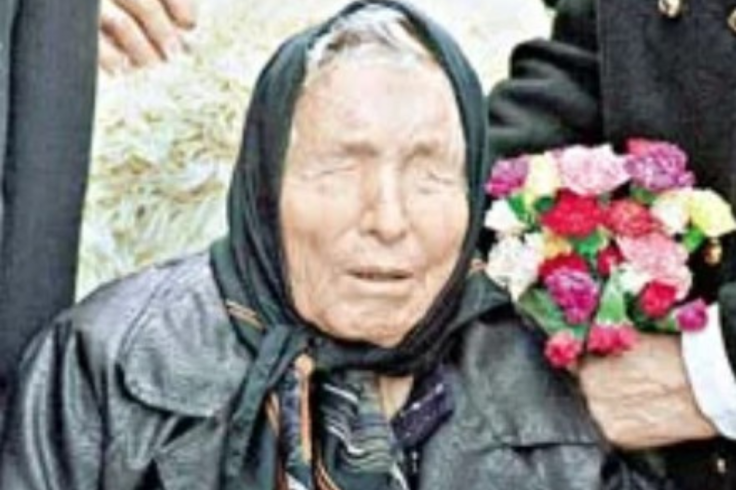
For context, the Russian case has become linked online to claims about Baba Vanga, the Bulgarian mystic who died in 1996. Her alleged predictions continue to circulate through social media and secondary reports, often after major events have already occurred.
One claim circulating online attributes to Vanga a prediction that a virus frozen in Siberia would be released and spread around the world. However, no authenticated record has been found showing that she made the prediction.
Another alleged forecast links 2027 to biological changes and people developing 'superhuman abilities.' There is no verified source establishing that Vanga made this prediction either. The claims circulate through secondary reports and online interpretations rather than an authenticated primary record.
The alleged prophecy therefore lacks a verifiable primary source. It also cannot establish what caused Shipilova's illness or demonstrate that a wider infection is developing.
What Russia's Plague Case Shows
The term Black Death refers to the devastating plague pandemic that struck Europe during the 14th century. Modern plague is caused by the bacterium Yersinia pestis, which can affect the lymphatic system, bloodstream or lungs.
Pneumonic plague is the lung-based form. It can spread through respiratory particles and become fatal without early diagnosis and treatment. WHO says recovery rates are high when the disease is detected and treated promptly.
Laboratory testing is required to confirm plague. Suitable clinical samples can include blood, sputum or material from a swollen lymph node.
That requirement matters in this case. Russian authorities have not confirmed that Shipilova had plague, and officials said no pathogen connected to her work had been identified.
US President Donald Trump described the death as a 'big problem for Russia' and said Washington was willing to help. US Secretary of State Marco Rubio said the situation was being monitored.
The confirmed facts remain narrower than some online claims suggest. One laboratory worker died after developing pneumonia of unknown origin. Around 200 contacts were monitored, precautionary restrictions were introduced at some hospitals, and authorities investigated the circumstances.
A confirmed plague outbreak, or a verified Baba Vanga prediction linking the case to Siberia, has not been established.
© Copyright IBTimes 2026. All rights reserved.