

'Stop Being a Cry Baby': Supreme Court Hears Case That Could Grant Federal Officers Full Immunity
A prisoner's alleged plea for treatment tests who can hold federal officers personally accountable
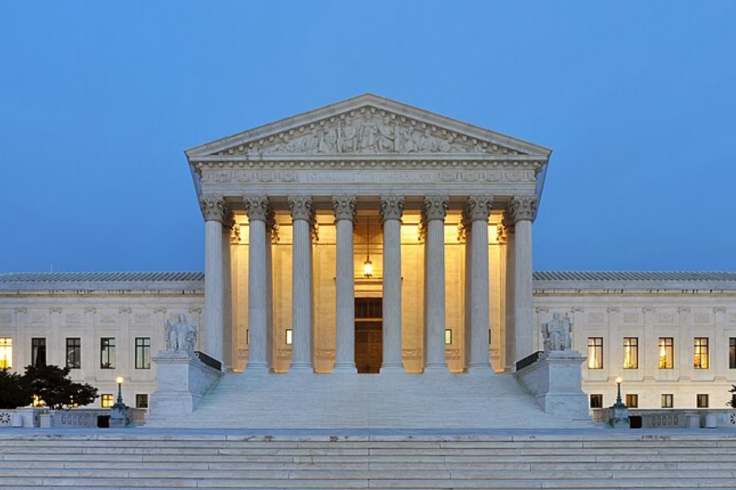
The US Supreme Court heard pivotal oral arguments on Monday, 9 November 2026, in a landmark constitutional confrontation that could drastically restrict the fundamental right of citizens to sue federal law enforcement officers for damages.
The high-stakes dispute, titled Nielsen v. Watanabe, centres upon former federal prisoner Kekai Watanabe, who sustained a fractured tailbone and internal bone fragmentation during a violent gang riot at the Federal Detention Center in Honolulu on 12 July 2021.
Watanabe alleges that federal prison nurse Francis Nielsen subjected him to cruel and unusual punishment under the Eighth Amendment by refusing urgent hospital care, dismissing his agonising injuries by telling him to 'stop being a cry baby', and leaving him confined in solitary isolation for months with only basic over-the-counter medication.
An X-ray in February 2022 revealed a fractured tailbone and bone fragments in surrounding tissue, according to Watanabe's complaint.
With the Trump administration backing the appeal and civil rights defenders warning of unchecked executive impunity, the outcome promises to redefine accountability across federal institutions.
Why the Supreme Court Is Reviewing Watanabe's Lawsuit
Watanabe claims Nielsen's response violated the Eighth Amendment's prohibition on cruel and unusual punishment. His allegations have not been established as findings of misconduct. The justices are deciding whether his damages claim can proceed, not whether Nielsen is liable.
The legal dispute centres on Bivens, a 1971 Supreme Court ruling that recognised a right to seek damages from federal officers for certain constitutional violations. In Carlson v. Green in 1980, the court recognised a related remedy after a prisoner died following inadequate asthma treatment.
A federal district court dismissed Watanabe's claim, but the Ninth Circuit Court of Appeals reinstated it in September 2024. The appellate majority found his allegations sufficiently similar to Carlson to fall within an existing damages remedy.
Nielsen's lawyers argue that differences in the injuries, the availability of other remedies and subsequent prison legislation make this a distinct case. They want the Supreme Court to reverse the appellate ruling and overturn Bivens altogether. The justices agreed to hear the appeal in June 2026.
How the Supreme Court Ruling Could Reach Beyond Prisons
The Trump administration supports Nielsen's appeal but has urged the justices not to overturn Bivens outright in this case. Instead, the Justice Department argues that the existing prison medical-care precedent has become effectively obsolete.
Former Justice Department lawyer Mary Hampton Mason told NPR she favours ending Bivens. She argues misconduct often reflects institutional failures in training and culture, while the precedent offers plaintiffs false hope.
Supporters of Watanabe warn that further restrictions could leave people without meaningful compensation when federal officials violate their rights. Georgetown law professor Stephen Vladeck, who filed a supporting brief, has warned that eliminating Bivens could effectively shield officers from personal damages liability.
The MacArthur Justice Center and Prison Policy Initiative point to difficulties obtaining relief through prison grievance procedures. Their court brief cites federal records from 2014 to 2024 showing that 940 of 65,712 medical-care grievances, about 1.4%, were recorded as granted.
A restrictive ruling could also influence claims involving federal immigration enforcement, although those cases are separate from Watanabe's. Ending or narrowing Bivens would not automatically eliminate every other legal remedy against the federal government or its officers.
Congress could create a statutory right to sue. The Bivens Act of 2025 was introduced in both chambers, but neither proposal has become law. Both bills were referred to congressional judiciary committees.
With oral arguments concluded, the Supreme Court is anticipated to deliver its consequential decision before the conclusion of the judicial term in June 2027.
© Copyright IBTimes 2026. All rights reserved.