

Federal Court Orders Trump Administration To Stop 'Unlawful Threats' Against the Election Workers
Judge Trina Thompson said pressure from the Justice Department and Department of Homeland Security could disrupt ballot counting and disenfranchise eligible voters
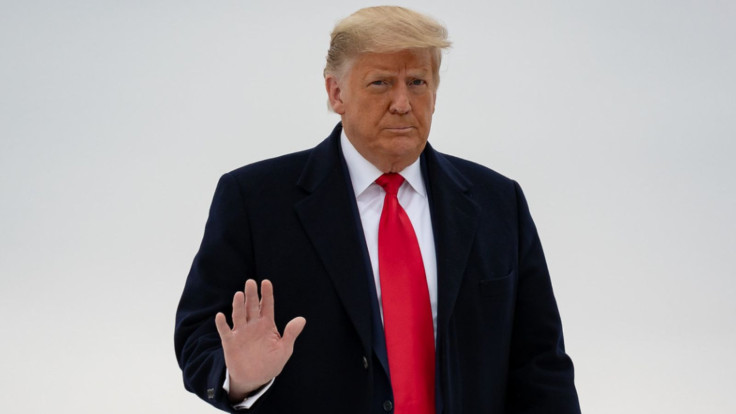
A federal court in California on Friday, 30 October, ordered the Trump administration to stop threatening election workers handling the 2026 US midterm elections, warning that federal pressure risked disrupting ballot counting and preventing lawful voters from having their votes counted.
The decision followed a lawsuit filed earlier in the week by the Service Employees International Union (SEIU) and other unions. Their challenge arose from a dispute over a list of approximately 20,000 California residents whom federal authorities allege are likely noncitizens.
Election Workers Faced Threats of Prosecution
US District Judge Trina Thompson, sitting in the Northern District of California, found that senior officials at the Department of Justice (DOJ) and Department of Homeland Security (DHS) had engaged in efforts to intimidate and coerce state and local election personnel.
According to the eight-page order, federal officials sent letters to election workers in California stating that they could face criminal prosecution if they processed ballots belonging to people the government considered unlawful voters.
The letters referred to an aiding and abetting theory of criminal liability. Thompson also noted that letters were sent to officials in Washington state.
The administration has said that its actions were intended to prevent noncitizens from voting. Thompson concluded that the federal pressure was likely to interfere with election administration and result in eligible voters being unable to cast counted ballots.
With ballots already issued and voting under way, the court said the timing of the ruling was critical. Thompson wrote: 'Given the consequences of inaction, the Court sees no reason to delay its ruling.'
Election Workers' Unions Allege Coordinated Campaign
In a 46-page complaint, the unions stated that DOJ and DHS officials pursued a coordinated strategy to pressure election staff to halt ballot processing and counting.
They alleged that federal agencies compiled information from what they described as unreliable sources, combined it with analytics and commercially available artificial intelligence, and used the resulting data to identify workers for possible criminal investigations and prosecution.
These points are allegations set out by the plaintiffs and were not adopted as findings in the judge's emergency order.
The unions sought emergency relief the following day. Their motion referred to a judge's warning in earlier litigation that 'these threats must stop'. The plaintiffs said they believed federal pressure had continued despite that warning.
They also cited accounts dated 29 October alleging that DOJ had instructed prosecutors to pursue criminal subpoenas against election officials. The motion further claimed that threatening letters had been sent to officials in all 50 states, although Thompson's order specifically discussed letters in California and Washington.
Election Workers Receive Temporary Court Protection
The Justice Department had separately sued California over the list. During October, the US Court of Appeals for the Ninth Circuit twice rejected the administration's requests for emergency relief to set aside disputed ballots pending citizenship checks.
Those cases involved voter-roll removals. The union lawsuit concerns federal communications directed at officials administering the election.
In the unions' case, Thompson concluded that the federal departments had likely violated the Voting Rights Act, the Constitution's Elections Clause and provisions of the Fifth and Tenth Amendments. The finding supported the grant of emergency relief and did not resolve the underlying claims.
The order bars DOJ and DHS from issuing further threats or directing election workers to segregate ballots allegedly linked to suspected noncitizens. It also requires both departments to notify individuals who received formal threats that those threats have been enjoined.
The Trump administration appealed on 31 October. The temporary restraining order is scheduled to expire on 16 November, and a preliminary injunction hearing is set for 13 November.
© Copyright IBTimes 2026. All rights reserved.