Taylor Swift Accused of £560,000 Era's Tour Crew Bonus as 'Tax Write-Off'
Online uproar over Taylor Swift's Eras Tour bonus payouts prompts scrutiny of tax treatment
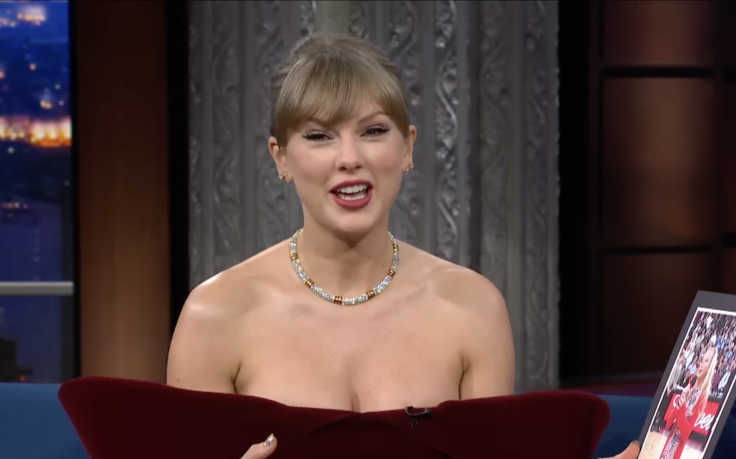
Taylor Swift's unprecedented generosity towards her Eras Tour crew has sparked an unexpected controversy: critics allege that the astronomical bonuses may have been structured as a tax-advantage tactic rather than purely altruistic rewards.
The pop megastar's six-month Eras Tour documentary, Taylor Swift: The Eras Tour | The End of an Era, on Disney+ details her heartfelt thank-you gestures to her 10,000-plus tour personnel, including dancers, tech crews, and truck drivers.
However, an online backlash has emerged, claiming the £560,000-plus ($750,000) amounts shown for individual crew members in the series could function as tax deductions for Swift's business rather than gifts, prompting questions about financial transparency and tax strategy.
Bonus Day: Generosity or Smart Finance?
In the documentary, Swift explains why the so-called 'bonus day' traditions were important to her: it recognised the crew's grueling work across 149 shows spanning five continents and set a precedent for equitable reward linked to the tour's gross success.
According to multiple reports, Swift distributed bonuses totalling £157 million ($197 million) throughout the Eras Tour, over and above regular compensation for roles ranging from caterers to carpenters. Yet critics online have seized on the optics of the sizeable payouts to argue that such payments could be used by Swift and her corporation as deductible business expenses, lowering overall taxable income for the entity behind the tour. This claim appears prominently in social media discussions, where commenters assert that generous payouts may serve as 'tax write-offs'.
From a tax perspective, payments to employees or contractors, whether labelled as bonuses or not, ordinarily count as deductible business expenses in many jurisdictions, including the United States. Employers can typically deduct wages and bonuses as ordinary business expenses when calculating taxable income, provided appropriate documentation is maintained. However, these are treated as taxable income for the recipients, who must report the amounts as compensation.
@entertainmenttonight Taylor Swift shares an emotional behind-the-scenes look at "Bonus Day" in her new 'The End of An Era' docuseries. While the exact amounts are edited out, ET confirmed at the time that Taylor gave out a total of $197 million to those working with her over the course of the tour. #taylorswift #erastour
♬ original sound - Entertainment Tonight - Entertainment Tonight
What the Docuseries Shows
Episode 2 of The End of an Era focuses closely on the bonus moment, capturing reactions from production assistant Max Holmes and dancer Kameron Saunders as they read Swift's personal notes accompanying the envelopes. The film deliberately bleeps the exact dollar amounts, leaving viewers to infer their magnitude through crew responses.
In archival footage from earlier in the tour, truck drivers contracted through logistics partner Shomotion reportedly received six-figure checks, around £80,000 ($100,000), at a tour leg in Santa Clara, California, a sum markedly higher than typical industry bonuses of £3,700-£ 7,000 ($5,000–$10,000).
Swift's approach was consistently framed by her team and coverage as one of appreciation for the crew's contributions to what became the highest-grossing concert tour in history, with gross ticket sales exceeding £1.6 billion ($2 billion).
Industry Context and Reactions
In the music and broader entertainment industries, professional touring personnel are often paid overtime, allowances, per diems, and in some cases discretionary bonuses, though the scale of Swift's payouts is widely reported as extraordinary.
“Bonuses are just a tax write off”
— NICK (Taylor’s Version)⸆⸉ (@_nd13) December 13, 2025
Sure, but there’s also a million other ways to lower your tax liability that don’t include giving life changing bonuses. But she CHOSE to do that.
Tay really is a generous queen 👸🏼
Mike Scherkenbach, CEO of Shomotion, told Rolling Stone that the checks his truck drivers received were 'life-changing', enabling significant life goals such as down payments on homes. This underscores how rare and impactful such bonuses are for workers typically earning modest industry wages.
You wanna play Semantics? Her tour cost 2Billion. That 200M "Bonus" is a business expense which reduces her taxable income. Taylor Swift is a businesswoman, not a charity. Billionaires don't become Billionaires because they care about people!
— Leigh Loeb (@leigh_loeb) December 12, 2025
Fans and cultural commentators have reacted to the tax speculation in divergent ways: some argue that large bonuses are inherently strategic financial moves by wealthy entertainers, while others highlight that critics often misunderstand how business deductions work.
There is a huge online debate on what constitutes genuine generosity versus PR or legal financial optimisation, but again, it remains just that.
© Copyright IBTimes 2026. All rights reserved.
- MOST POPULAR IN Entertainment