

Trump Administration Wants To Slash Pregnancy Workplace Accommodations Over Religious Exemptions
A proposed workplace policy shift raises fresh questions about reproductive healthcare, religious rights and protections for workers
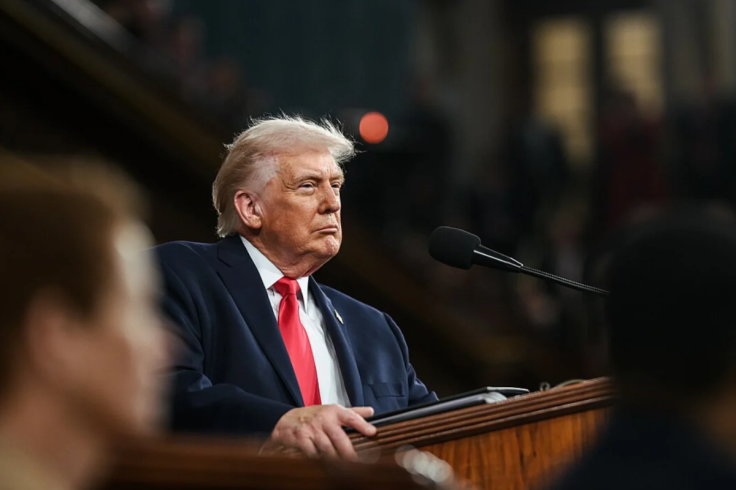
The Trump administration is considering changes to the Pregnant Workers Fairness Act that could narrow US workplace accommodations for fertility treatment and expand religious exemptions.
The plans, reported by The New York Times on Monday, 2 November 2026, involve federal regulations rather than an amendment to the law itself.
Congress approved the law in December 2022, and it took effect on 27 June 2023. It generally requires employers with at least 15 workers to provide reasonable accommodations for limitations connected to pregnancy, childbirth and related medical conditions. Employers need not make adjustments that would impose undue hardship.
There is a complication missing from some accounts of the planned rollback. A federal judge had already struck down parts of the regulations concerning purely elective abortions in May 2025. Those provisions cannot simply be described as protections still awaiting removal.
Pregnant Workers Fairness Act Changes Could Affect IVF Treatment
The Equal Employment Opportunity Commission, or EEOC, issued its implementing regulations in April 2024. They took effect on 18 June that year and interpreted pregnancy-related medical conditions to include miscarriage, lactation, postpartum depression, endometriosis, menstruation and fertility treatment.
The resulting accommodations can be quite ordinary. A worker might need a stool, additional bathroom breaks, permission to carry water or a change of shift. Others may request lighter duties, temporary reassignment, remote work or time off for appointments. Individual circumstances and undue hardship still matter.
For someone undergoing in vitro fertilisation, or IVF, the flexibility to attend medical appointments can be especially important. A regulation that no longer expressly mentions fertility treatment could create uncertainty about which requests employers must consider. That remains a possibility, not an announced change.
Andrea Lucas, now the EEOC chair, challenged the breadth of the 2024 rules as a commissioner. In a published statement, she argued that aspects of the interpretation 'cannot reasonably be reconciled with the text'. She nevertheless described the underlying law as a bipartisan achievement supporting pregnant workers.
Not everyone agrees that fertility protections should be reconsidered. In May 2026, 15 Democratic senators, including Tammy Duckworth, Elizabeth Warren and Chuck Schumer, urged Lucas not to weaken the rules. They warned that removing IVF language could make employers more likely to refuse accommodations.
Pregnant Workers Fairness Act Debate Also Involves Religious Exemptions
The administration is reportedly considering wider religious exemptions for employers that object to certain reproductive healthcare procedures. Federal law already contains provisions addressing religious employment, so the question is what additional exemption, if any, regulators might propose.
Abortion accommodations require particular care in explaining the legal position. The EEOC's 2024 regulations addressed time away from work for abortion-related care, including travel. They did not require employers to pay for abortions, travel expenses or paid leave.
On 21 May 2025, US District Judge David C. Joseph ruled that the commission had exceeded its authority in mandating accommodations for purely elective abortions. He vacated the relevant requirements while distinguishing procedures needed to treat medical conditions related to pregnancy.
The ruling did not erase the Pregnant Workers Fairness Act or its wider protections. Nor does it mean every abortion-related circumstance is legally identical. The position depends on the nature of the medical condition, other applicable laws and relevant court orders.
The broader dispute sits against the Supreme Court's 2022 decision in Dobbs v. Jackson Women's Health Organisation, which overturned Roe v. Wade. State abortion restrictions have made time away from work especially consequential for some people travelling for care.
Workers who qualify under the law also retain protections against retaliation for seeking accommodations. Employers generally cannot require them to take leave when another reasonable adjustment would allow them to work. Any further change must be assessed against the statute, existing regulations and court rulings.
The EEOC's regulatory agenda anticipates a proposed rule in November 2026, with public comments expected to close in January 2027. Neither date is a binding deadline. The agency has not yet published the proposed wording.
© Copyright IBTimes 2026. All rights reserved.