

Trump's Media Ban Backfires as He's Literally Silenced by the Missing Press Pool
Trump's crackdown on banned outlets triggers a broadcast blackout, leaving his remarks barely audible as the media war escalates
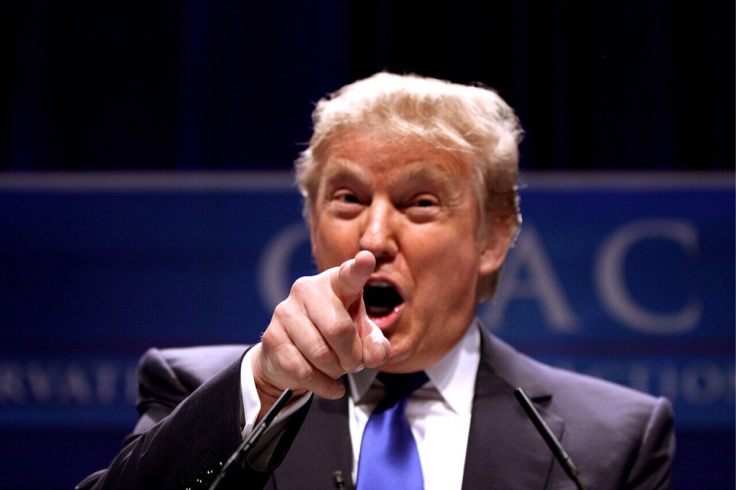
Donald Trump had plenty to say. The problem was that, when he unveiled the White House's new helipad, television viewers could barely hear him.
The president's remarks were drowned out by helicopter noise during Monday's ribbon-cutting, after the television networks that normally provide White House pool coverage suspended their shared operation. The White House had no independent TV pool feed available for the event.
Trump was not prevented from speaking. But without the usual broadcast infrastructure carrying clean audio and video, much of what he said simply failed to reach viewers clearly.
Talk about backfire.
— Brian Krassenstein (@krassenstein) September 21, 2026
Here’s Trump‘s event right now at the White House. Newsmax is covering it, but they can’t hear what he’s saying because the entire press Pool boycotted him for banning CNN, politico and MSnow.
Trump is silenced by the very people he tried to silence.…
The TV Pool Disappears
The extraordinary audio problem followed a dramatic chain of events.
On Friday, Trump announced that CNN, MS NOW and Politico would be barred from the White House, accusing the outlets of producing what he called 'FAKE NEWS'. Their access was subsequently revoked, and the three organisations filed a federal lawsuit challenging the decision.
CNN was also scheduled to provide Monday's television pool coverage. Instead, the other four members of the rotating pool, ABC, CBS, Fox News and NBC, declined to replace it.
Bryan Boughton, Fox News' Washington bureau chief and the pool's rotating chair, notified the White House press corps that there would be no replacement pool. The suspension applied specifically to presidential events designated for pool coverage, while other pooled coverage continued.
That distinction matters because the television pool is not simply another press conference arrangement. The five networks share the costs and responsibility of sending crews to presidential events, with the assigned broadcaster distributing its footage to other news organisations.
Remove that shared camera and audio operation, and the consequences can be immediate.
Trump's Words, Minus the Broadcast
That was exposed at the new White House helipad.
As Trump took part in the ribbon-cutting, helicopter noise overwhelmed the available audio, leaving his remarks effectively inaudible to television viewers. C-SPAN did not air the event because it relies on the television pool and had no feed to use.
The episode illustrated something bigger than one bad audio recording. When the independent television pool disappears, there can be very little broadcast footage of presidential events where journalists cannot independently bring their own cameras.
The White House can still provide its own video, and outlets can report from outside restricted areas. But those are not the same thing as the shared footage traditionally produced by news organisations.
Trump TV Enters the Fight
The same day the television pool stopped covering designated presidential events, the White House promoted its own online feed branded 'Trump TV'.
The White House launched 'TRUMP TV: The Essentials Station' on 21 September, describing it as a new source for administration announcements, presidential remarks and other material.
That creates a striking new media landscape around the president. Instead of relying solely on the traditional television pool for footage, the administration now has a direct digital channel through which it can distribute presidential material.
The difference is straightforward: pool footage is produced by rotating news organisations, while White House video comes from the administration itself.
The development therefore adds another layer to an already contentious fight over who controls access to presidential events and how the public sees them.
IT'S LIVE. 📺🦅
— The White House (@WhiteHouse) September 21, 2026
TRUMP TV IS STREAMING NOW. 24/7, updated in real time, with top past moments, announcements, and the latest and greatest from the administration all in one place.
Not every big moment has made it on your tv, now it can.
📲 https://t.co/3KwWkBZ69m pic.twitter.com/g4v7n2J04s
The Legal Fight Heads To Court
CNN, MS NOW and Politico have accused the administration of violating their First Amendment rights and due process protections. Those are allegations made in their lawsuit, not a final judicial finding.
Judge Timothy J. Kelly is scheduled to hear the outlets' request for a temporary restraining order on Wednesday, 23 September. Kelly previously ordered the restoration of CNN correspondent Jim Acosta's White House press credentials during Trump's first presidency.
Legal experts cited by Reuters said the administration could face significant constitutional difficulties if the exclusions are found to amount to viewpoint discrimination. The White House, meanwhile, has argued that press access is a privilege rather than a right and has defended the exclusions.
For now, the most immediate consequence is strikingly simple.
Trump still has a microphone. He still has cameras. And he still has plenty to say.
But after his media ban helped trigger the suspension of the television pool, there was suddenly no independent broadcast operation making sure viewers could actually hear him.
© Copyright IBTimes 2026. All rights reserved.
- Recommended For You


