

Donald Trump's Leg Tapping Might Be a Physical Therapy Technique, Commentator Suggests
David Pakman stressed that his theory was speculation and said there was no evidence linking the movement to a specific illness or condition
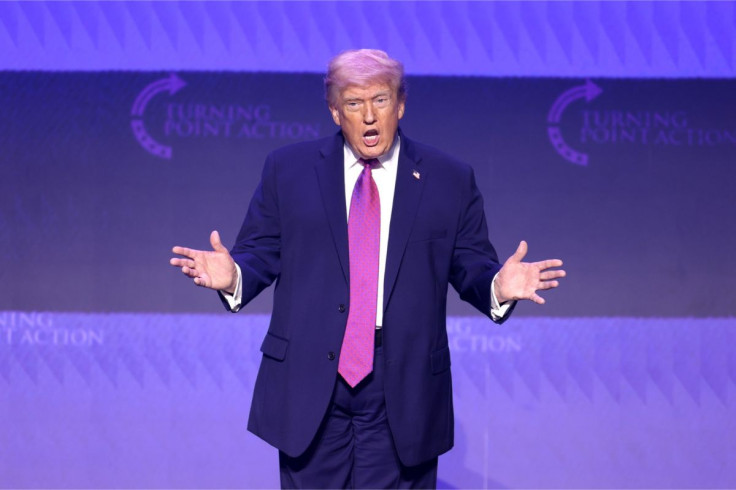
Donald Trump's leg tapping at a Veterans Day memorial service at Arlington National Cemetery in Virginia could be a physical therapy technique, commentator David Pakman has suggested.
The president's vocal critic described his theory as speculation and acknowledged that he did not know what explained the movement.
The appearance renewed questions about Trump's mental and physical well-being during his second term in the White House.
Official reports from his physician state that he is in good health, while Pakman's comments focused on a movement he claimed to have noticed repeatedly over the past year.
At Arlington, Trump's Leg Tapping Drew Attention
Trump laid a wreath at the Tomb of the Unknown Soldier and delivered an address during the occasion honouring veterans of the United States Armed Forces. Viewers noticed him repeatedly tapping his right leg as he walked.
On his YouTube channel, Pakman described what he considered a recurring movement in different locations. He suggested one possible explanation was tactile cueing, a technique involving physical touch or tapping to assist someone in performing a movement.
Pakman qualified his remarks by stating that 'we have no medical transparency on this guy, other than he's the healthiest president ever'. That was his criticism of the information available about Trump's health, rather than a medical assessment of the president.
Could Leg Tapping Be a Therapy Cue?
Tactile cueing uses touch, pressure, tapping or objects to guide a patient's movement, improve body awareness and prompt proper muscle activation.
Explaining his theory, Pakman stated, 'This is a real technique for people in physical therapy, including in neurological rehab. Sometimes if a person has trouble, coordinating a certain movement or a certain movement, they are told to use a physical touch or a tap, which is like an extra sensory input which will help you perform that movement.'
He described cueing as preparation for a movement that someone finds difficult, offering examples from neurological rehabilitation. His question was whether Trump might be tapping his leg to remind himself to prepare for a more difficult movement.
'For example, you might use a cueing technique if you have Parkinson's, or certain neurological injuries, or movement disorders, in order to prepare yourself for a certain movement that's more difficult.'
Those examples were part of Pakman's explanation of cueing. They did not establish a connection between Trump's tapping and any particular illness. There is no suggestion that Trump has Parkinson's or another neurological condition.
Pakman's central qualification was explicit. 'This is a real rehab concept. We don't know that's what Trump is doing.'
Other Questions Surround Trump's Leg Tapping
Pakman also noted the White House's acknowledgement that Trump has chronic venous insufficiency. The condition prevents leg veins from properly returning blood to the heart, causing blood to pool in the lower limbs.
It can cause swelling and is more common in older people. Pakman did not think it explained the tapping, although he questioned whether there might be a relationship between the condition and the movement.
He also mentioned other people's suggestions about stiffness, an orthopaedic problem or leg braces. These were additional theories raised in his commentary, rather than established explanations for what viewers observed at Arlington.
© Copyright IBTimes 2026. All rights reserved.