Trump Sons Merge Golf Firm With Powerus to Target $1.1B Pentagon Drone Contracts
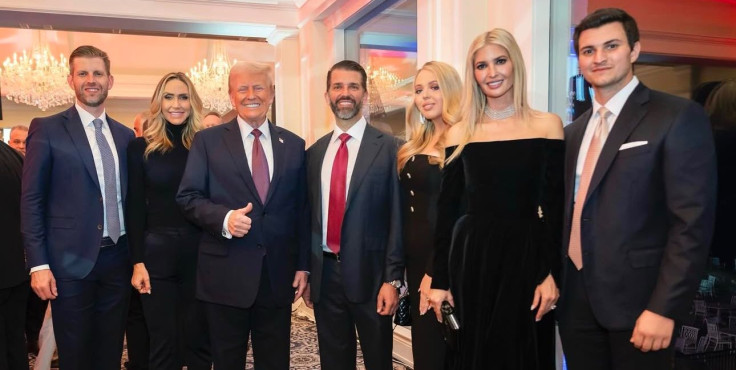
Eric Trump and Donald Trump Jr. are backing Florida-based firm, Powerus
The rapid expansion of the United States defence-tech sector has reached a controversial new junction, as Eric Trump and Donald Trump Jr. confirm their latest venture into the lucrative world of unmanned aerial systems.
Through a strategic reverse merger between the Trump-backed golf-course operator Aureus Greenway Holdings and the burgeoning Florida-based manufacturer Powerus, the president's sons are positioning themselves to capitalise on a massive shift in military procurement.
With the Pentagon launching its 'Drone Dominance' initiative, a $1.1 billion campaign designed to deploy over 200,000 drones by 2027, and the administration recently enforcing a strict ban on foreign-made Chinese drone components, the domestic market for combat-ready systems has seen unprecedented demand.
Powerus, which aims to leverage battlefield-proven Ukrainian drone designs for American-made production, represents the latest move by the Trump family to entangle private business interests with federal defence priorities. This development arrives amidst rising scrutiny from government ethics experts, who argue that the lack of a traditional blind trust for the president's assets, combined with the family's growing footprint in industries directly regulated by the White House, creates significant potential for conflicts of interest that remain largely unchecked as the administration escalates its military posture in the Middle East and beyond.
The Strategic Shift Toward Domestic Drone Production
The emergence of Powerus as a key player in the domestic drone market is part of a broader, aggressive strategy to localise the defence supply chain.
By integrating specialised heavy-lift capabilities—drones capable of carrying payloads up to 675 kilogrammes—and autonomous maritime conversion technology, the company is positioning itself as an essential partner for US defence agencies seeking to reduce their historical reliance on international suppliers.
The planned Nasdaq listing, facilitated through the merger with Aureus Greenway Holdings, is expected to provide the capital necessary to reach an ambitious production target of 10,000 drones per month, a volume that would instantly propel the startup into the ranks of the nation's largest defence-tech providers.
Involvement of Trump-linked Investment Vehicles
The investment is managed through several entities associated with the Trump family, including American Ventures and Unusual Machines, in which Donald Trump Jr. holds shares. Additionally, Dominari Securities, an investment bank linked to the Trumps, is overseeing the transaction.
This initiative appears to be part of a broader pattern rather than an isolated business deal. Historically, the Trump family has sought to leverage their political influence for financial gain. Their recent focus on drone technology aligns with the wider realignment of US military strategy, which emphasises rapid deployment and reduced reliance on Chinese technology.
The move also coincides with recent US foreign policy developments, notably in the Middle East, where drone strikes have become a key operational tactic. Acquiring Ukrainian drone technology could potentially grant the Trumps a foothold in an industry at the centre of modern conflict.
Given Ukraine's reliance on drone technology for defence purposes, demand for such equipment remains high. The Pentagon's efforts to strengthen its drone arsenal make this market particularly attractive, especially as Western nations seek alternative sources to Chinese systems.
Ethics and Potential Conflicts of Interest
Critics have voiced concerns over the ethical implications of this investment. Experts highlight that the timing, shortly after Donald Trump's presidency and amid ongoing global conflicts, raises questions about the influence of personal interests on public affairs.
Government ethics specialists warn that such activities risk blurring the boundaries between private enterprise and public service. The Trump family's extensive involvement in various ventures, including cryptocurrencies, has previously attracted scrutiny. Reports suggest that some of these ventures have profited significantly from the family's political stature, with critics alleging attempts to circumvent legal restrictions.
The New York Times estimates that Donald Trump's personal earnings since leaving office could amount to as much as £1.4 billion, largely derived from licensing deals, media settlements, and family investments.
Family Business With Deep Pockets
The Trump family's financial empire continues to expand, often shadowed by questions regarding their political influence. Their engagement in Ukraine's drone industry exemplifies how they appear to be intertwining political opportunities with private gains. Critics worry that such patterns may set troubling precedents in which personal wealth and influence become increasingly entangled, threatening public trust.
Many observers find these developments concerning. The prospect that the Trump brothers might be capitalising on geopolitical tensions, and possibly even influencing conflicts, raises profound questions about ethics and accountability. The ongoing narrative of ambition, influence, and profit underscores the complex relationship between public service and private interest.
As the drone industry gains prominence amid ongoing conflicts and global upheaval, the Trump brothers' investment signals a new chapter in their business pursuits. It also highlights enduring concerns about conflicts of interest in American politics, where the line between public duty and personal profit remains increasingly blurred. Many are left to ponder how far this pattern might extend in the future.
© Copyright IBTimes 2026. All rights reserved.
- MOST POPULAR IN World