

Trump Sons Invested Millions In Drone Firm After US Ban On Chinese Parts Fuels Iran War-Driven Demand
Trump Sons Dive into Defense: $59M Drone Deal Raises Eyebrows
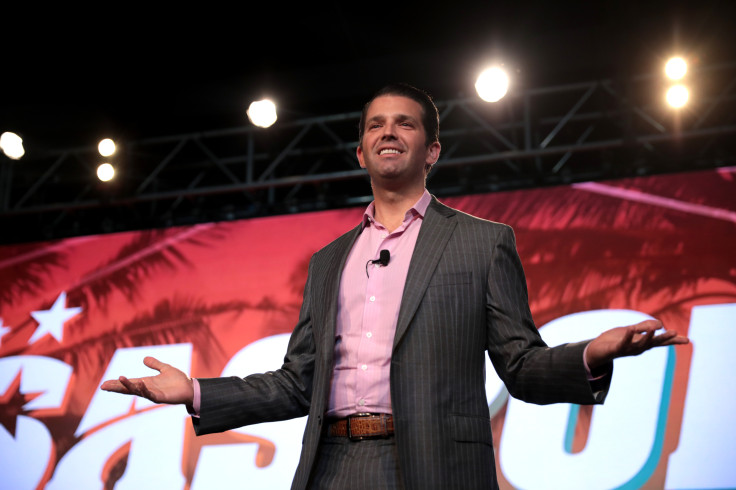
Donald Trump Jr. and Eric Trump have taken stakes in a Florida drone startup pitching itself to the Pentagon; a bet that places the president's sons in direct financial alignment with a defence market their father's administration has spent the past nine months constructing through executive orders, a sweeping ban on Chinese drone imports, and an active military campaign against Iran.
On 9 March 2026, Aureus Greenway Holdings Inc. (Nasdaq: AGH), a West Palm Beach golf-course operator in which both brothers hold stakes through their investment vehicle American Ventures, announced a definitive merger agreement with Autonomous Power Corporation, trading as Powerus.
Upon completion, the combined company will operate under the name Powerus Corporation and seek a Nasdaq listing under the ticker PUSA. The deal drew in a £7.1M ($9M) private placement from investors including drone components maker Unusual Machines (NYSE: UMAC), where Trump Jr. already sits as a shareholder and advisory board member, and a separate £39.5M ($50M) commitment from Seoul-based Korea Climate and Governance Improvement Fund (KCGI), bringing the total capital raise to approximately £46.6M ($59M).
A Company Purpose-Built for a Changed Market
Powerus was founded less than two years ago by former US Army Special Operations veterans and has already acquired three subsidiaries in six months: Kaizen Aerospace, which builds heavy-lift unmanned aerial systems capable of payloads exceeding 500 pounds; Tandem Defense, focused on tactical military platforms; and Agile Autonomy, which specialises in maritime surveillance systems.
All three operate from US-based manufacturing facilities. According to the company's press release, Powerus is targeting production capacity of more than 10,000 drones per month. Interim AGH chief executive Matthew Saker stated in the same release that 'the need for and uses of autonomous technologies are front page news given developments in the Middle East and elsewhere,' describing the deal as 'made even more relevant by current geopolitical uncertainties.' The merger is expected to close in summer 2026, pending shareholder approval, an effective Form S-4 registration, and regulatory clearance.
Exclusive: Eric Trump and Donald Trump Jr. are backing Powerus, a drone company vying to meet Pentagon demand and fill a hole left by the administration’s ban on new Chinese drones in the U.S. https://t.co/O6kmzXeGQT
— The Wall Street Journal (@WSJ) March 9, 2026
The commercial logic behind the deal is inseparable from a single regulatory act. On 22 December 2025, the Federal Communications Commission added all foreign-manufactured drones and critical components to its national security Covered List, blocking new models from Chinese manufacturers, including DJI and Autel Robotics, which together had commanded between 70 and 90 per cent of the US consumer drone market, from receiving FCC equipment authorisation.
Without that authorisation, new drone models cannot legally be imported, marketed, or sold in the United States. FCC chairman Brendan Carr said the action was designed to 'unleash American drone dominance.' DJI called the ruling 'disappointing' and said in a statement to CNN that 'no information has been released regarding what information was used by the Executive Branch in reaching its determination.' China's foreign ministry called the designation 'discriminatory.'
The Policy Architecture Behind the Profit
The regulatory environment that makes the Powerus investment commercially attractive was not assembled at arm's length from the Trump family. On 6 June 2025, President Trump signed Executive Order 14307, 'Unleashing American Drone Dominance,' directing all federal agencies to prioritise US-manufactured drone systems.
Defence Secretary Pete Hegseth followed on 10 July 2025 with a Pentagon memorandum titled 'Unleashing U.S. Military Drone Dominance,' rescinding previous procurement restrictions and classifying small drones as 'consumable' supplies. 'Drones are the biggest battlefield innovation in a generation,' Hegseth wrote.

'U.S. units are not outfitted with the lethal small drones the modern battlefield requires.' He called for every US Army squad to be equipped with low-cost, expendable drones by the end of fiscal year 2026, and the Pentagon subsequently announced plans to procure more than 200,000 drones by 2027 at a projected cost of £869M ($1.1B) across four programme phases. As of 7 March 2026, the Pentagon was set to place 30,000 drone orders 'in the next few days' following the first phase of its 'Gauntlet' evaluation at Fort Benning, Georgia.
The conflict-of-interest concerns do not originate with the Powerus announcement. Trump Jr. joined Unusual Machines as an adviser in November 2024, weeks after his father won the presidential election, despite having, according to reporting by Popular Information, 'no notable experience with drones or military contracting.' He was granted 200,000 shares of the company's stock in exchange for that advisory role, a stake valued by multiple outlets at approximately £3.2M ($4M).
In October 2025, Unusual Machines received its largest-ever Pentagon contract: a US Army order for 3,500 drone motors, with an additional 20,000 components expected to follow. The company's CEO Allan Evans and a Trump Jr. spokesperson both denied he played any role in securing the contract. Separately, 1789 Capital, a venture capital firm where Trump Jr. is a partner, had at least four portfolio companies win federal contracts totalling more than £582M ($735M) under the current administration, according to a Financial Times analysis. Unusual Machines is now also one of the investors in the Powerus private placement, meaning it is simultaneously an investor in, and a potential components supplier to, the newly combined company.
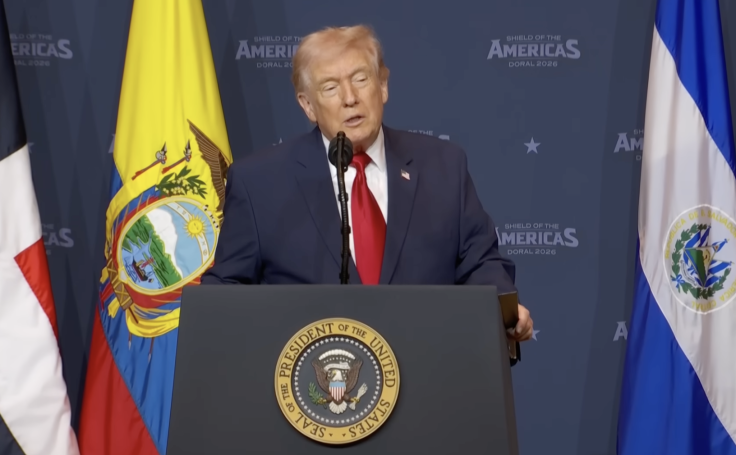
The War That Completes the Picture
The investment was announced as the United States remains in an active armed confrontation with Iran, operations in which drone systems sit at the centre of both offensive capability and strategic risk. Since the US and Israel launched strikes on Iranian nuclear infrastructure in mid-2025, Iran has responded with sustained drone and missile campaigns across the region.
The New Republic reported on 9 March 2026 that a seventh US service member had been killed when Iran struck a Saudi military base on 1 March. The Pentagon had deployed its Low-Cost Unmanned Combat Attack System (LUCAS), a one-way attack drone squadron, to US Central Command in the Middle East in November 2025, confirming the battlefield urgency driving procurement demand. Powerus CEO Andrew Fox told The Wall Street Journal that the drone market 'is certainly going to grow faster than, say, golf courses are.'
Ethics watchdogs are not treating the pattern as coincidental. Kedric Payne, general counsel at the Campaign Legal Center, told Al Jazeera: 'The first thing that comes to mind is another example of the president's family appearing to profit from the presidency.'
The administration shapes the market, writes the procurement rules, wages the war, and the president's sons hold equity in the companies being asked to win it.
© Copyright IBTimes 2026. All rights reserved.
- MOST POPULAR IN World


