

Who Is Kathy Ruemmler? Former Obama Counsel Who Communicated With Jeffrey Epstein The Most
Documents and a privilege log make Ruemmler one of the most prominent non-family figures in Epstein's email cache.
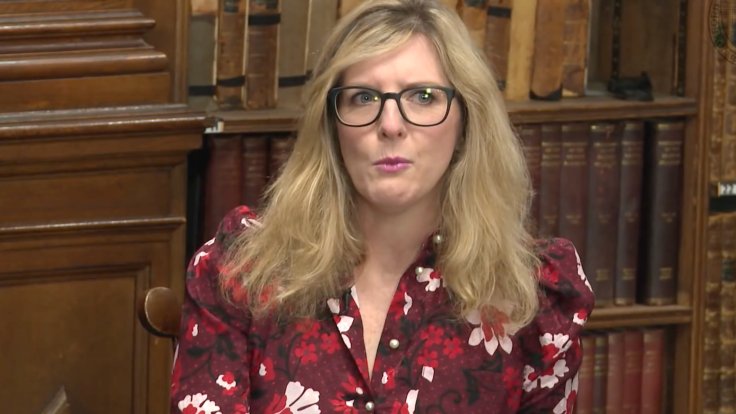
Kathy Ruemmler was a lawyer at the centre of newly released Jeffrey Epstein material, appearing as one of the most frequent non-family correspondents in the financier's email cache.
Once Former President Barack Obama's White House counsel and now the general counsel at Goldman Sachs, Ruemmler's exchanges with Epstein, spanning career advice, legal questions and personal notes, have prompted fresh scrutiny after House Democrats and court filings put hundreds of messages and a privilege log into the public record.
A High-Profile Lawyer Appears Repeatedly in the Epstein Files
Ruemmler, formally Kathryn H. Ruemmler, served as White House Counsel from 2011 until 2014 and later became a senior partner at Latham & Watkins before joining Goldman Sachs in 2020, where she is currently listed as Chief Legal Officer and General Counsel.
Emails produced by the estate and selectively released by House Democrats show a recurring correspondence between Ruemmler and Epstein from 2014 through mid-2019.
Some messages are conversational: career and apartment questions, political observations, while others, according to a court privilege log filed by the executors of Epstein's estate, are described as legal in nature.
Victims' lawyers and oversight investigators have pointed to those descriptions in the privilege log as evidence that Ruemmler's role may have extended beyond social acquaintance. The estate, however, has asserted attorney–client privilege over 277 messages between Ruemmler and Epstein, a claim now central to litigation between Epstein accusers and the estate's executors.
What The Documents Actually Show
The tranche of documents released to Congress included thousands of pages; the House Oversight packet that Democrats made public contains email threads and metadata showing Ruemmler in repeated contact with Epstein and with lawyers retained by him.
Some released messages show Ruemmler seeking Epstein's advice about job offers and housing; others evidence political commentary, including criticism of Donald Trump.
Crucially, the public versions of the court privilege log: a legal inventory that lists documents the estate contends are protected from disclosure, describe dozens of entries as 'attorney–client communications' concerning sexual-assault claims or litigation strategy.
The log was filed in a civil case brought by several alleged victims against Darren Indyke and Richard Kahn, the estate's co-executors, who are accused in separate litigation of facilitating Epstein's operations. The log itself remains a contested artefact: privilege logs do not reveal full content and are sometimes redacted to shield victim identities, which complicates outside assessment.
Goldman Sachs has told reporters that Ruemmler regrets any association with Epstein and that her professional relationship with him occurred while she was at Latham & Watkins, before she joined the bank. Ruemmler's office has not provided further public detail about whether she acted in a formal attorney capacity for Epstein in private practice.
Privilege, Privacy And Public Interest
The privilege claim sits at the intersection of two competing legal interests: victims' advocates' demand for transparency into Epstein's network and the estate's assertion of confidentiality rights. Plaintiffs say the privilege log's descriptions make clear the messages bear on litigated allegations against Epstein; the estate says turning the messages over would violate legitimate confidentiality protections.
The broader legal context has shifted in recent months. Congress passed, and the President signed, the Epstein Files Transparency Act, a law that mandated release of unclassified Department of Justice materials related to Epstein; federal judges have authorised unsealing portions of grand jury transcripts and investigative files.
Those movements increase pressure on courts to resolve privilege disputes and on the estate to produce documents. Still, judges have cautioned about protecting victim identities and redacting irrelevant personal data.
Beyond the privilege questions, some documents previously circulate that linked Ruemmler to a draft of Epstein's will, she was at one point listed as an alternate executor in earlier drafts, though that status was later changed. Such administrative ties, opponents say, deepen the public interest in full disclosure; defenders emphasise routine legal correspondence and social contact among lawyers and wealthy clients.
© Copyright IBTimes 2026. All rights reserved.