

3I/ATLAS Glows Greener And Brighter as Closest Earth Encounter Nears
The ancient, green-glowing interstellar comet 3I/ATLAS is now brighter than ever as it speeds past Earth
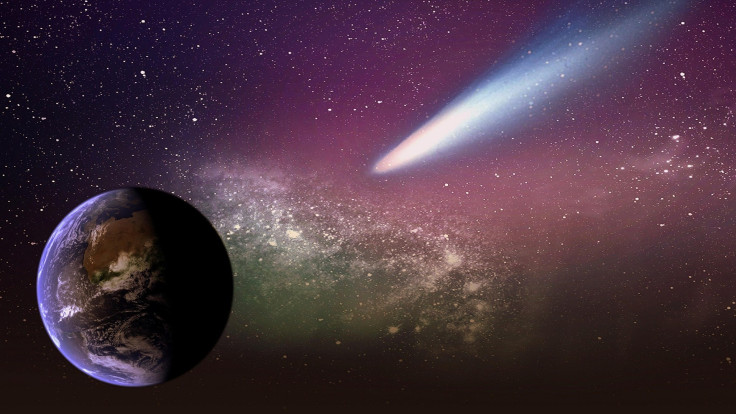
The universe is vast, but occasionally, something truly alien slips through our cosmic neighbourhood, offering a fleeting glimpse into the ancient building blocks of other star systems. This is precisely the case with the interstellar comet 3I/ATLAS, a colossal, fast-moving space rock that has now done something rather extraordinary: it has started turning vivid green.
Astronomers have been scrambling to track this mysterious visitor, only the third confirmed interstellar object (1I/'Oumuamua and 2I/Borisov were the first two) ever detected passing through our solar system. Discovered back in late June, the comet is screaming through space on a hyperbolic, U-shaped path that confirms it is not gravitationally bound to our sun — it is merely passing by at an estimated 210,000 kilometres per hour (130,000 mph) before heading back out into the void, never to return.
The latest findings, revealed by new imagery, show that 3I/ATLAS is not only getting significantly brighter but is also morphing in hue, providing vital clues about its composition.
The Colour Shift: Why Interstellar Comet 3I/ATLAS Is Turning Green
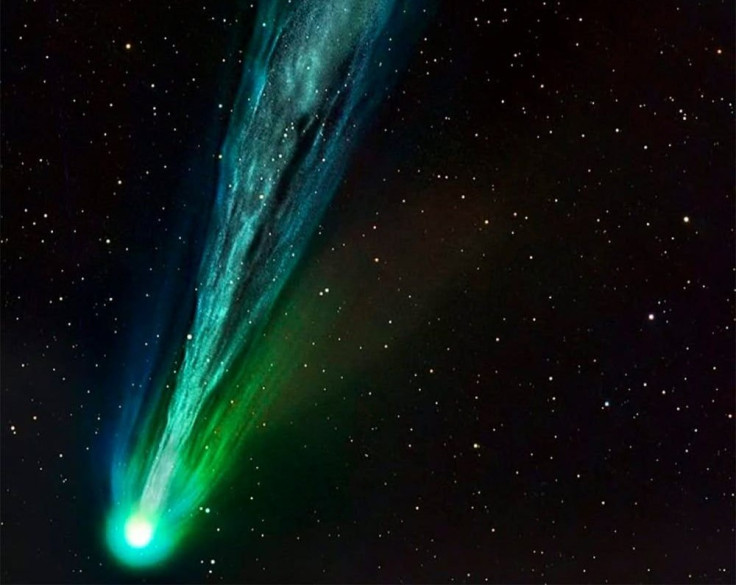
Images captured on Nov. 26 using the Gemini North telescope atop Hawaii's Mauna Kea volcano confirm the change. The comet now sports a bright, cloudy atmosphere, known as a coma, that emits a distinct, albeit faint, greenish glow. This is a dramatic contrast to observations made by the Gemini South telescope in late August, which found the object to be distinctly redder.
While the colour change might sound like something out of science fiction, the reason for the emerald glow is purely chemical. This green colour is caused by the presence of diatomic carbon (C2), a molecule composed of two carbon atoms. As the comet swings closer to the intense heat of the sun, the ice within its core sublimates, releasing this gas along with dust. When the (C2) gas interacts with solar radiation, it emits light in the greenish spectrum.
This phenomenon is common for many solar system comets — including last year's 'Mother of Dragons' comet 12P/Pons-Brooks and the recently identified Comet C/2025 F2 (SWAN) — but it is particularly meaningful for an object originating outside our system. Scientific consensus, which recently proved a long-standing 90-year-old theory, suggests that sunlight rapidly breaks down (C2) molecules, explaining why the green glow is contained only within the coma, or head, of the comet, and never appears in its long tail. The red-to-green switch indicates that 3I/ATLAS has now been heated enough to begin releasing these more complex carbon molecules.

The Final Approach: Will the Mammoth Comet 3I/ATLAS Erupt?
What makes 3I/ATLAS so scientifically compelling is its pedigree. Experts believe it is probably the largest and, very likely, the oldest interstellar object seen so far. If it originated from the thick disc of the Milky Way, scientists estimate this 'cosmic fossil' could be as old as seven billion years — older than our entire solar system.
As it barrels toward its ultimate farewell, astronomers are keeping a close watch. The comet is set to make its closest approach to Earth on Dec. 19, passing within a comfortable distance of 270 million kilometres (170 million miles) of our planet.
However, the real show may be yet to come. Because of the vast distances this object has travelled, there is a distinct possibility of a 'delayed reaction' to the sun's heat. Comets often have a lag time between being heated and the heat fully penetrating their icy interior. This delayed heating can trigger the sublimation of new, deeper chemical ices, potentially causing a massive, last-minute outburst of material before it finally sails away into the dark, making it briefly much brighter for observers on Earth.
While some fringe theories have suggested the object could be a piece of artificial alien technology, the overwhelming majority of astronomers agree it is a standard, albeit spectacular, interstellar comet. Studying it in depth offers a crucial opportunity to analyse primordial material from a different star system, revealing unprecedented details about the chemical makeup of our mysterious galactic frontier.
As the mammoth comet 3I/ATLAS prepares to make its final, distant approach to Earth before vanishing into the cosmic dark, scientists wait to see if its interior heat will trigger a spectacular, last-minute eruption. This green-glowing visitor is a time capsule of stellar evolution, offering an irreplaceable chance to study matter from beyond our sun's domain.
© Copyright IBTimes 2026. All rights reserved.