Voynich Manuscript 'Decoded' by WitchTok? Viral Theory Claims Women Used Period Blood to Grow Mysterious Plants
TikTok creators have proposed a link between menstrual rituals and the Voynich Manuscript
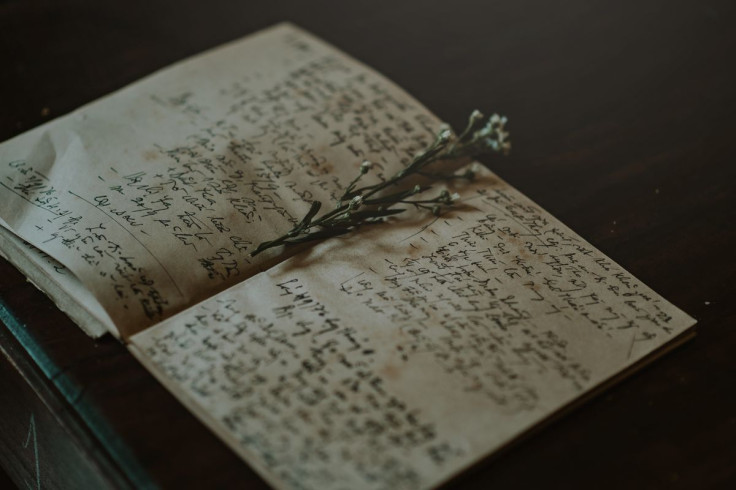
A viral TikTok trend encouraging women to add menstrual blood to moon water has become linked to a new theory about the mysterious Voynich Manuscript, with 'WitchTok' creators claiming the centuries-old book may contain a secret record of women's reproductive knowledge.
The trend involves collecting menstrual blood in water left under moonlight, with some creators claiming that the mixture can be used in rituals or to encourage plant growth. One viral discussion then drew comparisons between plants produced in these experiments and the strange botanical illustrations found throughout the Voynich Manuscript.
The theory has since expanded into claims that medieval women used menstrual blood, moon cycles and plants as part of a secret system recorded in the manuscript. However, the connection remains speculative. Yale University's Beinecke Rare Book and Manuscript Library continues to describe the Voynich Manuscript as undeciphered and written in an unknown script.
Trend Fuels Voynich Theory
The viral theory centres on the idea that menstrual blood can be combined with moon water and used in plant-related rituals. Creators have compared images from those experiments with the unusual botanical illustrations in the Voynich Manuscript.
Some interpretations of the manuscript also focus on its drawings of naked women in and around pools of green liquid, alongside plants, astronomical imagery and zodiac symbols. From those images, TikTok creators have proposed that the manuscript records women's menstrual cycles, reproductive knowledge and plant practices.
There is no established translation of the manuscript supporting those claims. Yale describes the text as being written in an unidentified script, with repeated attempts to decipher it having failed.
The viral theory represents a modern interpretation of illustrations whose original meaning remains uncertain.
What the Voynich Manuscript Actually Contains
The Voynich Manuscript is an illustrated codex associated with the early 15th century and is now held by Yale's Beinecke Library. It contains botanical and pharmaceutical drawings, astronomical and astrological imagery, diagrams and numerous depictions of naked female figures.
The manuscript entered the modern public record after rare-book dealer Wilfrid Voynich acquired it in 1912. Its unidentified script has since attracted generations of cryptographers, linguists and manuscript scholars.
Researchers have proposed that the writing could represent a natural language, an invented language or an encoded system. No interpretation has been independently established as a translation.
Palaeographer Lisa Fagin Davis identified evidence for five scribal hands in a 2020 digital study, suggesting that multiple people contributed to the manuscript. That finding concerns the handwriting and does not amount to a decipherment.
Medieval Women's Medicine Offers Some Context
The TikTok theory has some historical context. Research by Keagan Brewer found that medieval writers, including Bavarian physician Johannes Hartlieb, used secrecy and encipherment when discussing sensitive subjects such as contraception, abortion and other reproductive knowledge.
That shows secret writing about women's medicine existed during the period, but it does not establish that the Voynich Manuscript contains menstrual records, moon-water rituals or instructions for growing plants from menstrual blood.
For the TikTok theory to constitute a genuine decipherment, researchers would need to demonstrate a consistent translation of the manuscript's script that could be independently tested. Until then, the links between period blood, moon water and the Voynich Manuscript remain a viral modern theory surrounding one of history's most enduring undeciphered texts.
© Copyright IBTimes 2026. All rights reserved.
- Recommended For You