

Who Is Kirsten Schwalbe? Denmark's Oldest Person Held Two Leadership Roles in Nazi Party
Newly examined records complicate the story of Denmark's 112-year-old longevity record-holder
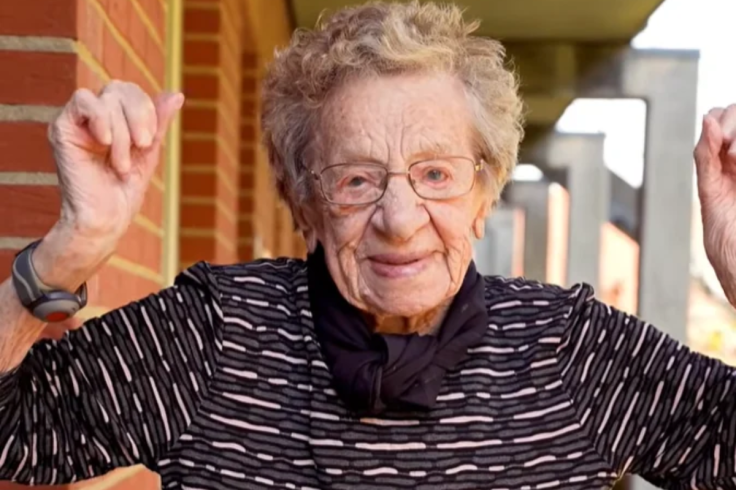
Kirsten Schwalbe, Denmark's oldest person in recorded history at 112, has come under scrutiny after newly examined wartime documents revealed that she held two leadership positions in the country's Nazi Party.
The revelations have cast a different light on the life of the woman previously celebrated for her extraordinary longevity, prompting questions about her past and distressing her family.
The news follows Schwalbe's recognition as the longest-lived person in Denmark's recorded history on 14 October 2026.
She reached 112 years and 218 days, surpassing the previous record held by Karla Lindholm Jensen, who died aged 112 years and 217 days in 2020.
Her remarkable age had made her a familiar figure in Danish media, but her wartime affiliations have now become an unexpected part of her public story.
Who Is Kirsten Schwalbe? Her Childhood, Marriage and Family
Born on 10 March 1914 in Struer, Midtjylland, Denmark, Schwalbe married in 1938 and had three daughters with her husband.
According to the Gerontology Research Group, two of her siblings lived to 100 and 103. Her younger brother Bertel died in 2024 at 103. Her husband died in 1981, leaving Schwalbe widowed.
Her personal history has included decades of family life and work as a seamstress. She also enjoyed needlework and continued knitting well into old age. At 104, she developed heart problems and received a pacemaker.
Her life had previously been presented largely through the lens of remarkable longevity. That narrative changed considerably when researchers examined records documenting her political affiliations during the German occupation.
Kirsten Schwalbe's Two Leadership Roles in Denmark's Nazi Party
According to documents from the Danish National Archives reviewed by investigative outlet Frihedsbrevet, Schwalbe held two local leadership positions in the National Socialist Workers' Party of Denmark, known as DNSAP.
The records identify her as acting branch group leader and women's group leader in the party's Holstebro branch between August 1943 and July 1944. Her husband also held a leadership position, serving as acting branch leader there from November 1942 until July 1944.
Historian Claus Bundgård Christensen told Danish media that Schwalbe's positions went beyond ordinary membership. After examining the documents, he described her as among the prominent members of the Nazi Party in her region during that period
However, the documents do not establish what specific duties she performed or how extensively she participated in party activities.
Schwalbe's membership had already emerged publicly in October. She acknowledged joining DNSAP in August 1941 but said she had done so at her husband's urging. She explained that she had little interest in politics and denied having sided with the German occupying forces.
The newly uncovered leadership records have therefore added a more complicated dimension to her earlier explanation.
Family Reacts as Kirsten Schwalbe's Nazi Past Emerges
The latest revelations have also raised questions about a recently published biography of Schwalbe, titled Vi skal have noget at grine af.
The book, written by journalist Frederik Helms and television photographer Line Morell Holm, was released by Danish publisher Gyldendal on 8 October 2026.
Neither the authors nor the publisher reportedly knew about Schwalbe's two leadership positions when the biography was prepared.
The revelations have prompted Gyldendal to reconsider how the book should address her wartime past.
The publisher initially indicated that it would add information in a future edition. However, its non-fiction publishing director, Mette Korsgaard, subsequently clarified that any update would occur only if Schwalbe herself participated.
Korsgaard said the newly discovered information placed the book and its premise in a different light. The publisher also wanted to examine the historical chapter more thoroughly through further interviews and consultations with experts before deciding how to proceed.
Her family has also responded to the renewed attention. According to Danish media reports, relatives said Schwalbe was deeply affected by the coverage and was unable to comment on the latest findings.
© Copyright IBTimes 2026. All rights reserved.