

3I/ATLAS' Behaviour Suggests Current Survey Telescopes May Be Missing Exotic Interstellar Visitors
Astronomers say 3I/ATLAS' unusual behaviour reveals gaps in current survey telescopes, hinting at unseen interstellar objects
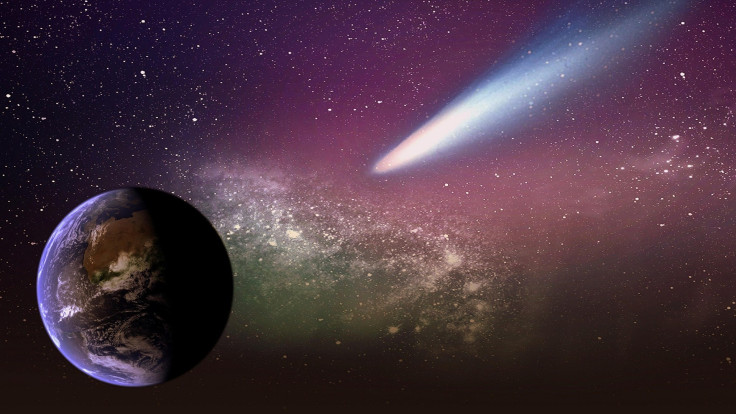
The interstellar comet 3I/ATLAS has puzzled astronomers with behaviour inconsistent with known comet physics.
Its unusual anti-tail, which remains sun-facing rather than typical comet behaviour, has cast doubt on the ability of current survey telescopes to detect the full range of interstellar objects passing through our Solar System.
3I/ATLAS is the third object to enter our Solar System, preceded by 1I/'Oumuamua in 2017 and 2I/Borisov in 2019, which is confirmed as an interstellar object. The comet was discovered by NASA-funded telescopes (ATLAS) in Chile on July 1, 2025, and has been followed with near-uninterrupted scrutiny as it approaches the Earth.
In contrast to typical comets, which show tails pointing away from the Sun due to solar radiation pressure, 3I/ATLAS has shown an anti-tail pointing toward the Sun. Both professional and advanced amateur astronomers observe that the dust structure has changed orientation in unexpected, unconventional ways.
Anti‑Tail Defies Expectations
Those who have been monitoring 3I/ATLAS have observed that it has an anti-tail extending over hundreds of thousands of kilometres, which is longer than the average distance between the Earth and the Moon. Although anti-tails are not unheard of in the science of comets, they are generally attributed to the effect of perspective. However, with the 3I/ATLAS, several observatories, including Hubble, Gemini, and XMM-Newton, indicate that the feature is an actual physical structure, not an optical illusion.
This action has heightened discussion of the interaction among dust, ice, and radiation in the objects that formed outside our Solar System. Some researchers have argued that the comet's energy output and dust dynamics exceed theoretical expectations for a nucleus of known size of 5.6 km.
Limits of Current Survey Telescopes

The anomalies exhibited by 3I/ATLAS expose the weaknesses of the contemporary survey telescopes. Pan-STARRS, ATLAS, and the upcoming Vera Rubin Observatory are built to detect objects more than 100 metres in diameter within a range similar to the Earth-Sun distance. This limit implies that smaller or faster visitors to the interstellar space could quite readily pass unnoticed.
In addition, the survey telescopes are tuned to the standard speed of asteroids and comets, which is tens of kilometres per second. When observing objects travelling at higher velocities, exotic interstellar objects can be missed, suggesting that 3I/ATLAS may not be an outlier but a member of a larger, hidden population.
Calls for a Reconnaissance Mission
The atypical performance of 3I/ATLAS has prompted scientists to discuss the possibility of a special reconnaissance mission. This kind of mission could provide first-hand measurements of dust composition, energy output, and structural peculiarities, along with previously unknown observations of material formed outside our Solar System.
Supporters believe that the temporality of the interstellar visitors necessitates a quick reaction. In hyperbolic trajectories, these objects enter the Solar System only to be thrown out of it into interstellar space. The lack of an opportunity to examine them in more detail may lead to missing crucial information about the formation of planets in other star systems.
Broader Implications for Astronomy
The example of 3I/ATLAS highlights the necessity to reconsider the detection strategies. There were exotic visitors to interstellar space, beyond the reach of present telescopes; we are therefore left incomplete in determining the frequency and variety of such macro bodies. This not only applies to cometary physics but also to broader questions about the composition of planetary systems throughout the galaxy.
Even some researchers have suggested that unusual appearances, such as the anti-tail, might point to non-natural processes, but the vast majority believe that 3I/ATLAS is a natural comet. In any case, the discussion shows that interstellar objects disrupt current paradigms and compel astronomers to push the boundaries of technology.
The behaviour of 3I/ATLAS, including its anti-tail pointing toward the sun and its anomalous energy emission, suggests that existing survey telescopes may be missing classes of interstellar visitors. As astronomers continue to monitor the comet, the case underscores the need to expand observation resources and to consider reconnaissance missions.
In the meantime, 3I/ATLAS is an indicator that the universe is much weirder than our tools can fully depict now.
© Copyright IBTimes 2026. All rights reserved.