

3I/ATLAS Mystery Deepens: The Enriched Alien Chemistry Suggests Life Is Universal
The 'alien' chemistry of comet 3I/ATLAS suggests the ingredients for life are universal.

It is a piece of chemistry born light years away, a rogue iceberg of cosmic material that pre-dates our own Sun. And for a brief, glorious period, it has been sailing through our celestial neighbourhood, giving scientists the once-in-a-lifetime opportunity to sample material from another star system.
The object is interstellar comet C/2025 N1, better known as 3I/ATLAS, and it has proven to be the most intriguing cosmic trespasser ever detected. Officially catalogued as only the third confirmed visitor from beyond our Solar System—following the famous 1I/ʻOumuamua and 2I/Borisov—this wandering ice ball was first discovered on July 1, 2025, by the NASA-funded Asteroid Terrestrial-impact Last Alert System telescope in Chile.
Its remarkable speed and hyperbolic trajectory confirm the dizzying truth: this comet is unbound to our Sun's gravity. It is merely passing through, and once it is gone, it will be jettisoned back into the endless blackness of deep space, never to return.
The discoveries tumbling out of the latest observations are strengthening theories that life's fundamental ingredients might be universal, and that other planetary systems possess a chemistry remarkably similar to our own. This single, fleeting flyby is already revolutionising what we know about the building blocks of life.
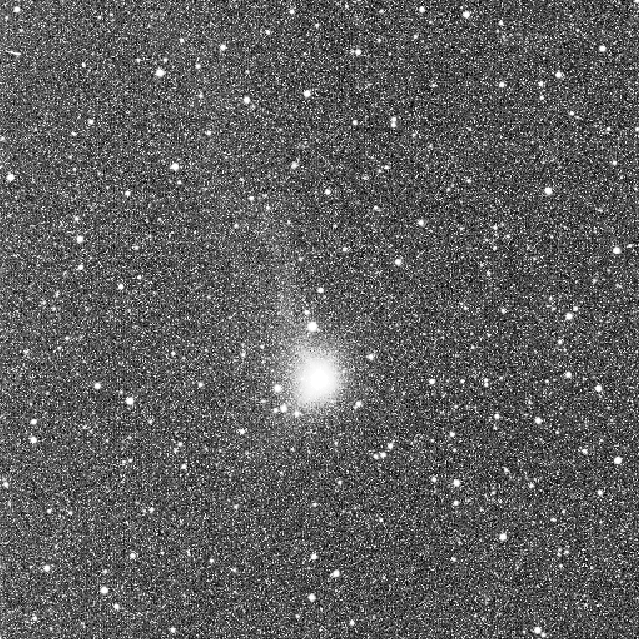
The Shocking Alien Chemistry of 3I/ATLAS
Perhaps the most astonishing revelation has come from the high-powered antennae of the Atacama Large Millimeter/submillimeter Array in Chile. Here, researchers detected that 3I/ATLAS carries an unusually rich, and entirely alien, cocktail of organic molecules. The chemical compounds being boiled off the comet's surface include methanol and hydrogen cyanide, both released at levels far exceeding what scientists typically see in comets that originated right here in our Solar System.
To put the richness of this discovery into context, roughly 8% of all vapor escaping from the comet consists of methanol, a figure approximately four times higher than normal cometary abundances. Furthermore, hydrogen cyanide levels also show significant enrichment compared to comets originating from our own Oort Cloud or Kuiper Belt.
These are not merely abstract compounds; they are the starting materials—the classic scaffolding—for chemical pathways that could eventually build sugars, amino acids and other biologically relevant compounds. The sheer abundance of these life-building molecules strengthens the theory that comets act as deep-space delivery trucks, capable of seeding young planets with crucial raw materials for life.
A NASA astrochemist leading the research described these abundances as 'among the most enriched values measured in any comet', suggesting complex chemical reactions may be occurring within or just beneath the surface of 3I/ATLAS itself.
The wonders do not end there. In an unprecedented observation, Japan's X-Ray Imaging and Spectroscopy Mission—a collaborative project between JAXA, NASA and the European Space Agency—recorded something never before seen from an interstellar object: X-ray emissions creating a faint halo stretching roughly 250,000 miles around the comet. This cosmic light show occurs as the solar wind, a stream of charged particles from our star, slams into the comet's vast cloud of neutral gas.
The resulting charge-exchange reactions cause the solar wind ions to steal electrons, emitting X-rays in the process. The spectrum of this glow revealed excess X-ray emission at energies associated with carbon, nitrogen and oxygen ions, handing researchers a powerful new tool for understanding how this alien world interacts with our star.
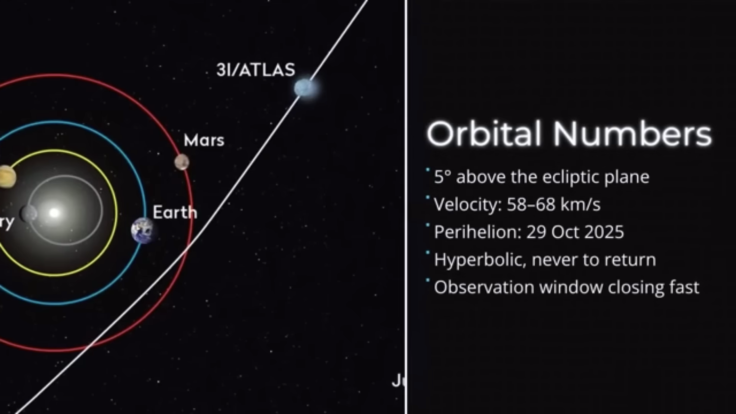
How 3I/ATLAS United the Solar System's Best Telescopes
Recognising the unrepeatable nature of this visit, NASA has effectively transformed much of the Solar System into one giant, distributed observatory to capture every possible piece of data from the wanderer. This meticulously coordinated campaign involves at least a dozen missions capturing data from multiple vantage points.
The Hubble Space Telescope, for instance, turned its Wide Field Camera back toward 3I/ATLAS on November 30, revealing a bright blue-green glow likely dominated by gases such as cyanogen and ammonia mixed with dust reflecting sunlight.
Meanwhile, the European Space Agency's Jupiter Icy Moons Explorer (JUICE) caught clear signs of two distinct tails: a plasma tail of electrically charged gas and a fainter dust tail fanning outward.
Even at Mars, the Mars Reconnaissance Orbiter and MAVEN captured some of the closest images and ultraviolet maps as the comet swept past at approximately 19 million miles in early October, while the Perseverance rover even managed to photograph a faint smudge of the distant visitor from the Martian surface.
Deep-space missions including Lucy, Psyche, Europa Clipper and Parker Solar Probe have either collected data or stand ready to observe when geometry allows, marking the first time heliophysics missions have deliberately targeted an object from another star system.
What happens next is simple: the comet makes its closest approach to Earth on December 19, passing at a safe distance of approximately 1.8 astronomical units, or about 170 million miles, posing absolutely no threat to our planet. For amateur stargazers, the sight remains elusive.
At magnitude 9 to 11, the comet is far too faint for naked-eye viewing. By March 2026, 3I/ATLAS will pass within 0.36 astronomical units of Jupiter before continuing its outbound journey into the interstellar void, taking its secrets and its alien chemistry with it, never to be seen again.
The fleeting visit of 3I/ATLAS is more than an astronomical event; it is a profound philosophical touchstone. Its enriched chemical payload—carrying the complex building blocks of life from an unknown stellar nursery—delivers a resounding affirmation that life's genesis is not a fluke unique to Earth.
The raw materials are out there, traversing the galaxy and waiting to be assembled. As this unique messenger prepares to leave our Solar System forever, taking its secrets back into the void, the science community's work is far from over.
© Copyright IBTimes 2026. All rights reserved.